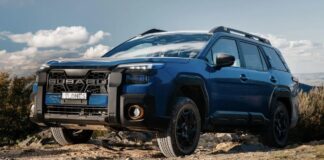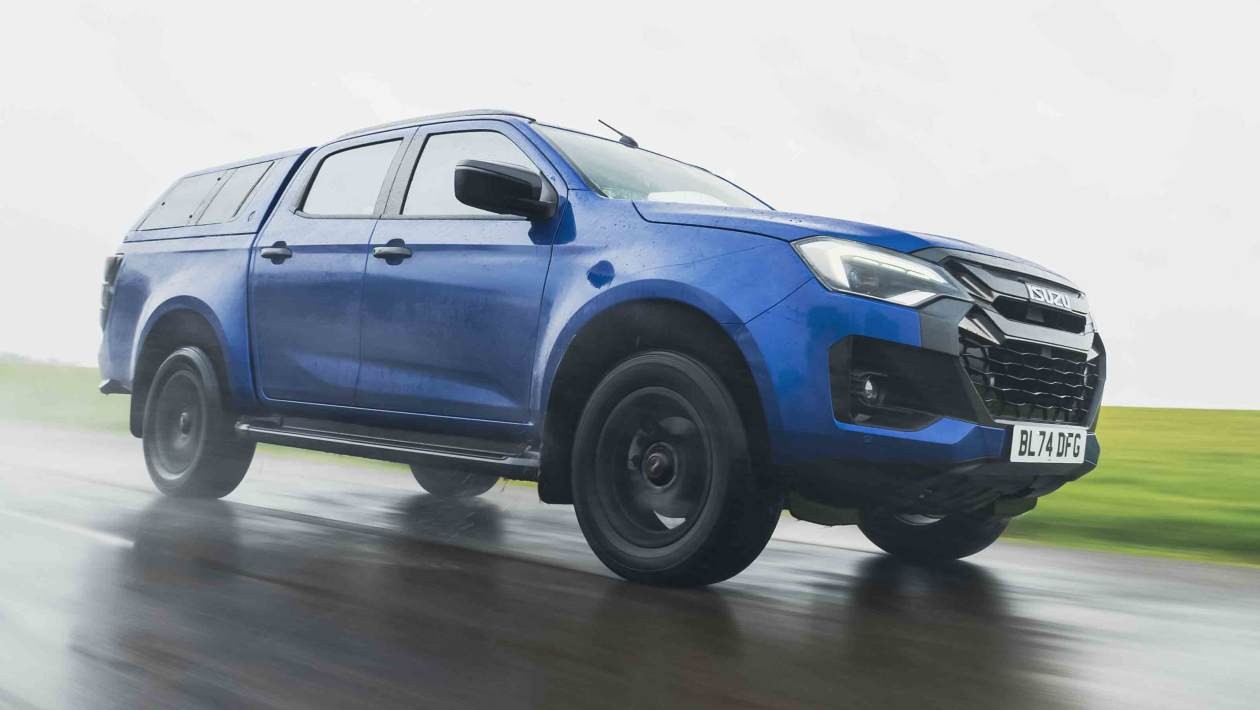
The Isuzu D-Max is a work-focused pickup truck that stands out for its long warranty and generous standard features, making it a strong contender for buyers who prioritize durability over outright performance. While constant updates keep it competitive, its single 1.9-liter diesel engine struggles to match the power of leading rivals.
Evolution and Updates
The D-Max debuted in 2012 with a 3.0-liter diesel, targeting tradespeople and farmers. A more efficient 1.9-liter diesel followed in 2017, and the current model arrived in 2021. Updates in 2023 and 2025 included cosmetic tweaks and improved safety systems, with an electric version planned for 2026. The latest revisions feature a refined front end with optimized airflow, new lights, and an upgraded infotainment system (8-inch standard, 9-inch in the V-Cross). The ADAS system has wider viewing angles for better safety, and a “Rough Terrain” switch optimizes electronics for slippery conditions.
Trim Levels and Pricing
The D-Max range starts around £27,500 (excluding VAT) for the Single Cab Utility 2WD, with four-wheel drive adding £2,500. The Double Cab Utility begins at around £32,000, while the DL20 is available as Extended or Double Cab for around £33,500. An automatic gearbox adds roughly £2,000. Upgrading to the DL40 (Double Cab only) costs around £3,000 more, and the V-Cross starts at just over £38,000 (auto adds £2,000). The high-riding Arctic Trucks variant is the most expensive, exceeding £57,000.
Engine and Performance
All D-Max models use the same 162bhp 1.9-liter turbodiesel with six-speed manual or automatic transmission. While the engine is economical, it lacks the torque of competitors like the Toyota Hilux, requiring harder work for heavy loads or towing. Fuel economy ranges from 33.6mpg (2WD manual) to 31.4mpg (high-spec auto), with CO2 emissions between 220g/km and 235g/km. The D-Max now includes an AdBlue tank to meet emissions regulations.
Load Space and Towing
The D-Max offers a significant advantage with Single and Extended Cab bodies, though the Single Cab sits lower for less extreme off-roading. Load bays vary: 2,290mm (Single Cab), 1,785mm (Extended Cab), and 1,520mm (Double Cab). All versions can carry over a tonne, and towing capacity is 3.5 tonnes (except for Single Cab 2WD, which is 2.5 tonnes). A wide range of accessories, including load covers and roof bars, enhances practicality.
Reliability, Safety, and Driving
The D-Max boasts a five-star Euro NCAP safety rating and a five-year/125,000-mile warranty. Safety systems include lane departure warning, attention assist, and rear cross-traffic alert (Double Cab only). While the D-Max isn’t featured in customer satisfaction surveys, it has a strong reputation for reliability.
The 1.9-liter diesel feels underpowered compared to rivals, requiring higher revs for heavy loads. The manual gearbox is vague, but the automatic is smoother. Off-road performance is impressive thanks to electronic systems and available four-wheel drive, with a “Rough Terrain” mode optimizing settings for slippery conditions.
Interior and Tech
The D-Max’s interior ranges from functional (Utility) to more luxurious (V-Cross). The updated infotainment system (8-inch standard, 9-inch in V-Cross) includes Android Auto and Apple CarPlay. Higher trims offer heated seats, leather steering wheels, and dual-zone climate control. Cabin storage is generous, with multiple compartments and cup holders.
Alternatives
Competitors include the Ford Ranger, Volkswagen Amarok, Toyota Hilux, and KGM Musso. The Ranger and Amarok offer more refinement, while the Hilux prioritizes dependability. The Maxus T90 is an electric option but lacks off-road capability.
The Isuzu D-Max remains a solid choice for those seeking a reliable and practical pickup truck, though its limited engine options and somewhat unrefined driving experience prevent it from being a top-tier competitor.