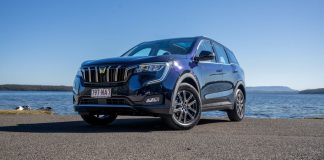
Chinese automotive brands are rapidly gaining recognition for safety, with the GWM Haval H7, MG 7, and MG ZS all recently achieving five-star safety ratings from the Australasian New Car Assessment Program (ANCAP). These results, released just before the holiday season, underscore a significant shift in quality and safety standards among Chinese manufacturers.
MG’s Advancements in Safety Tech
The MG 7 liftback, a new entrant to the market, has impressed ANCAP with its crash test performance and comprehensive suite of standard active safety features. The MG ZS, a popular crossover, has also been upgraded from a four-star to a five-star rating for models built from December 4, 2025. This improvement is due to the addition of a front-centre airbag, which boosted the adult occupant protection score from 75% to 81%.
“ANCAP encourages safety improvements from all manufacturers, and MG should be commended for proactively making improvements to the ZS,” said ANCAP CEO Carla Hoorweg. This highlights the industry’s growing commitment to incorporating advanced safety technologies.
Haval H7: Strong Performance with a Recall Note
The GWM Haval H7 demonstrated strong performance in both crash protection and avoidance assessments, earning another five-star rating for the Chinese brand. However, ANCAP testing revealed an issue with the driver’s head restraint dislodging during a full-width frontal crash test, leading to a voluntary safety recall for affected vehicles.
The recall applies to H7 models built before October 15, 2025 (VINs LGWEFUA60RF800006 to LGWEFUA6XSF802190), which will need to be updated to meet the five-star standard. This proactive response from GWM Haval demonstrates a commitment to ensuring the integrity of fundamental safety systems.
What This Means for Consumers
These ratings signal that Chinese automakers are not just competing on price but also on safety. The rapid improvement in ANCAP scores suggests that these brands are investing heavily in safety research and development. The recall for the Haval H7, while a concern, was handled transparently and efficiently, showcasing the brand’s commitment to consumer safety.
The shift towards safer Chinese-made vehicles is likely to increase consumer confidence and challenge long-held perceptions of quality in the automotive industry. These developments are also likely to push other manufacturers to further improve their safety standards to remain competitive.