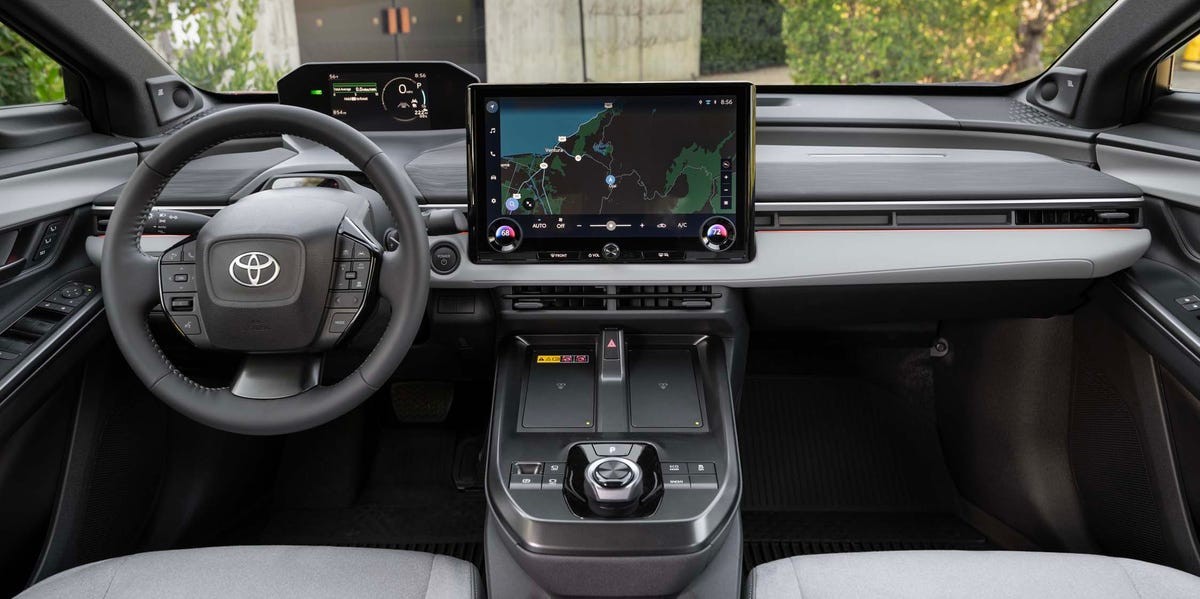
Toyota has previewed the interior of the redesigned 2026 C-HR, revealing a cabin that borrows heavily from its larger, all-electric bZ series models. This design approach suggests Toyota is unifying the look and feel across its modern lineup.
Infotainment and Digital Features
The centerpiece is a large 14.0-inch touchscreen controlling most vehicle functions. Toyota retains some physical buttons for essential controls, acknowledging that drivers still appreciate tactile feedback. A fully digital gauge cluster complements the central screen, delivering a modern, high-tech aesthetic.
Materials and Comfort
The C-HR’s seats are upholstered in Toyota’s SofTex synthetic leather, a move likely driven by sustainability and cost considerations. Higher-spec XSE models get suede inserts for a more premium feel, while the base SE trim uses fabric. Both trims offer heated front seats and a heated steering wheel as standard, positioning the C-HR as a comfortable daily driver.
Standard and Premium Features
Even the base C-HR comes well-equipped with dual wireless charging pads and an eight-way power driver’s seat. Stepping up to the XSE trim adds an eight-way power front passenger seat and a 360-degree surround-view camera, enhancing convenience and safety.
Space and Practicality
Despite being smaller than the bZ, the C-HR doesn’t feel overly cramped. Toyota has optimized the space effectively, although rear legroom is slightly reduced by about three inches compared to the larger bZ model. This trade-off is typical for compact crossovers prioritizing design and agility over outright cabin volume.
The 2026 Toyota C-HR interior signals a clear trend toward unified design language within the brand, blending tech-forward features with practical comfort, making it a compelling option in the competitive compact crossover segment.