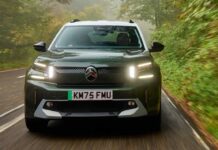
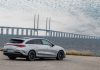
Mazda’s compact SUV lineup is evolving, and the 2026 CX-5 is at the center of a significant shift. The updated CX-5 now closely mirrors its sibling, the CX-50, in size and features, raising questions about Mazda’s internal product strategy. The new model boasts a longer wheelbase and increased passenger/cargo space, effectively erasing much of the differentiation that once existed between the two vehicles.
Size and Space: A Growing Rivalry
The 2026 CX-5 gains 4.6 inches in wheelbase and 4.5 inches in overall length, making it nearly identical in dimensions to the CX-50. While the CX-50 remains slightly wider, the CX-5 now surpasses it in interior volume. This expansion addresses a previous weakness: rear passenger space. The redesigned CX-5 offers improved legroom and headroom, finally matching competitors like the Honda CR-V and Volkswagen Tiguan in practicality. A larger liftgate and a flexible 40/20/40 split rear seat further enhance usability, making it easier to carry both passengers and gear.
Tech Overhaul: Embracing Touchscreens
Mazda has made a decisive move toward touchscreen dominance in the 2026 CX-5. The infotainment display grows to 12.9 or 15.6 inches depending on trim, and the traditional rotary controller has been scrapped entirely. This shift includes fully embracing Google’s ecosystem, with integrated Google Maps, Google Play, and Google’s AI assistant, Gemini. While the new system offers expanded functionality, physical controls for frequently used features like climate control have been removed, replacing them with on-screen adjustments.
Interior Refinement: A Step Back?
The interior features comfortable seating and a new steering wheel, but material quality in the top-spec trims doesn’t quite match the CX-50. The CX-5 Premium Plus offers fewer soft-touch surfaces, relying more on hard plastics. This suggests Mazda may be prioritizing cost savings or design consistency across the lineup, even if it means compromising on premium feel in certain areas.
Performance and Efficiency: A Familiar Drive
The CX-5 retains its 187-hp 2.5-liter engine with standard all-wheel drive. While the powertrain remains responsive, it lacks the urgency of turbocharged options. The optional 256-hp turbo engine is no longer available, but a hybrid version is planned for next year. Fuel economy has dipped slightly to 24 mpg city and 30 mpg highway. Despite the increased size, Mazda has maintained the CX-5’s engaging driving dynamics, with precise steering and a compliant ride.
Safety Features: Enhanced Protection
The 2026 CX-5 includes advanced safety features such as automatic emergency braking, adaptive cruise control, lane-keeping assist, and blind-spot monitoring as standard. The adaptive cruise control now supports automatic lane changes with driver initiation. These improvements contribute to top IIHS crash test scores, reinforcing Mazda’s commitment to safety.
Pricing and Positioning: The Overlap
The 2026 Mazda CX-5 ranges from $31,485 to $40,485. This pricing completely overlaps with the CX-50, which starts at $31,395 and tops out at $36,395. The CX-5 now even exceeds the CX-50 in price at the high end. The rationale behind this positioning remains unclear, but for consumers, the choice between the two models may come down to preference rather than practical differences.
With these changes, Mazda has effectively blurred the lines between the CX-5 and CX-50, making it harder for buyers to distinguish between the two. This strategic move suggests Mazda is willing to cannibalize its own sales in order to streamline production or test market demand.