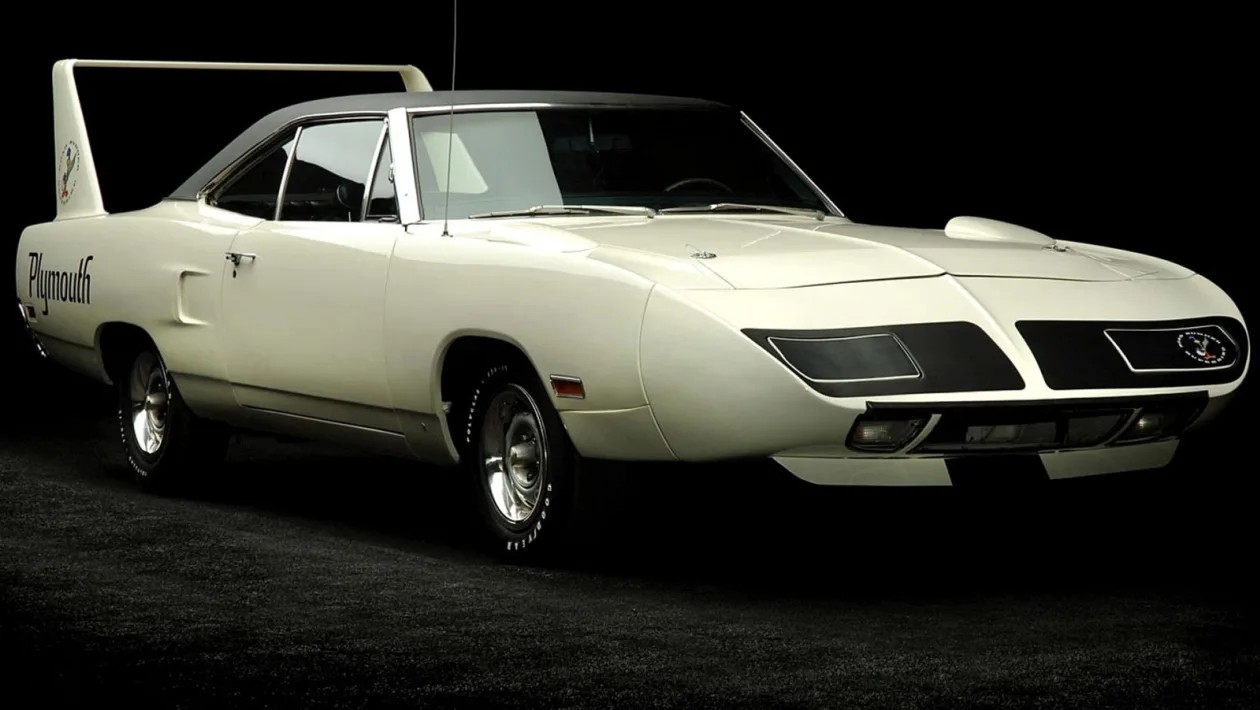
The 1970 Plymouth Superbird stands out as one of the most iconic muscle cars ever built, not just for its raw power but for its radical, wind-cheating design. Unlike many contemporaries focused purely on straight-line speed, the Superbird was engineered for one thing: dominating NASCAR circuits. Its enduring fame was recently boosted by a cameo in the animated blockbuster Cars, but its legacy was forged on the track decades before.
The Need for Speed: NASCAR Regulations and Road-Legal Racers
The Superbird, along with its Dodge Charger Daytona sibling, arose from a specific quirk in NASCAR rules. At the time, to qualify for competition, manufacturers had to sell a minimum of 1,920 road-legal versions of their race cars to the public. This led to the bizarre but effective practice of putting extreme racing machines on dealership floors.
The Superbird was based on the Plymouth Road Runner, but it was heavily modified for aerodynamics. Its distinctive pointed nose and towering rear wing weren’t just for show; they were the product of wind tunnel testing. However, the rear wing’s height wasn’t purely about downforce – it was also dictated by the need to open the trunk.
Power and Performance: Engines and Trade-Offs
Plymouth offered three engine options: a 375-horsepower 7.2-liter V8, and the legendary 426 cubic inch (7.0-liter) “Hemi” producing 425 horsepower. Ironically, despite the Superbird’s aerodynamic ambitions, its extra weight from the steel nose and massive wing actually made it slower off the line than the standard Road Runner.
That said, in full racing configuration, the Hemi-equipped Superbird could exceed 200 mph. The car’s peak performance was short-lived, however. In 1971, NASCAR changed engine size regulations, effectively eliminating the Superbird’s aerodynamic advantage, and Plymouth discontinued it after just one year of production.
The Superbird remains a symbol of an era when manufacturers pushed the boundaries of what was possible – and sometimes necessary – to win on the racetrack. The car is a reminder that even the most extreme designs can be born from the most mundane rules.