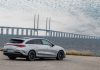
Honda is slashing prices on its Accord e:PHEV plug-in hybrid in China by nearly 15,000 USD, a drastic move highlighting the intensifying price war among established automakers in the world’s largest car market. The limited-time promotion reduces the vehicle’s cost to 20,280 USD, marking one of the largest official discounts ever offered by a joint-venture sedan in the country.
Plummeting Sales Force Aggressive Discounts
The price cut, announced by GAC Honda in February, applies to existing customers repurchasing the model and is capped at 1,000 units. This deep discount—100,000 yuan (14,610 USD) off the original price of 34,890 USD—comes as Honda struggles with declining sales in China.
Data from GAC Group shows Honda sold just 4,558 vehicles in January 2026, a staggering 69.86% drop year-over-year. Full-year sales in 2025 fell 25.22% to 351,900 units. Meanwhile, GAC Aion, the group’s electric vehicle brand, saw sales surge by 171.63% in the same month. This sharp contrast illustrates a broader shift in consumer preference toward domestic EV brands.
Japanese Automakers Feel the Heat
Honda isn’t alone. Other Japanese joint ventures are also resorting to aggressive pricing. GAC Toyota has introduced subsidies up to 3,210 USD for its Wildlander SUV, and Dongfeng Nissan is offering discounts of up to 3,070 USD on the Teana sedan and 1,460 USD on the Sylphy compact.
These moves signal a growing pressure on traditional automakers as Chinese EV manufacturers flood the market with competitive, often cheaper, alternatives. The broader automotive consumption index stands at a historically low 31.1, and automakers are increasingly relying on financing incentives like low-interest loans to boost retail demand.
The Rise of Domestic Electrification
The Accord e:PHEV discount coincides with the increased availability of plug-in hybrids and EVs from domestic brands in the same price range. This competition is forcing established players to adapt or risk losing market share. Honda frames the discount as a limited-anniversary promotion marking the Accord’s 50-year global history, but it’s clear that underlying sales pressures are driving the move.
The company has not disclosed production or sales plans beyond the promotional allocation, suggesting uncertainty about future demand. The situation raises the question of whether these aggressive discounts will be enough to stabilize sales, or if further measures will be needed to compete in China’s rapidly evolving automotive landscape.
Ultimately, these price cuts are a symptom of a larger trend: foreign automakers struggling to maintain relevance in a market increasingly dominated by domestic EV brands and intense price competition.