The Saic H5 has launched in China as the most affordable entry point into the Harmony Intelligent Mobility Alliance (HIMA), marking the first direct collaboration between Huawei and SAIC Motor. Priced from 159,800 yuan ($22,040 USD), the H5 aggressively undercuts competitors like Tesla and Leapmotor, positioning itself to capture high-volume youth segments with advanced autonomous driving technology. This move signals a critical test: can Huawei maintain brand credibility at lower price points where profit margins are thinner?
Strategic Shift in HIMA’s Approach
The H5 represents a departure from HIMA’s premium strategy with the Aito and Stelato brands. Instead of focusing solely on luxury, SAIC and Huawei are targeting mainstream consumers who want cutting-edge tech without the high price tag. The Max EREV trim, tested at 179,800 yuan ($24,800 USD), features Huawei’s ADS 4.0 system, proving that autonomous driving capabilities are no longer exclusive to luxury vehicles.
Design & Dimensions: Practicality Over Prestige
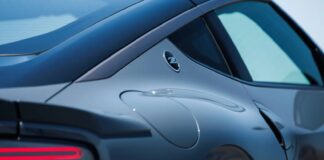
The Saic H5 measures 4,780 mm in length, with a wheelbase of 2,840 mm. Its design prioritizes aerodynamic efficiency and maneuverability in dense urban areas over oversized proportions. Unlike some competitors, the H5 retains conventional mechanical door handles, aligning with emerging Chinese safety standards. A roof-mounted 192-line lidar unit is central to the autonomous driving suite, while the rear features a continuous taillight and a steep tailgate for optimized aerodynamics.
The vehicle’s 2,000 kg curb weight (EREV variant) is achieved through weight-saving measures in the chassis casting, making it lighter than many comparable SUVs.
Interior: Tech-Forward, Cost-Conscious
The cabin is dominated by a 15.6-inch floating touchscreen running HarmonyOS. A key difference from other HIMA models is the software layout: navigation is prioritized on the central screen, while the SR environment visualization moves to the instrument cluster. Wireless charging pads and a large storage area add practical utility.
Material quality is surprisingly high for the price point, with soft-touch plastics covering roughly 99% of visible surfaces. However, hard plastic on the B- and C-pillars is the only noticeable cost-cutting measure. The mechanical door release handles are firm, suggesting robust construction. The rear offers a flat floor, two backrest adjustments, and ample legroom thanks to the 2,840 mm wheelbase. Trunk space is 601 liters, fitting up to six 20-inch suitcases.
Driving Experience: Balanced Performance & Autonomy
The H5 Max EREV uses a 1.5-liter range extender (72 kW/97 hp) that acts solely as a generator. The rear-mounted electric motor delivers 150 kW (201 hp) and 280 Nm of torque. The 32.6 kWh LFP battery provides a 235 km pure-electric range and a combined range of 1,360 km.
The suspension hardware consists of MacPherson struts at the front and a multi-link independent setup at the rear. The chassis tuning prioritizes lateral stability and damping rebound, offering a more European-style driving feel compared to softer-tuned rivals. The steering is calibrated with minimal dead zone, providing precise control.
Huawei’s ADS 4.0 system, with its 192-line lidar, three 4D radars, and 11 cameras, demonstrates advanced AI-powered behavior in urban environments, successfully navigating complex scenarios and identifying unconventional obstacles.
The Verdict: A Disruptive Force in the EV Landscape
The Saic H5 is a calculated move to capture the entry-level premium EV market by offering high-tier autonomous hardware at a competitive price. It bridges the gap between luxury tech and affordability, directly competing with the Leapmotor C11 and Tesla Model Y in China. The H5’s success will depend on whether Huawei’s branding can sustain market share at lower price points, where margin compression is highest.
The H5 proves that advanced autonomous driving is no longer a luxury feature, but an accessible option for mainstream consumers in the Chinese market.