For decades, motorcycle luxury meant extra features bolted onto a capable machine. Heated grips, powerful sound systems, and advanced navigation were nice-to-haves, but rarely essential. Now, BMW is challenging that notion with the R 1300 RT – a touring motorcycle where luxury isn’t an afterthought, but a core design principle.
The Evolution of Two-Wheeled Comfort
Motorcycle touring has always been about endurance. Early riders prioritized mechanical reliability above all else. As technology advanced, comfort became a focus: wind protection, supportive seats, and eventually, electronic aids. Yet, even today, many touring bikes feel like stripped-down compromises. The BMW R 1300 RT aims to change that. It’s not just about adding extras; it’s about integrating them seamlessly into a riding experience that prioritizes ease, safety, and enjoyment.
Outside of motorcycling, luxury often means excess – shiny finishes, impractical features, and high prices. But on two wheels, true luxury means eliminating friction. Heated seats, adaptive lighting, radar assistance… everything that makes long distances feel effortless. The R 1300 RT embodies this philosophy.
A New Heart for a Familiar Form
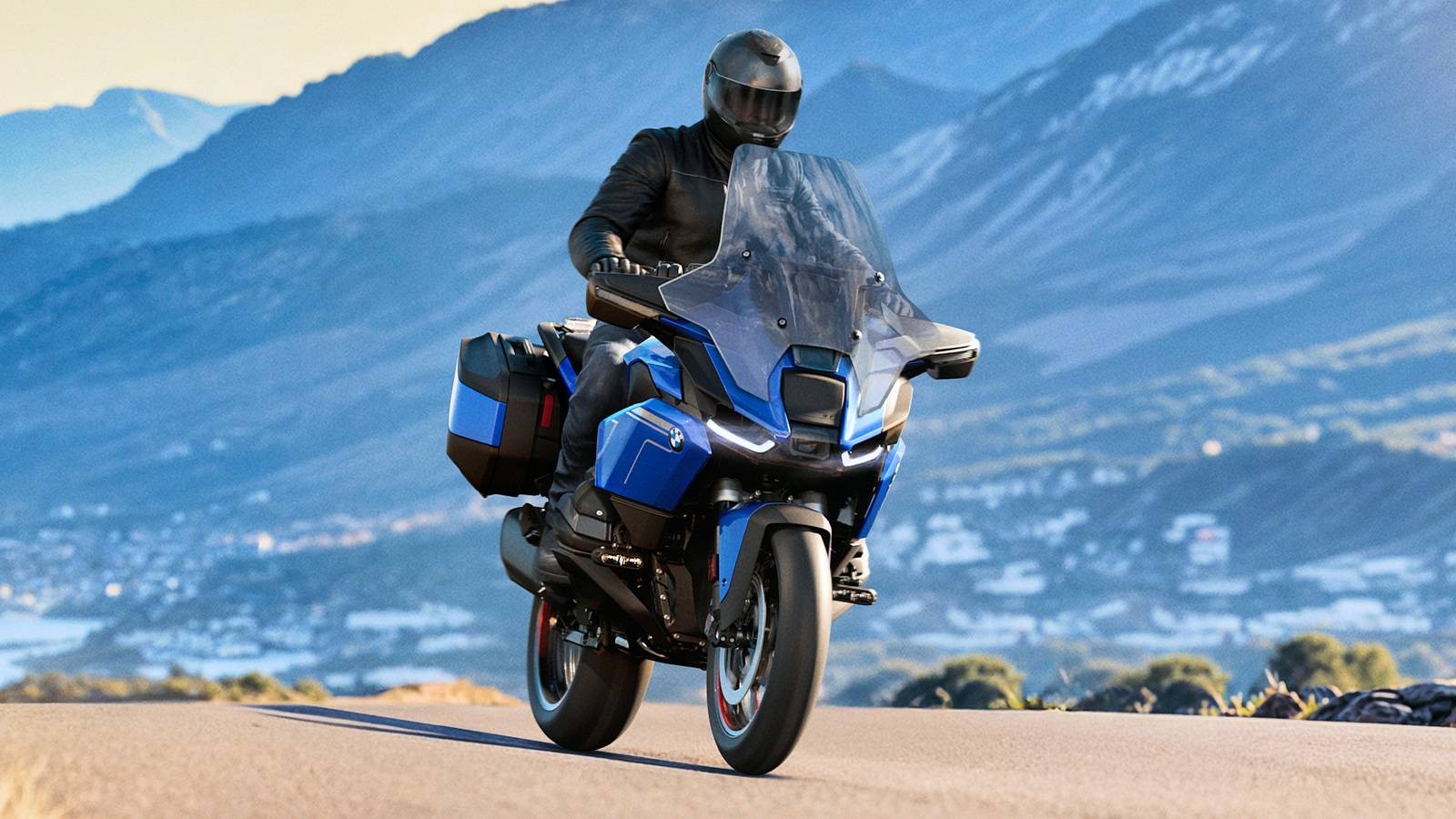
The R 1300 RT retains the iconic RT silhouette: broad fairing, integrated panniers, and a commanding road presence. However, the redesign is striking. Sharper lines, a more sculpted body, and reworked DRLs give the bike a modern, aerodynamic edge.
But the biggest change lies beneath the surface. BMW’s new 1,300 cc boxer twin replaces the outgoing 1250 unit. This engine is more compact thanks to an optimized camshaft layout and internal packaging. The result is a tighter chassis, better balance, and improved handling.
Engine Specs:
- Power: 145 horsepower
- Torque: 110 pound-feet
- Transmission: Six-speed gearbox with shaft drive
Early reports suggest the new engine delivers responsive power at all revs, making highway overtakes smooth and confident. Reliability, as with most BMW boxers, isn’t a major concern.
Chassis and Handling: Stability Redefined
The smaller engine necessitated a redesigned chassis with a new main frame and revised rear subframe. The telelever front suspension – BMW’s signature technology – continues to separate braking and suspension forces, enhancing stability. Reviews indicate the new chassis feels superior, delivering a more balanced and composed touring experience.
At roughly 620 pounds, the R 1300 RT isn’t light. Its low stance requires deliberate parking maneuvers. However, this weight is a trade-off for stability and equipment – a price most touring riders are willing to pay.
A Rolling Control Center: Technology Integration
The R 1300 RT is loaded with tech: a full-color TFT display, electronic suspension adjustment, keyless ignition, heated grips, and comprehensive LED lighting. These aren’t gimmicks; they’re practical tools for long-distance travel.
Key Tech Features:
- Large TFT display with connected services
- Adaptive cruise control
- Radar-based safety systems
- Multiple riding modes
- Electronically adjustable suspension
- Integrated navigation system
The electronic suspension eliminates the need for manual adjustments, while the adaptive cruise control simplifies highway riding. The full-color display provides clear, real-time data. This isn’t just form over function; it’s a practical machine designed for serious touring.
The Price of Premium: From Sensible to Spec’d
The base MSRP starts at $22,645. This includes a substantial amount of standard equipment for a modern touring motorcycle. However, few buyers stop there. Option packages – adaptive cruise control, radar safety, upgraded audio, premium paint, and additional luggage – quickly drive the price up.
A fully equipped R 1300 RT can easily reach the mid-$30,000 range before taxes and fees. The base model remains competitive in the premium touring segment. But for those seeking the ultimate long-distance experience, a fully spec’d version is the realistic choice.
The BMW R 1300 RT isn’t just a motorcycle; it’s a statement. It proves that luxury and practicality aren’t mutually exclusive, and that on two wheels, comfort can be as essential as performance.