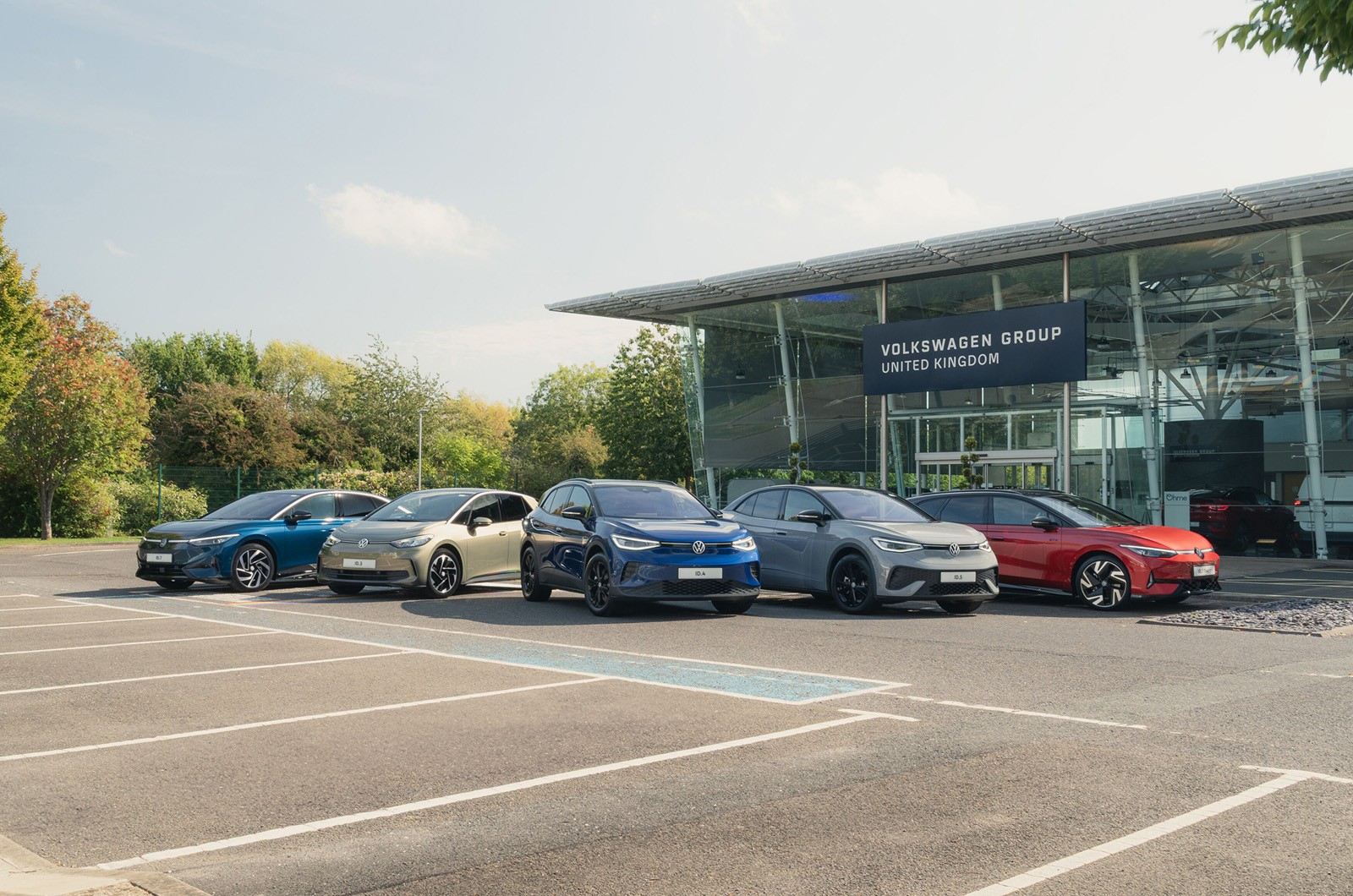
The UK government’s aggressive push for electric vehicle (EV) adoption will likely drive up the price of traditional gasoline and diesel cars, according to Volkswagen’s head of sales, Martin Sander. The warning comes as manufacturers already heavily discount EVs to meet increasingly strict zero-emission vehicle (ZEV) mandates, a practice that executives say is unsustainable long-term.
The Unsustainable Discounting of EVs
Currently, automakers are offering substantial discounts – averaging £11,000 per vehicle – to boost EV sales. According to the Society of Motor Manufacturers and Traders (SMMT), this equates to roughly £10 billion in discounts extended to UK buyers. These deep cuts are a direct response to the ZEV mandate, which imposes a £12,000 fine for each internal combustion engine (ICE) car sold exceeding the target EV sales mix.
For 2026, the mandate requires EVs to account for 33% of total registrations, rising dramatically to 80% by 2030. This creates a powerful incentive for manufacturers to prioritize EVs, even at a loss.
The Coming Price Hike on ICE Vehicles
However, executives warn that this discounting cannot continue indefinitely. Sander explicitly stated that manufacturers will eventually be forced to recapture lost profits by increasing the prices of ICE vehicles.
“I believe that the cost of individual [ICE] transportation will go up significantly… if we have to get to 80% [electric], this will not only happen by incentivising even more, but if we do that the cost of ICE vehicles will go up.”
The reasoning is simple: artificially low EV prices via discounts are not a long-term business model. Volvo UK boss Nicole Melillo Shaw echoed this sentiment, emphasizing that the industry has already made substantial investments in EV technology, and further discounting is unsustainable. The “pot for discounting,” as she put it, is “not bottomless.”
What This Means for UK Drivers
The situation raises critical questions about the government’s EV strategy. While the intent is to accelerate the transition to cleaner vehicles, the current approach relies heavily on financial incentives that distort the market.
Once the mandated EV targets are met, discounting will likely stop, and EV prices will rise sharply. This, combined with the inevitable increase in ICE vehicle costs, means UK drivers may face higher overall transportation expenses regardless of their vehicle choice. The policy is designed to force change, but it risks making car ownership less accessible for many.
The long-term viability of the mandate hinges on whether EV prices can fall naturally enough to reach 80% market share by 2030 without unsustainable discounts. If not, drivers will pay the price.