


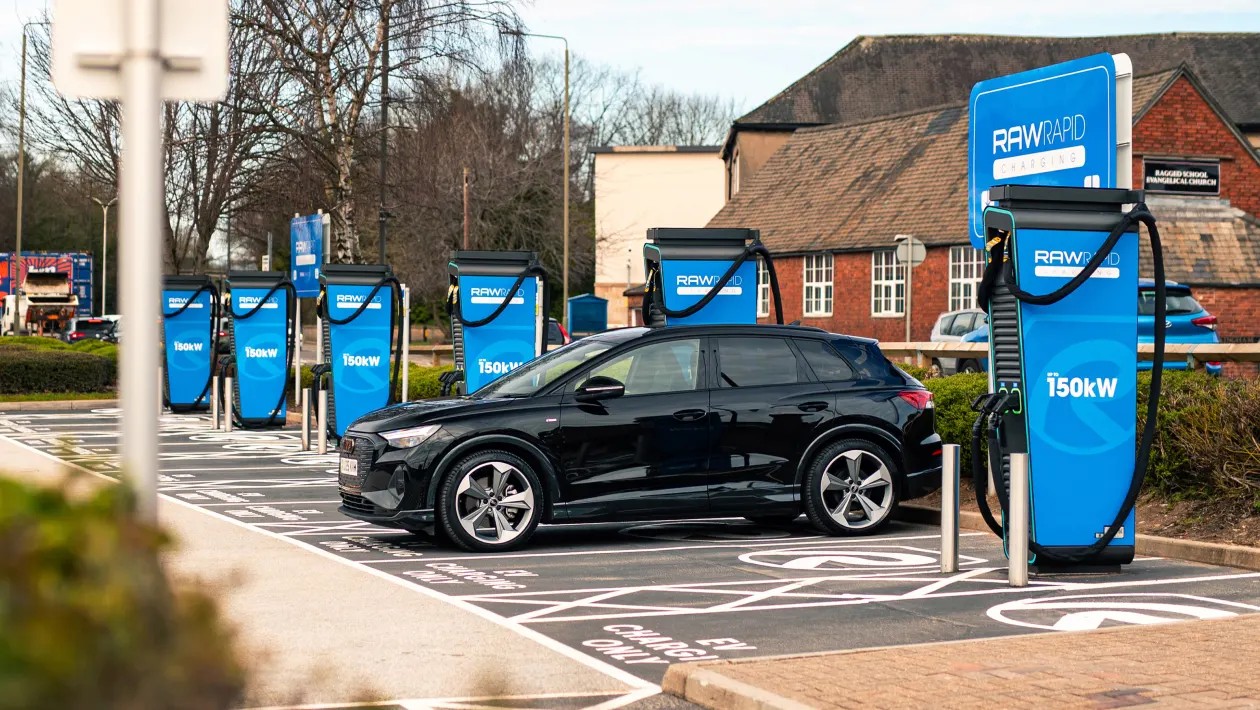
The United Kingdom is set to receive a substantial expansion of its electric vehicle (EV) charging network with a £24.5 million investment from RAW Charging and Landsec, a leading retail property operator. The partnership will deploy 1,000 new charging bays across 28 locations nationwide, including a landmark hub at Bluewater shopping centre in Kent—projected to be the UK’s largest retail destination EV charging facility.
Modernizing a Critical Network
This initiative isn’t just about adding chargers; it’s about upgrading the entire infrastructure. A key component of the 20-year partnership involves replacing outdated charging stations that fall short of modern speed, reliability, and accessibility standards. This is crucial because slow or unreliable charging remains a significant barrier to EV adoption for many consumers. The project includes 554 AC fast chargers and 446 DC rapid chargers, with Bluewater alone receiving 200 new bays, starting with a 24-bay ultra-rapid hub launching this summer.
Why This Matters: Addressing Range Anxiety and Demand
The expansion is timely given the rapidly increasing demand for EV charging. The UK government has set ambitious targets for phasing out petrol and diesel vehicles, meaning a robust and reliable public charging network is essential. Without sufficient infrastructure, “range anxiety” – the fear of running out of charge – will continue to deter potential EV buyers. Landsec’s involvement, bringing major shopping destinations into the mix, strategically places these chargers where consumers already spend time, making charging more convenient.
Beyond Retail: Expanding Access
RAW Charging already serves a diverse portfolio of clients, including the National Trust and Merlin Entertainments (Legoland, Chessington, Alton Towers). This indicates a broader strategy to embed EV charging into everyday destinations, not just retail spaces. The network will be fully accessible via contactless payment and major EV charging apps, simplifying the user experience.
The bulk of these installations are expected by 2027 and 2028, with the project poised to significantly improve charge times and operational performance for EV drivers across the UK. This upgrade is not merely a convenience; it’s a necessary step toward a sustainable transportation future.


