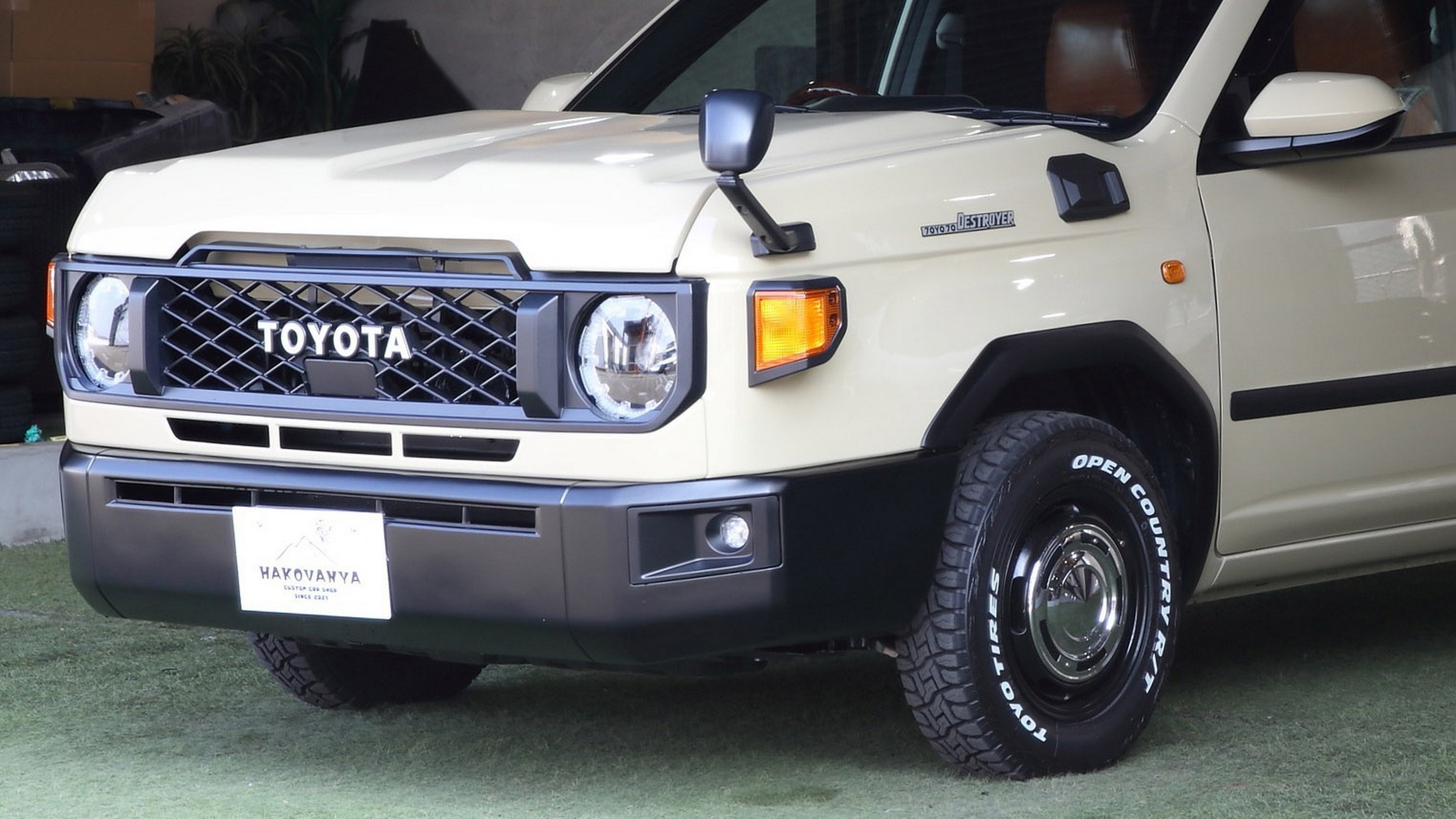
A Japanese tuner, Hakobanya, is offering a striking conversion kit that turns the utilitarian Toyota ProBox wagon into a convincing imitation of the iconic Land Cruiser 70 Series. The project, dubbed the “70 BOX” or “70Yo.70 Destroyer,” provides an aggressive aesthetic overhaul for around $9,400 in parts alone—or a fully built vehicle for approximately $24,200.
From Workhorse to Off-Roader: The Conversion Details
The transformation centers on reshaping the ProBox’s front end to match the latest Land Cruiser 70 Series facelift. This includes round LED headlights, a honeycomb grille, a rugged unpainted plastic bumper, and custom fenders with a bulged hood. Hakobanya even recreates details like the fender-mounted mirrors and AdBlue covers (despite the ProBox only offering gasoline or hybrid engines).
The side profile receives plastic wheel arch cladding, faux vents, and aftermarket alloy wheels with grippy tires. A suspension lift kit and roof rack complete the look, though the ProBox’s proportions remain somewhat awkward due to its smaller wheels and long front overhang. At the rear, the original taillights are covered, replaced by rectangular units on a custom bumper.
Interior Options and Performance
Hakobanya offers interior upgrades, including leather-style seat upholstery, new floor mats, aftermarket infotainment systems, woodgrain accents, and protective cargo covers. The 70 BOX retains the ProBox’s original powertrains: a 1.5-liter four-cylinder producing 107 hp or an optional self-charging hybrid. The gasoline engine pairs with a CVT, driving either the front or all four wheels.
Cost Breakdown and Market Appeal
The conversion kit costs approximately ¥1.5 million ($9,400). A new ProBox donor vehicle ranges from ¥1,918,400-2,261,600 ($12,047-14,200), though used models are cheaper. Hakobanya sells complete vehicles from ¥3.85 million ($24,200).
Why This Matters: The 70 BOX highlights Japan’s vibrant aftermarket customization scene. The ProBox is a popular commercial vehicle, and this conversion taps into the Land Cruiser’s legendary status, offering a more aggressive look without the higher cost of purchasing a real Land Cruiser. It also demonstrates how strong brand recognition can drive aftermarket demand, even for vehicles that don’t share mechanical similarities.