Geely’s Smart brand is encountering significant headwinds in its push to expand beyond its core compact car lineup. Despite dismissing concerns about increasing vehicle sizes earlier this year, sales data reveal a clear preference among Chinese consumers for the smaller, original Smart #1 model. This disconnect has led to dealers offloading unsold larger models, the #3 and particularly the #5, through used car channels at substantial discounts.
Sales Figures Confirm Consumer Preference
Over the past year (March 2025 to February 2026), Smart sold roughly 30,000 vehicles in China. The #1, the brand’s smallest offering, accounted for a dominant 64% of those sales. The larger #3 and #5 models together represented just 36% – with the flagship #5 underperforming significantly. This suggests that Smart’s attempts to broaden its appeal with larger vehicles are not resonating with the market.
Unsold Inventory Liquidated at Steep Discounts
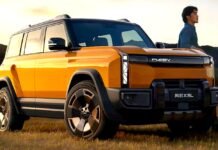
New, unregistered Smart #5 vehicles are currently being sold on used car platforms in cities like Chongqing for as much as 100,000 yuan (approximately $14,500 USD) below the manufacturer’s suggested retail price. One employee at a major used car platform reported that long-range luxury versions, originally priced at 269,900 yuan ($39,100 USD), are now available for 169,800 yuan ($24,600 USD), with further negotiation possible. This aggressive discounting points to a surplus of unsold inventory and pressure on dealers to clear stock.
The Problem With the #5 Model
The #5’s low monthly sales – consistently in the three-digit range – make this liquidation unsurprising. Despite heavy promotion, including a plug-in hybrid launch in October 2025, the model has failed to gain traction. This is especially concerning given Smart’s continued commitment to larger vehicles.
The Looming Launch of the Even Larger #6
Smart is preparing to release the #6, a plug-in hybrid sedan that will be its largest vehicle yet. Measuring nearly 5 meters in length, the #6 is positioned to compete directly with established rivals like the Xiaomi SU7 and Tesla Model 3 in the highly competitive 200,000-300,000 yuan ($29,000-$43,500 USD) segment. This is a risky move, as no other manufacturer has successfully challenged Tesla or Xiaomi in that price range.
Stagnation in Core Model Updates
While the #1 continues to dominate sales, Smart has primarily focused on minor price cuts and configuration adjustments rather than substantial upgrades to its best-selling model. For example, the 2026 #1 still supports the same 150kW fast-charging capability as the 2022 version, lagging behind competitors like the Lynk & Co Z20 which now offers 300kW charging.
In conclusion, Smart’s strategy of expanding into larger vehicle segments appears to be misaligned with consumer demand in China. The liquidation of unsold #5 models and the upcoming launch of an even larger vehicle raise serious questions about the brand’s direction. Unless Smart adjusts its approach and prioritizes improvements to its core #1 model, it risks further eroding its market share.