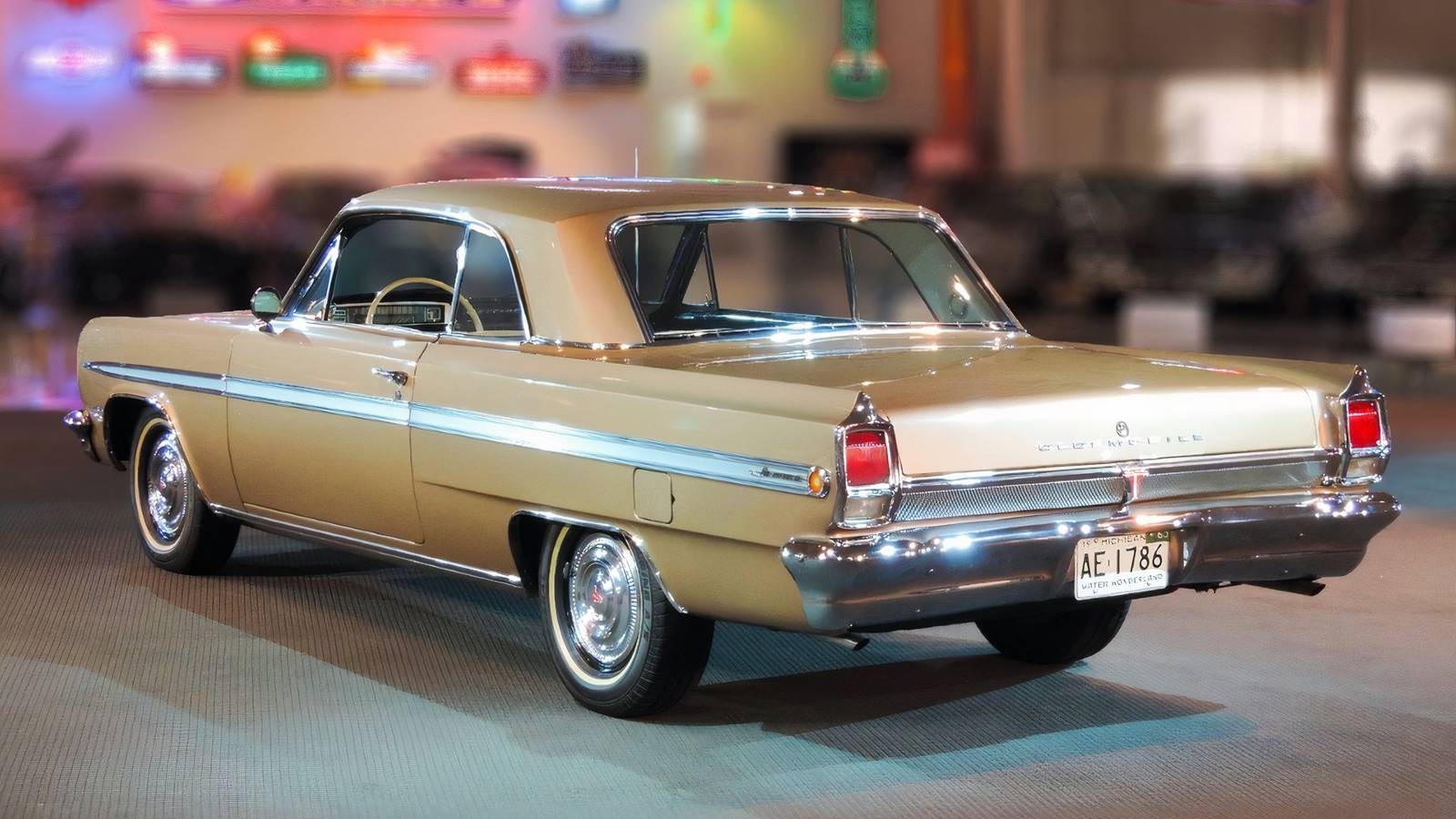
Oldsmobile, often dismissed as a conservative brand, quietly pioneered performance technology in the 1960s. While brands like Pontiac and Ford get the spotlight, Oldsmobile was first to market with a factory-installed turbocharger on the Jetfire, making it a uniquely significant, if forgotten, part of automotive history. The Jetfire wasn’t just fast for its day; it was a glimpse into the future of forced induction that wouldn’t become mainstream for another two decades.
A Rarity Born From Innovation
The Jetfire was produced for only two years (1962–1963), with a total of just 9,607 units made. This limited production, combined with its groundbreaking turbo technology, makes it one of the rarest and most collectible GM vehicles from the classic era. Today, it represents a piece of automotive history that’s surprisingly affordable, offering enthusiasts a chance to own a truly unique machine.
The car arrived on the scene just ahead of Chevrolet’s Corvair Monza, cementing its place as the first production car with a factory turbocharger. It stood out with chrome trim, including hood fins and a contrasting body stripe, signaling its distinct identity within Oldsmobile’s lineup.
The Turbo-Rocket V-8: A Technological First
The heart of the Jetfire was the 215ci Turbo-Rocket V-8, an engine that achieved one horsepower per cubic inch – an impressive feat for the early 1960s. This was a modified Oldsmobile Rockette engine paired with a Garrett AiResearch turbocharger. The system included a unique feature: a reservoir of “Turbo-Rocket Fluid,” a mixture of distilled water and methyl alcohol injected into the intake to prevent spark knock.
While innovative, the engine wasn’t without its quirks. Drivers often forgot to refill the fluid, leading to unreliable performance and, in some cases, engine damage. Some owners even removed the turbochargers altogether, swapping them for conventional carburetors.
Performance and Handling: A Mixed Bag
With 215 horsepower, the Jetfire wasn’t a drag-strip champion. It took around 10 seconds to reach 60 mph, slower than many contemporary muscle cars. However, it was competitive for the early 1960s, roughly on par with a 1962 Corvette. The car featured bucket seats, a center console, and either a three-speed automatic or a four-speed manual transmission. A pressure/vacuum gauge on the console was intended to help drivers maximize turbo boost, though an aftermarket tachometer was notably absent.
Despite its performance limitations, the Jetfire’s handling was lackluster, with unresponsive steering and a soft suspension. The car’s reliability issues and mediocre driving experience ultimately led to its discontinuation after just two years.
The Legacy Continues with the Cutlass 442
Oldsmobile’s performance legacy didn’t end with the Jetfire. The Cutlass, introduced in 1961, became the foundation for even more aggressive models. In 1964, Oldsmobile launched the 442, a direct competitor to the Pontiac GTO. The name initially stood for “four-barrel carb, four-speed transmission, and dual exhaust,” but it later evolved to represent the 400 cubic inch engine.
The 442 quickly surpassed the GTO in performance, especially with the 1970 W30 package and a massive 455ci V-8. This model was faster than rivals like the Chevelle SS and GTO Judge, solidifying Oldsmobile’s reputation as a serious player in the muscle car scene.
The Hurst/Olds: A Performance Collaboration
Oldsmobile further pushed the boundaries of performance in 1968 by partnering with Hurst Performance to build limited-edition cars with 455ci V-8s, circumventing GM’s engine displacement restrictions. The Hurst/Olds became an instant classic, with production continuing intermittently through the 1980s.
A Bargain for Collectors
Today, the Oldsmobile Jetfire remains an undervalued classic. Recent auction sales on Bring a Trailer have seen prices between $27,500 and $30,750 for well-preserved examples, a steal considering its rarity and historical significance. Hagerty values Jetfires between $15,000 (project car) and $47,000 (mint condition).
The Jetfire isn’t just a car; it’s a conversation starter, a piece of automotive history that’s both unique and affordable. While it may not be a drag-strip racer, it’s a testament to Oldsmobile’s forgotten innovation and a rare opportunity for collectors to own a truly one-of-a-kind vehicle.