At the turn of the millennium, the automotive world was locked in a “roadster war.” The consensus was simple: if you wanted a premium open-top driving experience, you bought German. Brands like Porsche, BMW, and Mercedes-Benz dominated the conversation, backed by legendary prestige and much higher price tags.
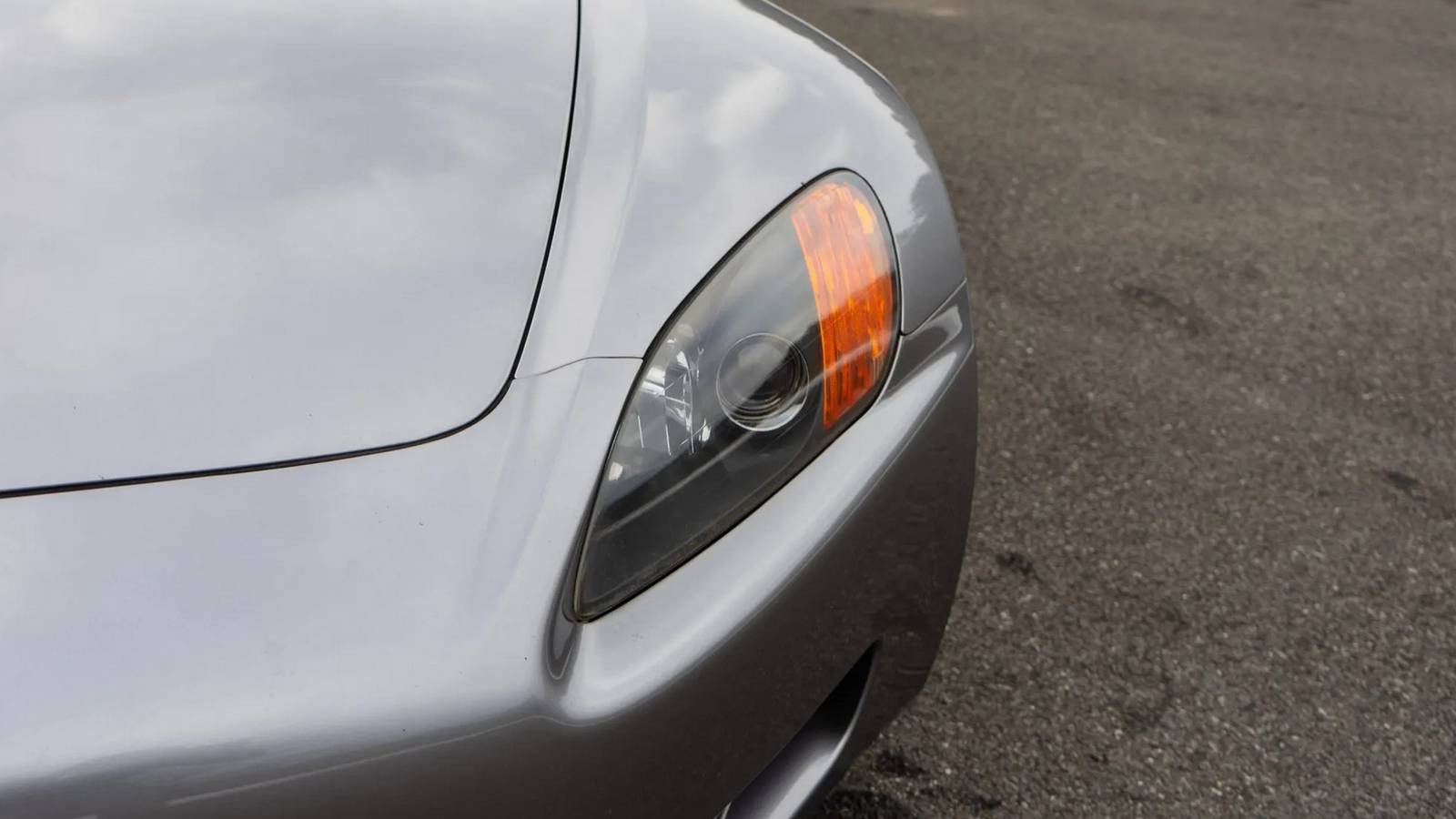
However, two decades later, the market has delivered a surprising verdict. The Japanese underdog—the Honda S2000 —has not only survived the era of German dominance but has significantly outperformed its rivals in terms of value retention and desirability.
The Era of German Dominance
In the late 1990s, the roadster market exploded. Each German manufacturer carved out a specific niche:
– BMW Z3: Focused on smooth inline-six performance.
– Mercedes-Benz SLK: Positioned as a luxury tourer.
– Audi TT: Offered turbocharged character.
– Porsche Boxster: Provided mid-engine dynamics.
At the time, the Porsche Boxster was the undisputed heavyweight of the segment. With an original MSRP of approximately $45,000 (equivalent to roughly $87,000 today), it was a high-barrier entry for enthusiasts. Buyers assumed the Porsche badge acted as a guarantee of long-term value. That assumption has since been proven wrong.
The Fall of the German Roadster
The decline of the early Porsche Boxster (the 986 generation) serves as a cautionary tale in automotive investing. While the brand carries immense weight, the 986 was plagued by a significant engineering flaw: IMS bearing failure. This mechanical Achilles’ heel turned many early Boxsters into high-risk ownership propositions.
Furthermore, while the Boxster was prestigious, many enthusiasts found its performance uninspiring compared to the raw engagement of its competitors. As these cars aged, their market value struggled to keep pace with the premium they once commanded.
The Honda S2000: A Masterclass in Engineering Purity
While German manufacturers focused on prestige and luxury, Honda engineers focused on a singular goal: driving purity. The S2000 was not designed to be a status symbol; it was designed to be a tool for enthusiasts.
This philosophy resulted in several key advantages that the collector market now rewards:
1. The Legendary F20C Engine
The heart of the S2000 is its the F20C inline-four engine. At its debut, it was a marvel of engineering,, featuring a 9,000 rpm redline and producing 240 horsepower. With 123.5 horsepower per liter, it rivaled the output density of exotic Ferraris. For over a decade, it held the record for the highest power output per liter of any naturally aspirated engine—a feat of efficiency that remains legendary.
2. Precision Handling
Honda achieved a near-perfect 50/50 weight distribution through a front-mid engine layout. Combined with double-wishbone suspension at both ends and a Torsen limited-slip differential, the chassis provides a level of responsiveness that many modern sports cars struggle to replicate.
3. Reliability and Low Maintenance
Unlike its German counterparts, the S2000 is famously robust. According to RepairPal, the S2000 maintains high reliability ratings with significantly lower annual repair costs than the Porsche Boxster. In the collector world, reliability equals usability, making the car a much more attractive long-term hold.
The Numbers: Value Retention Comparison
The shift in market sentiment is clearly visible in current valuations. While German roadsters have depreciated or stagnated, the S2000 has seen a steady climb.
| Vehicle (Approx. Year 2000) | Estimated Value (Good Condition) |
|---|---|
| Porsche Boxster | ~$12,500 |
| Honda S2000 | ~$26,300 |
The gap widens even further for “concours” (mint) condition models. A top-tier S2000 can command over $51,000, while the rare S2000 CR variant has soared to an astonishing $108,000. Data shows that S2000 values have increased by roughly 32% over the last five years, driven by a growing community of young enthusiasts who value its mechanical honesty.
The S2000 proves that in the collector market, engineering integrity and driving engagement often outweigh brand prestige.
Conclusion
The Honda S2000’s ascent demonstrates that true value is found in purpose-built engineering rather than marketing pedigree. By prioritizing a high-revving engine and a balanced chassis over luxury trimmings, Honda created a timeless driver’s tool that has successfully outpaced its more expensive German rivals.