The global automotive landscape is undergoing a seismic shift, and traditional industry giants are finding themselves on the defensive. A recent visit to Shanghai by Honda President Toshihiro Mibe has highlighted a growing sense of urgency—and even fear—among legacy manufacturers as they struggle to compete with the sheer velocity of the Chinese automotive ecosystem.
Honda’s Declining Grip on the Chinese Market
Honda is currently facing a perfect storm of declining sales and strategic setbacks. In China, the company’s market presence has plummeted; sales have dropped from a peak of 1.62 million units in 2020 to a projected 640,000 in 2025.
This decline has created a dangerous efficiency gap. Honda is currently utilizing only about half of its manufacturing capacity in the region. In the automotive industry, a utilization rate of 70–80% is generally required to reach profitability. Operating at 50% means the company is struggling to cover its fixed costs, leading to significant financial pressure.
The struggle is not limited to internal combustion engines. Honda has faced a difficult transition to electric vehicles (EVs), recently canceling several key projects, including:
– The 0 SUV and 0 Sedan models.
– The revival of the Acura RSX.
– The Afeela EV partnership with Sony.
These cancellations signal a broader industry challenge: the difficulty of building a profitable business model for EVs while competing against more agile, tech-centric rivals.
The Phenomenon of “China Speed”
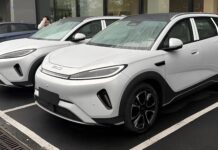
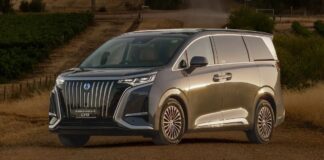
The core of the problem lies in what industry insiders call “China Speed.” While traditional legacy brands often require four to five years to engineer and bring a new model to market, Chinese manufacturers and their suppliers can often complete the entire cycle in two years or less.
During a recent visit to a Shanghai supplier factory, President Mibe reportedly remarked, “We have no chance against this,” noting the incredible efficiency and rapid development cycles of domestic Chinese firms. This isn’t just about speed; it is about a highly integrated supply chain that can produce vehicles at a cost and pace that traditional Western and Japanese automakers find nearly impossible to match.
A Growing Sense of Crisis Across the Industry
Honda is not an isolated case. A wave of alarm is spreading through the leadership of the world’s most established car companies:
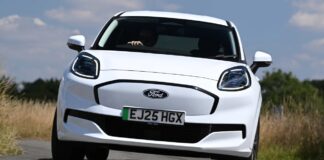
- Ford: CEO Jim Farley has warned that China’s massive production capacity is sufficient to serve the entire North American market, potentially putting all foreign competitors out of business.
- Toyota: Even the world’s largest automaker is feeling the pressure. Former CEO Koji Sato recently issued a blunt warning to suppliers: “Unless things change, we will not survive.”
The threat is already manifesting in international markets. In Europe, Chinese brands are beginning to carve out significant territory. Data from the European Automobile Manufacturers’ Association (ACEA) shows that BYD and SAIC are already capturing market shares that far outpace Honda’s current performance in the region.
Honda’s Strategic Pivot
In an attempt to regain its footing, Honda is restructuring its approach to research and development. The company is:
1. Restoring an independent R&D division by relocating thousands of engineers to a new, autonomous subsidiary.
2. Decentralizing decision-making to allow for greater creative freedom, moving away from the highly centralized control that has characterized the last six years.
The goal is to inject more agility into the development process, mimicking the rapid iteration seen in China. However, whether this structural change can bridge the massive gap in production speed and cost-efficiency remains to be seen.
Conclusion: The rapid rise of Chinese automotive manufacturing has created a structural crisis for legacy automakers. To survive, traditional giants must find a way to match the unprecedented speed and cost-efficiency of the Chinese model, or risk being sidelined in the global transition to electric and high-tech mobility.