In an era where high-performance vehicles are increasingly defined by hybrid assistance, digital interfaces, and luxury amenities, the McLaren Senna stands as a defiant outlier. While many modern supercars attempt to balance track capability with daily usability, McLaren took a different path with the Senna: they prioritized singular, uncompromising performance above all else.
The result is a machine that remains a benchmark for the industry, offering a level of “directness” and “responsiveness” that few contemporary rivals can replicate.
A “Track-First” Philosophy
The defining characteristic of the Senna is its refusal to compromise. Most manufacturers design supercars to be “all-rounders,” but the Senna was engineered with one goal: dominating the racetrack.
- Minimalist Interior: Eschewing the leather-wrapped luxury found in typical high-end supercars, the Senna’s cabin is a functional space composed of carbon fiber and Alcantara. It is designed to house racing gear and helmets rather than creature comforts.
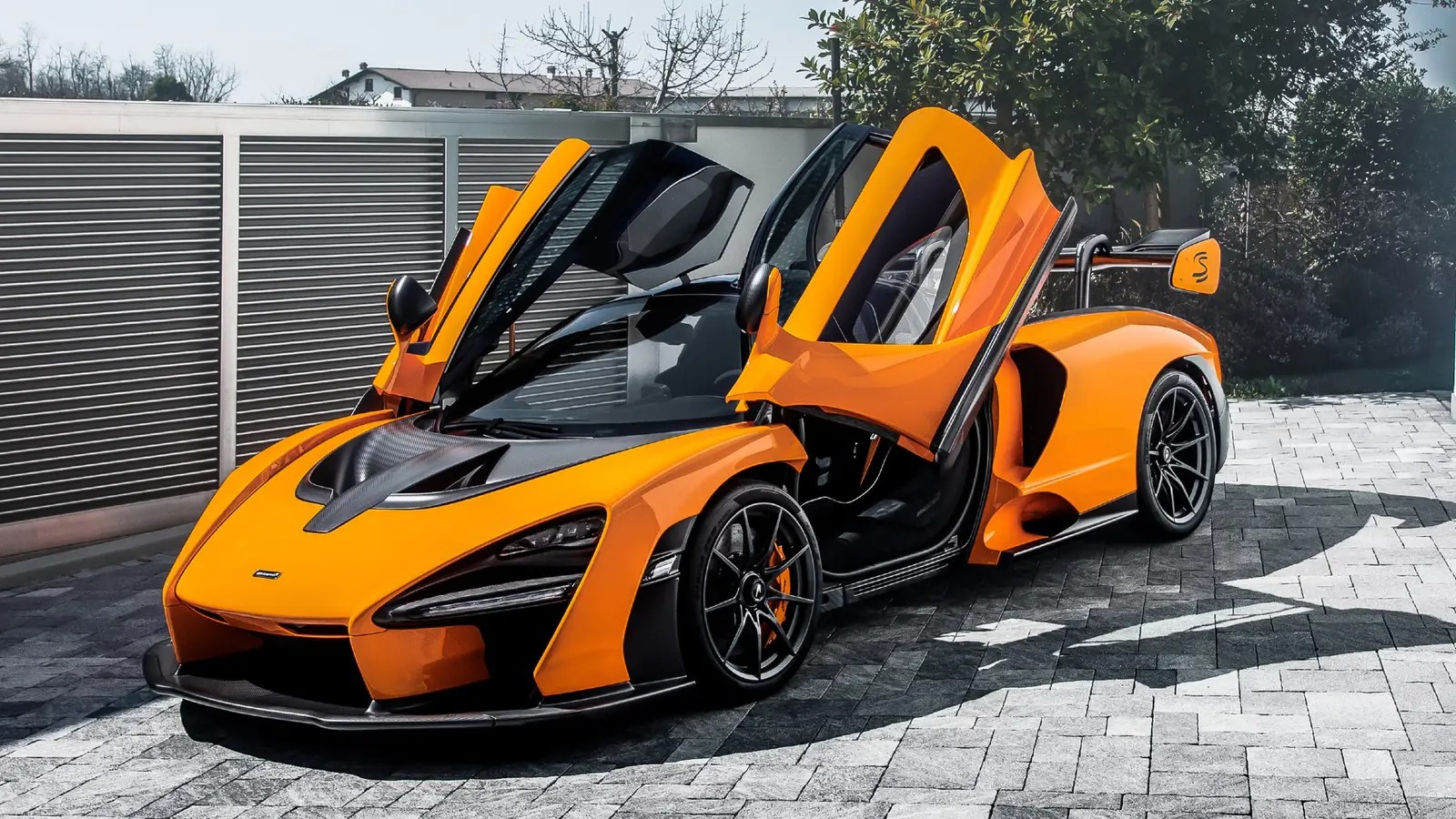
- Purposeful Design: Every vent, wing, and surface is dictated by aerodynamics rather than aesthetics. This “form follows function” approach results in a polarizing visual identity that prioritizes speed and cooling over traditional beauty.
- Road Legality vs. Track Focus: While the standard Senna is street-legal, it is far from a grand tourer. The even more extreme Senna GTR is a dedicated track machine, stripped of all road-going requirements to maximize performance.
Aerodynamic Dominance
The Senna’s ability to corner at high speeds is driven by massive aerodynamic forces. At 155 MPH, the standard model generates 1,764 pounds of downforce, a figure that pushes it into the realm of professional racing machinery.
The Senna GTR takes this further. By utilizing a massive front splitter and a larger rear wing, the GTR increases downforce to 2,200 pounds. Unlike static wings found on lesser performance cars, the Senna’s aerodynamic components are active; they constantly adjust to balance cooling, downforce, and speed, with the rear wing also functioning as an airbrake to assist in high-speed deceleration.
The Power of Lightweight Engineering
In the world of performance, weight is the enemy. McLaren addressed this through the Monocage III, a carbon fiber chassis that makes the Senna one of the lightest McLarens since the legendary F1.
- Weight Efficiency: The standard Senna weighs just 2,641 pounds, while the GTR is even lighter at 2,619 pounds.
- Power-to-Weight Ratio: Rather than chasing raw horsepower numbers, McLaren focused on efficiency. The Senna’s 4.0-liter twin-turbocharged V8 produces 833 horsepower, but it is the car’s low mass that creates its true edge. Its power-to-weight ratio (3.66 lb/hp) is superior to even the McLaren P1 GTR, allowing it to outperform much “heavier” muscle cars and even some more powerful hybrids.
Pure Mechanical Connection
While the industry moves toward complex hybrid powertrains, the Senna relies on a pure, mechanical setup: a V8 engine mated to a seven-speed dual-clutch transmission. This simplicity provides a raw, unfiltered driving experience that many enthusiasts feel is being lost in newer, more computerized models.
To manage this power, the car utilizes advanced carbon-ceramic brakes designed for high thermal conductivity. This ensures that even under the punishing heat of repeated track sessions, the brakes do not “fade,” providing the driver with consistent, predictable stopping power.
An Appreciating Icon
The Senna’s rarity and uncompromising nature have turned it into a highly sought-after collector’s item.
– Original Price: ~$959,000
– Current Average Price: ~$1,266,267
With only 500 standard units and 75 GTR versions ever produced, the Senna is transitioning from a mere supercar into a blue-chip automotive investment.
“The Senna is less a car and more a philosophy on wheels, proving what is possible when all bets are off.”
Conclusion
The McLaren Senna remains a singular achievement because it refuses to meet the consumer in the middle. By sacrificing comfort for extreme aerodynamics, lightweight engineering, and a pure mechanical connection, it offers an unfiltered driving experience that modern, more “civilized” supercars simply cannot replicate.