Mercedes-Benz is reportedly preparing a significant technical evolution for its SL roadster lineup. Driven by tightening global emissions regulations, the automaker is planning to restructure its engine offerings, resulting in a more powerful entry-level model and enhanced performance for its flagship variants.
The End of the Four-Cylinder SL
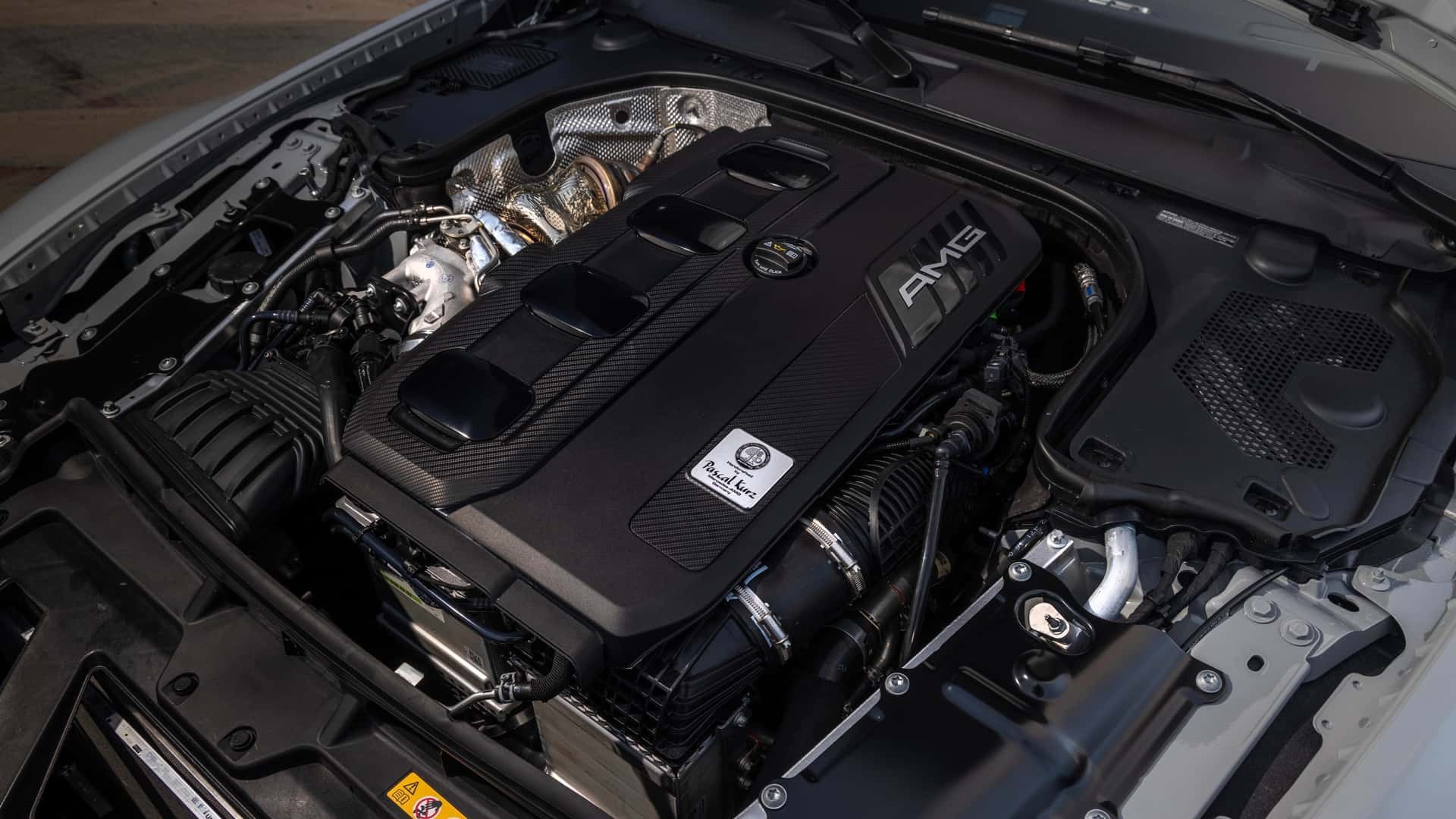
The most notable change involves the entry-level model. Currently, the SL43 is powered by the M139 four-cylinder engine. However, reports from Auto Motor und Sport indicate that this engine will be phased out because it struggles to comply with the upcoming Euro 7 emissions standards.
In its place, Mercedes is expected to introduce the AMG SL53 during the model’s facelift in 2027. This new variant will transition from a four-cylinder to a more sophisticated 3.0-liter M256 Evo inline-six mild-hybrid engine.
Key upgrades for the new SL53 include:
– Increased Power: An estimated 449 horsepower, supplemented by a 23-hp integrated starter-generator.
– Improved Traction: Unlike the current rear-wheel-drive SL43, the new SL53 will reportedly come standard with all-wheel drive.
This shift is significant because it moves the “entry point” of the AMG SL range toward a more traditional, smoother six-cylinder experience, potentially raising the baseline performance of the entire series.
Re-engineering the V8: More Power via New Architecture
The overhaul extends to the high-performance V8 models, the SL55 and SL63. To meet emissions targets while simultaneously boosting output, Mercedes is reportedly changing the fundamental architecture of the 4.0-liter twin-turbocharged V8.
The engine will transition from a cross-plane crank to a flat-plane crank. In engineering terms, this change typically allows for higher RPMs and better throttle response, which is a highly sought-after trait in performance vehicles.
Projected Performance Gains:
- SL55: Expected to rise from 469 hp to 537 hp.
- SL63: Expected to see a massive jump from 577 hp to 650 hp.
While the report does not provide specifics for the SL63 S E Performance plug-in hybrid, the refinement of the base V8 suggests that its total system output—currently 805 hp—could see a substantial increase as well.
Why This Matters: Regulation as a Catalyst for Performance
Typically, stricter emissions regulations like Euro 7 are viewed as a hurdle that forces manufacturers to downsize engines or add heavy hybridization, often at the expense of driving dynamics. However, the strategy Mercedes appears to be adopting is different.
By replacing a small four-cylinder with a larger, more efficient six-cylinder and re-engineering the V8 architecture, the automaker is turning a regulatory necessity into an opportunity to upgrade the entire lineup’s prestige and power.
Conclusion
Mercedes-AMG is leveraging new emissions mandates to refine the SL’s DNA, trading a four-cylinder entry model for a more robust six-cylinder version and significantly boosting the horsepower of its V8 flagships.