For many motorcyclists, the “perfect” bike is a contradiction. Speed enthusiasts crave the aggressive ergonomics of a racetrack machine, while long-distance travelers prioritize comfort and luggage capacity. Traditionally, riders had to choose one or the other. However, a growing segment of riders—those who need a machine capable of commuting to work, running errands, and embarking on cross-country adventures—is driving a demand for a new breed of motorcycle: the sport tourer.
Yamaha has entered this arena with the Tracer 9, a machine that attempts to bridge the gap between high-performance naked bikes and practical long-distance tourers.
Engineering Rooted in Racing Pedigree
Yamaha’s approach to the Tracer 9 is not a departure from its history, but an evolution of it. The company has long used Grand Prix and MotoGP racing as a high-stress laboratory to refine its technology. This “trickle-down” engineering is most evident in the CP3 engine platform, which features specialized components like forged pistons and ceramic-lined bores to reduce friction and improve heat dissipation.
By applying these racing-derived advancements to a touring platform, Yamaha aims to provide the durability required for long-distance travel without sacrificing the excitement expected from a performance brand.
A Unique Hybrid Design
The Tracer 9 does not fit neatly into a single category, which makes it a distinctive, if somewhat unconventional, choice. It occupies a middle ground between three different styles:
– Adventure (ADV) Stance: An upright riding position that offers high visibility and comfort.
– Naked Bike Styling: A partially exposed engine and aggressive lines.
– Touring Ergonomics: Features designed to mitigate rider fatigue over long distances.
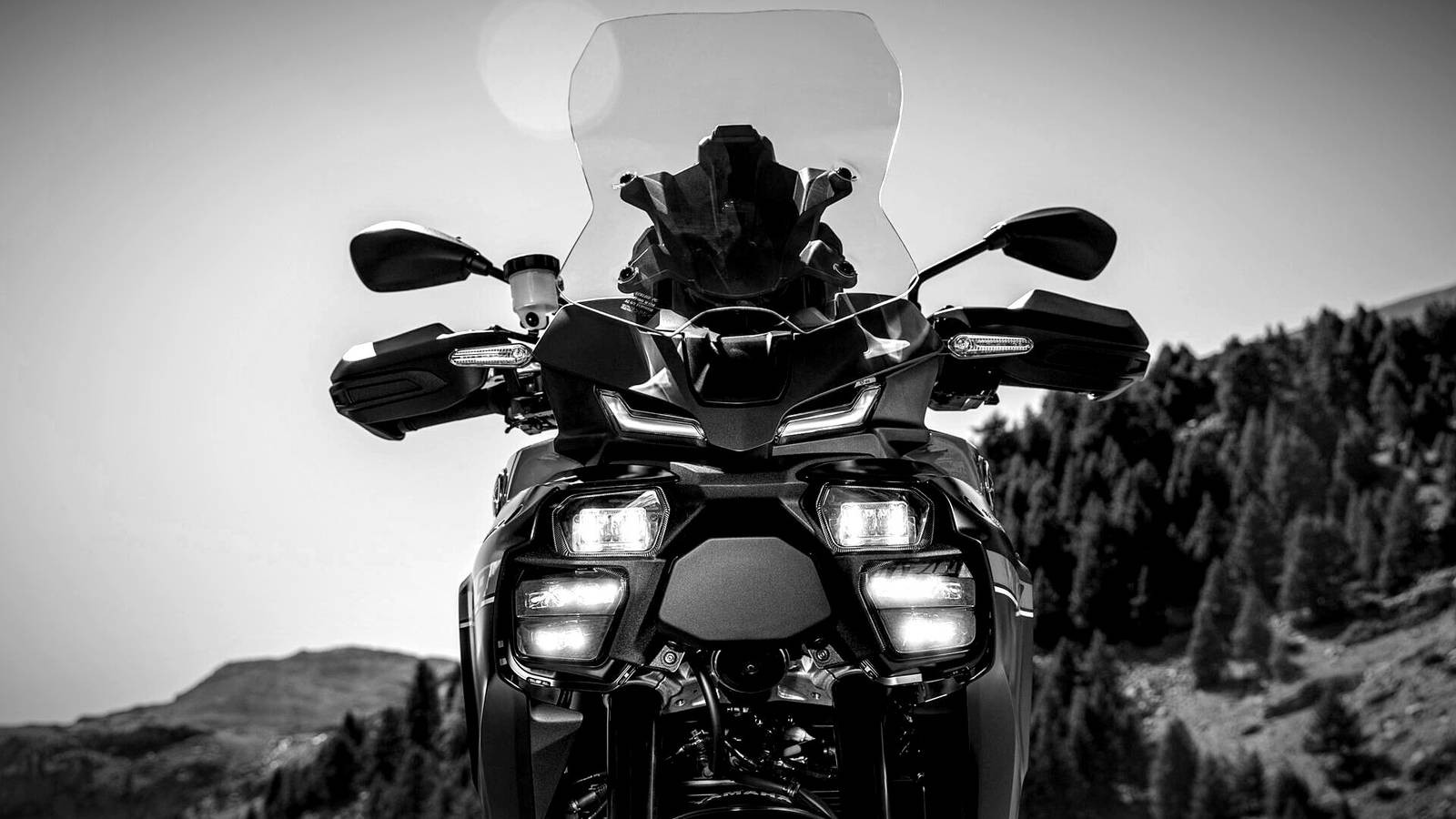
While the design is functional, it is not without its quirks. The low-set headlight configuration has been noted for its resemblance to maxi-scooters, and while the integrated side cases are practical—each capable of holding a full-face helmet—they do not perfectly align with the bike’s sleek aesthetic.
Performance and Technical Specifications
At the core of the Tracer 9 is an 890 cc liquid-cooled inline-triple engine. This powerplant is engineered for versatility, delivering:
– 117 horsepower
– 68 pound-feet of torque
The engine is tuned for a broad powerband, meaning it can provide effortless torque for high-gear overtaking or smooth, relaxed power for highway cruising. This performance is managed by a sophisticated suite of electronics, including a six-axis IMU (Inertial Measurement Unit) that enables five distinct riding modes and lean-sensitive safety systems.
Chassis and Handling
To manage this power, Yamaha utilizes its signature Delta-box frame. While originally designed for the rigidity required in sport riding, it has been tuned here to provide a more compliant, comfortable experience for touring.
The suspension setup includes:
– KYB 41 mm inverted front forks (fully adjustable)
– Rear monoshock (fully adjustable)
– High travel numbers to absorb road imperfections
This hardware, paired with a dual-disc braking system, ensures that the bike remains stable and predictable whether navigating twisty mountain roads or cruising on the interstate.
Technology and Touring Practicality
While certain high-end features found in the “GT+” variant—such as semi-active suspension and radar-assisted cruise control—may be absent in certain markets, the standard Tracer 9 remains a tech-heavy machine. Key features include:
– A 7-inch full-color TFT display for easy navigation and data reading.
– All-LED lighting with cornering functions that adjust based on lean angle.
– Advanced Rider Aids: Lean-sensitive traction control, ABS, and adjustable slide/lift control systems.
For the traveler, comfort is paramount. The Tracer 9 features a plush, spacious seat and an extended sub-frame to accommodate a passenger. An adjustable windscreen and cruise control work together to reduce wind blast and physical fatigue, making it a viable option for multi-day journeys.
The Yamaha Tracer 9 stands out as a highly capable “all-rounder,” successfully blending the raw performance of a naked sportbike with the practical ergonomics and technological sophistication required for serious touring.