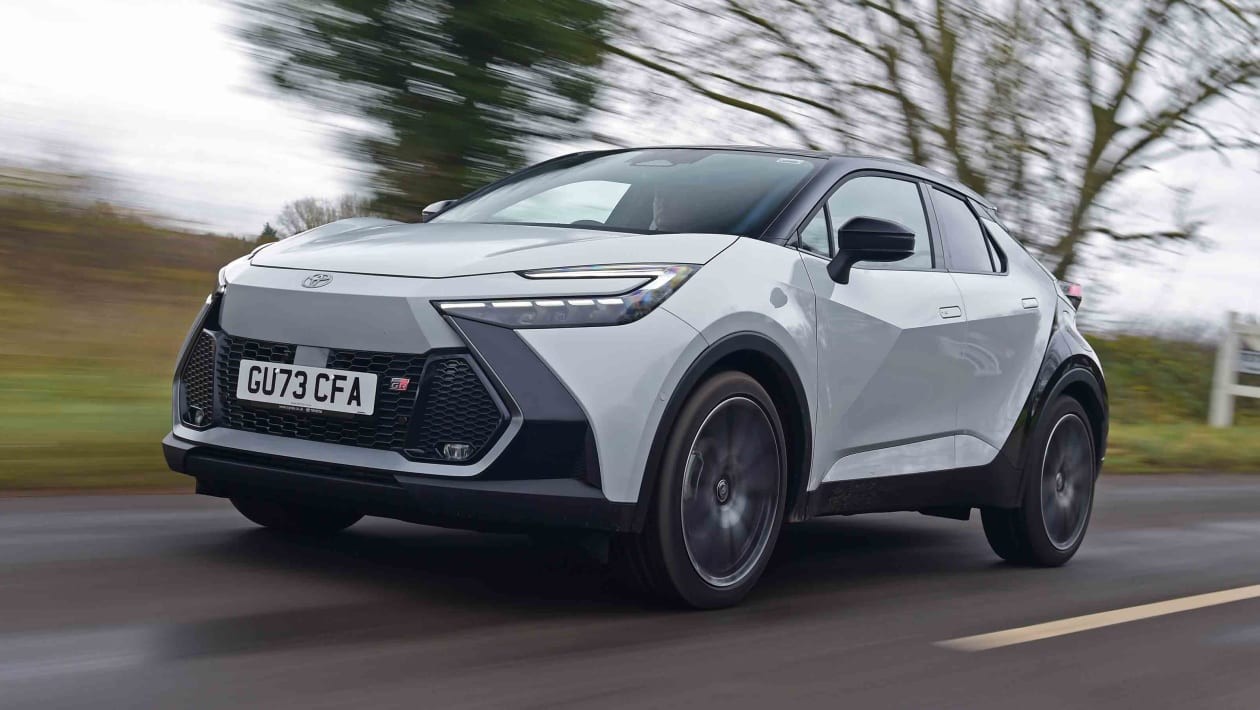
The second-generation Toyota C-HR (Coupe High Rider) continues to prioritize two things: striking, unconventional design and highly efficient hybrid technology. While the first generation established the model as a design standout, the new Mk2 version doubles down on that dramatic aesthetic while refining the driving experience through the shared TNGA platform used in the Toyota Corolla.
However, while the C-HR excels in urban efficiency and visual flair, it faces stiff competition from more practical rivals like the Kia Sportage and more economical options like the Hyundai Kona.
🚗 Performance and Driving Dynamics
The C-HR is built for ease of use rather than raw sporting thrills. It is most at home in city environments, where its hybrid powertrain allows for quiet, smooth, and electric-heavy driving.
- The Hybrid Lineup: The 1.8-litre hybrid (138bhp) is the efficiency leader, while the 2.0-litre hybrid (194bhp) offers more effortless acceleration.
- The Plug-in Option: The 2.0 Plug-in Hybrid (PHEV) is the fastest, delivering 220bhp, though it carries an extra 200kg of weight that is noticeable on higher-speed roads.
- Transmission Note: All models use a CVT automatic transmission. While smooth, this can lead to a characteristic “engine drone” during heavy acceleration—a common trait in hybrids that may feel less engaging than a manual petrol engine.
Driving Verdict: It is one of the better small SUVs to drive due to its tight body control and responsive steering, but it lacks the “fun factor” of a more traditional petrol-driven car like the Ford Puma.
🏙️ Urban vs. Long-Distance Capability
City Driving:
The C-HR is a standout performer in urban settings. The steering is light, making parking and maneuvering through traffic effortless. With smaller 17 or 18-inch wheels, the ride is supple enough to absorb potholes and speed bumps easily.
Motorway & Country Roads:
The car remains stable and composed on winding roads thanks to its sophisticated chassis. On motorways, it is calm and quiet, provided you haven’t opted for the larger 20-inch wheels, which tend to increase road noise.
A Note on Technology:
Modern safety regulations mean the C-HR is packed with driver assistance tech. While helpful, users may find the frequent warning chimes (“bongs”) intrusive. Unlike some competitors, resetting these alerts can be a cumbersome process involving multiple menu steps.
💰 Efficiency, Running Costs, and Value
Toyota’s hybrid expertise shines in the fuel economy figures. Even the thirstiest 2.0-litre model outperforms many petrol-only rivals.
Efficiency Breakdown
- 1.8 Hybrid: Highly economical, averaging around 60.1mpg.
- 2.0 Hybrid: Offers more punch with an average of 57.6mpg.
- 2.0 PHEV: Offers significant electric-only range (up to 41 miles) if charged regularly, making it an excellent choice for company car drivers looking to minimize Benefit-in-Kind (BiK) tax.
The “Hidden” Costs
Prospective buyers should be aware of a few financial nuances:
1. Luxury Car Tax: If the total price of your C-HR exceeds £40,000, you may be hit with a surcharge on road tax from the second year onwards.
2. Insurance: At insurance group 20–27, it is generally more expensive to insure than rivals like the Hyundai Kona (Group 16) or VW T-Roc (Group 14).
3. Depreciation: While Toyota holds value well, the C-HR typically retains between 41% and 49% of its value after three years—slightly behind the Hyundai Kona.
✨ Interior, Design, and Technology
Toyota has resisted the urge to “play it safe” with the C-HR’s styling. The exterior remains aggressive and distinctive, often featuring striking two-tone paint schemes.
Inside the Cabin:
The interior feels premium, characterized by quality plastics and thick padding. The tech suite is modern, featuring:
– A fully digital instrument panel.
– A large 12.3-inch infotainment touchscreen (available on higher trims).
– Wireless smartphone integration.
The Trade-off:
While the tech is impressive, the shift toward touchscreen-heavy interfaces means there are fewer physical buttons for climate and media controls. This can be more distracting than the tactile layouts found in some competitors. Additionally, visibility is somewhat hampered by the dramatic, sloping roofline and thick rear pillars.
🏁 Summary
The Toyota C-HR is a sophisticated, high-tech choice for drivers who value distinctive styling and exceptional hybrid efficiency above all else. While it may lack the sheer space of a Kia Sportage or the low running costs of a Hyundai Kona, its refined driving dynamics and urban prowess make it a premier small SUV for the modern commuter.