Despite a recent change in leadership, Mitsubishi Australia has confirmed it will not pivot exclusively toward electric vehicles (EVs) to meet tightening government regulations. Instead, the brand intends to maintain a diverse lineup that includes internal combustion engines (ICE), hybrids (HEV), plug-in hybrids (PHEV), and battery electric vehicles (BEV).
A Leadership Transition with a Consistent Vision
Following the departure of former CEO Shaun Westcott in September 2025, Shunichi Kihara assumed the role of CEO on January 5, 2026. While leadership changes often signal a shift in corporate direction, Mitsubishi Australia’s strategy remains steady.
Bruce Hampel, General Manager of Product Strategy, clarified that the company is navigating a delicate balance: meeting the federal government’s environmental mandates while catering to the specific demands of Australian drivers.
“We strongly believe that we’ll need to support with a wide variety of powertrains… you’ll see more of us as we expand into EVs – we’ll have our first EV at the end of the year.”
Navigating the New Vehicle Efficiency Standard (NVES)
The central tension for Mitsubishi—and much of the Australian automotive industry—is the New Vehicle Efficiency Standard (NVES). Introduced in 2025, this regulation functions as a carbon trading scheme:
– Penalties are imposed on manufacturers whose vehicle fleets exceed specific CO2 emission thresholds.
– Credits are awarded to brands that sell vehicles significantly below those limits.
– Targets become progressively stricter every year through 2029.
The transition has not been without criticism. Former CEO Shaun Westcott previously argued that the government’s timeline was overly ambitious, noting a significant “gap between ambition and reality.” He specifically highlighted that penalizing manufacturers does not automatically create a market if the necessary charging infrastructure is not in place to support consumer confidence.
The Roadmap: What to Expect from Mitsubishi
Mitsubishi is moving toward electrification, but through a gradual, multi-faceted approach rather than an overnight transition.
1. Upcoming Electric Models
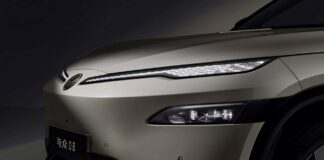
The brand has confirmed that its first fully electric SUV will arrive in Australia by the end of 2025. Industry speculation suggests this model may be based on the Foxtron Model B (Bria), following a partnership between Mitsubishi and Foxconn.
2. Strengthening Existing Favorites
Mitsubishi is focusing heavily on its current market leaders to bridge the gap toward full electrification:
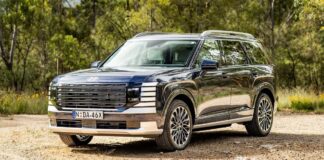
– The Outlander: As a top-selling mid-size SUV, the updated Outlander (released in March 2026) features an enhanced PHEV system with an electric range of up to 84km.
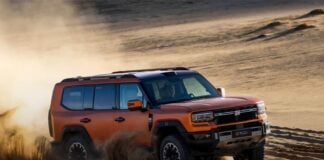
– The Triton Ute: Mitsubishi is currently developing a hybrid version of its popular Triton utility vehicle, which is expected to hit global showrooms by 2028.
Summary
Mitsubishi Australia is adopting a “middle ground” strategy, utilizing hybrids and plug-in hybrids to satisfy emissions regulations while waiting for the national charging infrastructure to catch up with the demand for full EVs.