


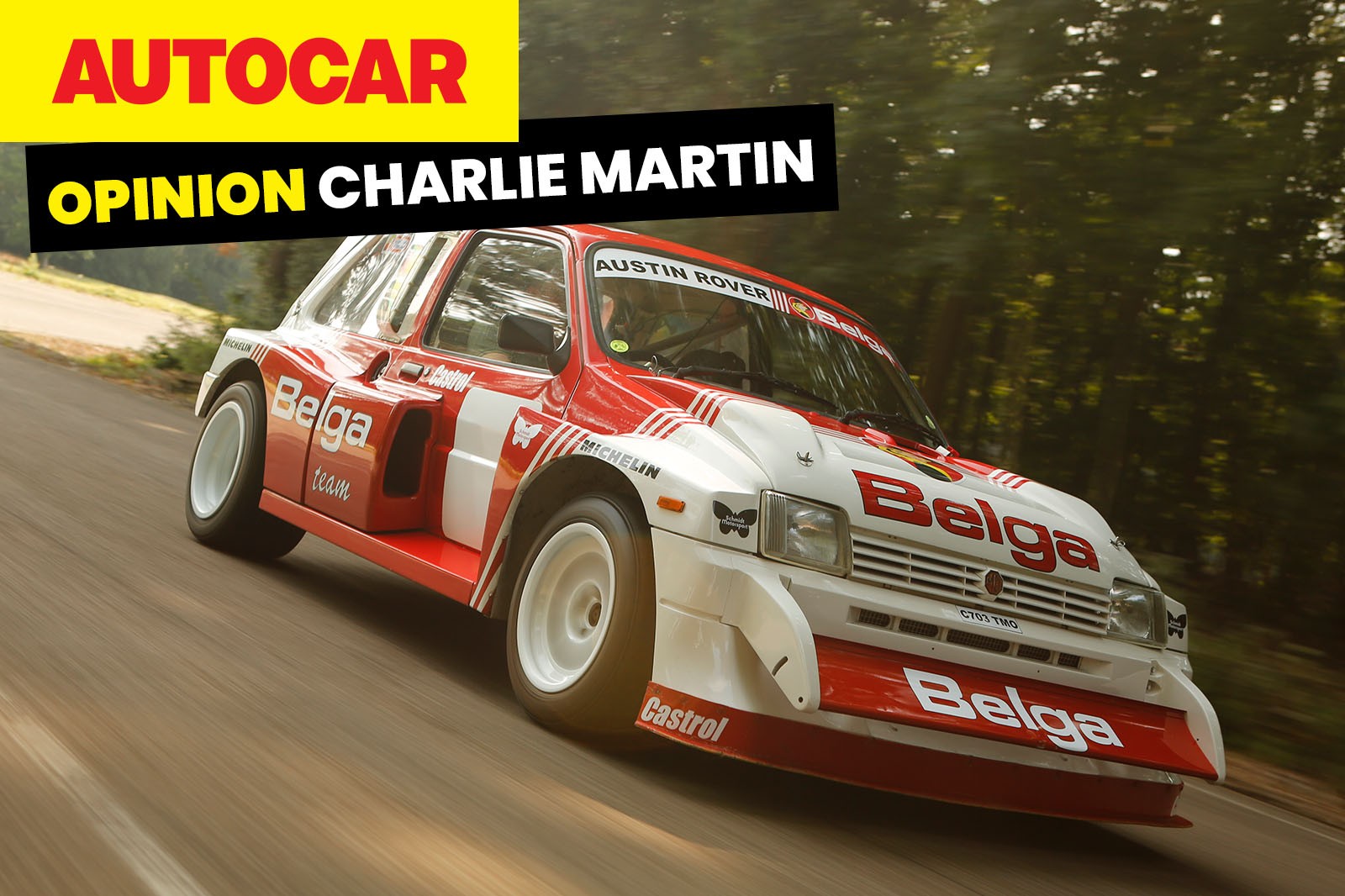
While many rally enthusiasts point to the sheer dominance of certain Group B monsters to define the era, there is a different kind of greatness found in the Austin Rover Metro 6R4. It may not have been the most successful machine on the gravel, but it remains one of the most distinctive and mechanically fascinating cars ever built.
The Challenge of the Brief
The development of the 6R4 was born from a specific marketing requirement: the Group B racer had to be based on the humble Austin Metro. This created an immediate engineering paradox.
The Metro’s compact dimensions provided a significant advantage in terms of agility and a short wheelbase, which is crucial for technical rally stages. However, that same small footprint made it incredibly difficult to package a high-performance drivetrain. To compete with the giants of the era, engineers had to find a way to squeeze massive power into a tiny chassis without ruining its balance.
Defying the Turbo Trend
During the mid-1980s, the rallying world was obsessed with turbocharging. Competitors like Audi, Lancia, and Mitsubishi were all leveraging turbo technology to achieve massive power outputs. It would have been the logical, “sensible” path for Austin Rover Motorsport to follow: take a small engine, add a large turbo, and integrate a four-wheel-drive system.
Instead, the engineers took a radical, contrarian approach. Rather than fighting the limitations of a small, turbocharged engine, they decided to build something entirely different.
The V6 Masterpiece
Enlisting former Cosworth maestro David Wood, the team developed an all-new, naturally aspirated V6 engine. This decision was driven by two primary engineering concerns:
- Throttle Response: In the heat of a rally stage, the delay caused by waiting for a turbo to “spool up” (turbo lag) could be the difference between winning and crashing. A naturally aspirated engine offered instant, predictable power.
- Weight and Heat Management: Turbocharged systems require heavy intercoolers, complex plumbing, and cooling systems to manage extreme heat. Adding this weight to a small car like the Metro would have compromised its handling and center of gravity.
The result was a lightweight, high-revving aluminum masterpiece capable of screaming to 9,000 rpm. While it could produce upwards of 400bhp, its true legacy lies in its sensory impact—specifically, the unmistakable, visceral sound of a high-revving V6 echoing through a forest stage.
Why It Matters
The Metro 6R4 stands as a testament to engineering bravery. In an era where most manufacturers were following a singular technological trend, Austin Rover opted for a bespoke, high-revving solution that prioritized balance and response over raw, turbocharged brute force.
The 6R4 proves that sometimes, the most memorable way to compete is not by following the crowd, but by solving a problem through pure, uncompromising engineering.
Ultimately, the Metro 6R4 remains a cult icon because it represents a unique moment in motorsport history where mechanical soul and unconventional design outweighed the sheer dominance of turbocharging.


