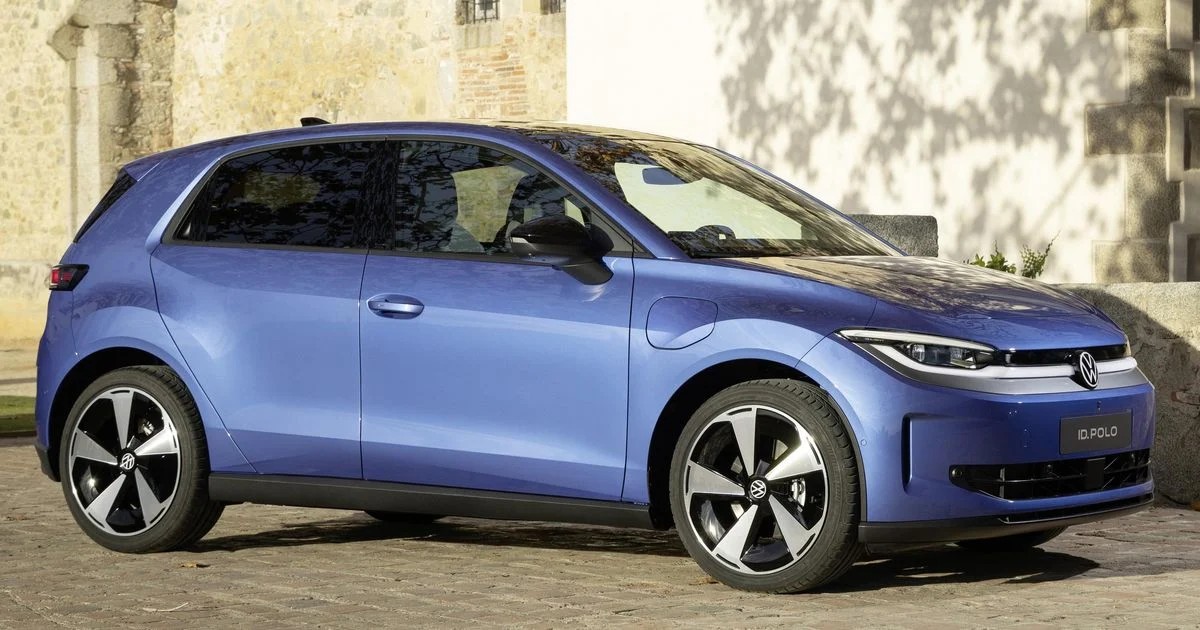
Volkswagen has officially pulled the curtain back on the ID. Polo, its new dedicated electric city car. Positioned as a key player in the increasingly competitive compact EV segment, the ID. Polo is set to launch alongside the traditional petrol-powered Polo, though the two vehicles are fundamentally different in both engineering and design.
A New Design Philosophy
The ID. Polo marks a turning point in Volkswagen’s design direction. It is the first model to implement the “Pure Positive” design language introduced by design chief Andreas Mindt. This approach emphasizes a “friendly” aesthetic, characterized by softer lines and a distinctive C-pillar that pays homage to the iconic first-generation Golf.
Crucially, Volkswagen has listened to consumer feedback regarding its previous electric vehicle (EV) generations. Moving away from the overly minimalist, touch-only interfaces that drew criticism, the ID. Polo features physical switches for essential functions, including:
– Window controls
– Steering wheel buttons
– Audio and climate control
To elevate the cabin’s perceived quality, the interior utilizes extensive fabric textures on the dashboard and doors, blending modern tech with a “retro-digital” aesthetic through stylized dials and control interfaces.
Dimensions and Practicality
Despite being a city car, the ID. Polo offers superior interior packaging compared to its petrol counterpart, thanks to its dedicated electric architecture.
| Feature | ID. Polo (Electric) | Petrol Polo (Comparison) |
|---|---|---|
| Wheelbase | 2600mm | 2264mm (+36mm) |
| Width | 1816mm | 1751mm (+65mm) |
| Boot Space (Seats up) | 441L | 351L (+90L) |
| Boot Space (Seats down) | 1240L | 1090L (+115L) |
This increased footprint allows the electric model to offer significantly more cargo capacity, making it a more versatile option for urban drivers.
Performance and Battery Options
The ID. Polo is built on the MEB+ architecture, which supports vehicle-to-load (V2L) functionality—allowing the car to act as a mobile power bank by delivering up to 3.6kW to external devices.
Drivers can choose from three motor outputs and two distinct battery technologies:
- Standard Range (85kW & 99kW motors):
- Equipped with a 37kWh LFP (Lithium Iron Phosphate) battery.
- Offers a WLTP range of up to 329km.
- Supports DC fast charging up to 90kW.
- Long Range (155kW motor):
- Equipped with a 52kWh NMC (Nickel Manganese Cobalt) battery.
- Offers a WLTP range of up to 454km.
- Supports faster DC charging up to 130kW.
Note: A high-performance ID. Polo GTI is also expected, featuring a 166kW motor and the larger 52kWh battery pack.
Trim Levels and Pricing Strategy
Volkswagen is offering the ID. Polo in three distinct tiers to capture different segments of the market:
- Trend (Base): Focuses on essentials with LED headlights, a 13-inch infotainment screen, and 17-inch steel wheels.
- Life (Mid-range): Adds convenience features like adaptive cruise control, a reversing camera, wireless charging, and 17-inch alloys.
- Style (Premium): The luxury option, featuring 18-inch wheels, LED matrix headlights, ambient lighting, and premium “sport comfort” seats. High-end options include a Harman Kardon sound system and a panoramic glass roof.
The Price War
In a strategic move to capture market share, Volkswagen has priced the ID. Polo aggressively in Germany. Starting at €24,995, it successfully undercuts the entry-level Renault 5 E-Tech, which begins at approximately €28,000.
However, the “EV premium” remains evident: the electric model is roughly €4,860 more expensive than the base petrol Polo.
Market Context: This pricing strategy highlights the intensifying battle for dominance in the European compact EV market. By undercutting competitors like Renault, Volkswagen is attempting to lower the barrier to entry for electric mobility, even as it balances the higher production costs of battery technology.
Availability
Pre-sales have already commenced in Germany. Currently, only the mid-range Life trim (155kW/52kWh) is available for order at €33,795, with the remaining configurations expected to hit the market by mid-year.
Conclusion: The ID. Polo represents Volkswagen’s attempt to refine the EV experience by blending improved usability with competitive pricing. By addressing previous ergonomic shortcomings and undercutting key rivals, it positions itself as a serious contender in the crowded urban electric vehicle market.