Most EV reviews lie to you. Or at least, they omit the truth. They hand you a number—a battery size, a WLTP rating—and say: “Here. That is your freedom.”
It isn’t.
You drive an electric car. You hit the M25. You look at the dash. The numbers don’t add up anymore. It feels like magic, the way range disappears. But it isn’t magic. It is physics, weather, and human error.
Like how people don’t want specs for online gaming; they want to know if it actually plays well. [1] Drivers don’t care about the lab. They care about the journey home when it’s raining.
Speed is the enemy
City driving? You’re fine. Stop-start traffic helps you. Regenerative braking grabs every scrap of energy as you slam the brakes in London gridlock. You harvest power from your own impatience.
Hit the motorway? That efficiency dies.
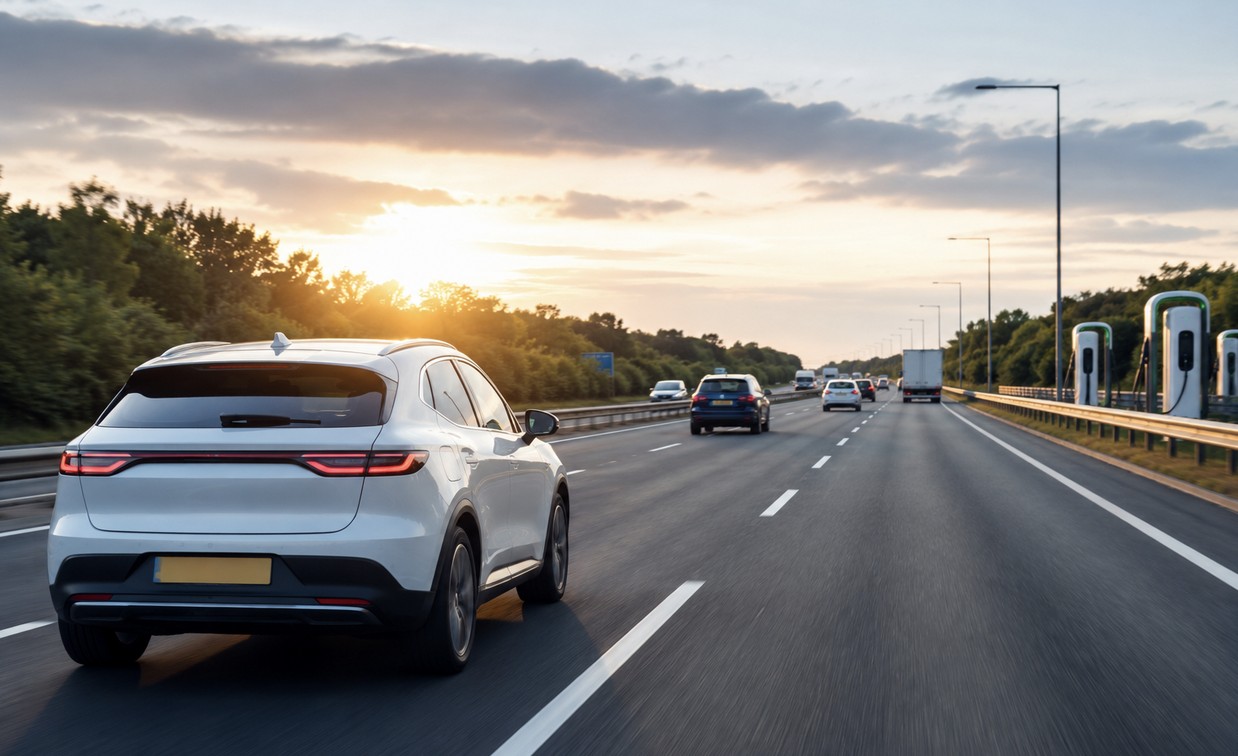
Air resistance grows with the square of speed. Go faster, fight the wind harder, drain the battery quicker. Unlike petrol cars, EVs bleed efficiency rapidly at highway speeds. One hour of 70mph cruising costs more in energy than two hours of crawling through town.
The test cycle is a fantasy. WLTP numbers are designed for consistency, not reality. They tell you how all models compare, but they tell you nothing about Tuesday night on the A14.
Weather bites back
Winter. Cold air. Dead battery.
Reviews barely mention it. But cold demands heat. Cabin heat. Heated seats. Windshield defrost. All electric loads. In winter, your heater fights the cold outside while your motor fights the wind.
Rain adds drag. Wind adds drag. A trip that takes three bars of energy in July might take five in December. The advertised range is an estimate. Treat it like a suggestion, not a guarantee.
Does the car break down? No. But your planning has to break open to make room for reality.
Drive slow, go far
Aggressive driving kills range. Hard acceleration. Sprinting to overtake a truck. These spikes in demand pull massive currents from the pack.
Two people, same car, same route. Driver A floors it. Driver B holds 65mph steady. Driver B gets home. Driver A might not.
It seems obvious, right? Yet many buyers look at battery capacity first. 100 kWh sounds better than 60 kWh. But driving 20 mph slower on a 600-mile trip might save you more range than buying the biggest battery available.
Speed isn’t everything. Efficiency is a habit, not just a hardware spec.
Real-world range is defined by behavior, not just hardware.
The charge stop isn’t just about speed
Charging hubs get busy. Fast chargers sit behind slow ones. Your car can accept 350 kW. The station offers 50. Or it’s occupied.
Range anxiety isn’t always about distance. It’s about infrastructure reliability. Queues. Broken units. Network outages.
The UK grid is improving. More service areas have rapid hubs now. Journeys are easier than they were in 2018. But they aren’t plug-and-go effortless yet. Planning still matters. You have to account for the wait.
Tiny details matter
Tyre pressure. Roof boxes. Heavy groceries in the boot.
Aerodynamic drag increases with every lump you attach to the car. Low tyre pressure creates rolling resistance. Eco mode limits throttle response.
Pre-condition your battery before leaving home. Keep it warm before the journey starts.
These small choices add up. One degree of attention here, two degrees there, and your range expands significantly.
Final thoughts
The advertised number is a starting point. Nothing more.
Real-world EV ownership isn’t about chasing specs. It is about adapting to conditions. Weather changes. Roads change. Drivers change.
Accepting the variable nature of the technology helps. Understanding how wind, speed, and habits eat range allows for smarter buying decisions. You don’t need a massive battery. You need awareness.
And that awareness never really ends. Every winter. Every storm. Every trip teaches something new.