The Peugeot e-408 presents a compelling case for buyers seeking a visually striking electric vehicle that doesn’t break the bank. As Peugeot’s first fully electric model to enter the mainstream market in this segment, it carries the weight of expectation. While it delivers a surprisingly engaging driving experience and a premium-feeling interior, its real-world range and charging speed lag behind key competitors.
A Bold Design with Practical Dimensions
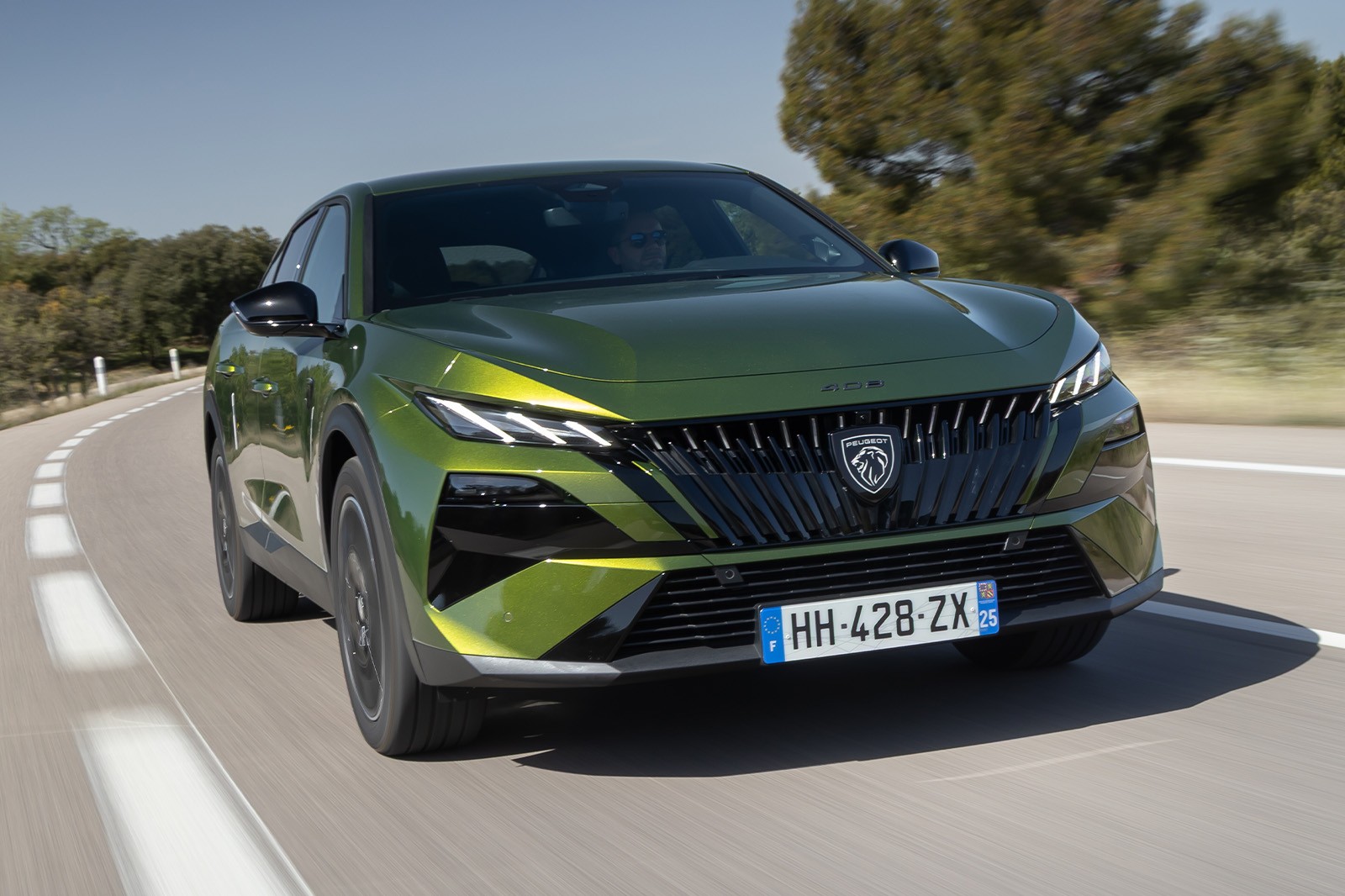
Visually, the e-408 is unmistakable. It inherits the sharp creases, pronounced wheel arches, and distinctive “fang” LED headlights from its internal combustion engine (ICE) sibling. Despite its aggressive stance, the car is surprisingly compact. It is shorter than the older Peugeot 508 SW estate and only marginally longer than a BMW 3 Series sedan, making it easier to maneuver in urban environments than its imposing silhouette suggests.
Underneath, the design prioritizes style over aerodynamic perfection, though the overall package remains cohesive. The vehicle sits on a traditional suspension setup—MacPherson struts at the front and a torsion beam at the rear—managed by passive springs and dampers. This choice keeps costs down but influences the ride character, as detailed below.
Interior Quality and Tech: Mostly Impressive
Step inside, and the e-408 feels like a significant step up in quality. The cabin is well-assembled, with solid switchgear and a design that balances modernity with usability.
- Infotainment: The main touchscreen is clear and responsive. Crucially, Peugeot has retained physical or tactile controls for most functions, avoiding the frustratingly deep menus found in some rivals. Temperature, heated seats, and steering wheel controls are managed via a row of touchpad toggles, offering quick access without distracting from the road.
- i-Cockpit: The signature small-diameter steering wheel and high-mounted digital instrument cluster remain. While the digital display is crisp and customizable, drivers with taller frames may need to adjust their seating position to see over the wheel comfortably.
- Driver Monitoring: A new camera system tracks driver attention. In testing, it proved less intrusive and annoying than similar systems in competitor vehicles, and it can be easily disabled via a toggle if preferred.
Driving Dynamics: Engaging, But Weight Tells
The e-408’s most surprising attribute is its handling. For a family-oriented SUV-crossover, it offers a polished, engaging drive. The steering is direct and well-weighted, complementing a firm ride that keeps the car composed through corners.
- Performance: The 210bhp electric motor (253 lb-ft of torque) propels the car from 0-62mph in 7.5 seconds. It is the fastest variant of the 408 lineup. Acceleration is smooth and serene, with excellent isolation from road noise.
- Driving Modes:
- Sport Mode: Unlocks full power and sharpens throttle response. Great for open roads, but can feel jerky and overly eager in low-speed maneuvers.
- Normal Mode: Restricts power to 187bhp for a more relaxed feel.
- Eco Mode: Cuts power to 158bhp and reduces HVAC efficiency to save energy.
However, the car’s 1,800kg kerb weight begins to show at higher speeds. While acceleration is strong below 40mph, it lacks the punch of rivals like the Tesla Model 3 or the IM5 when merging onto highways. The Michelin e-Primacy tires and heavy chassis also mean that pushing the car to its limits results in traction loss, particularly on wet surfaces where the front wheels can struggle for grip.
Key Takeaway: The e-408 is best enjoyed as a relaxed cruiser rather than a track-day weapon. Its sporty looks are incongruous with a driving style that favors comfort over aggression.
Comfort and Refinement
On smooth roads, the e-408 is a refined companion. Motorway noise is minimal, and the battery weight helps settle the ride. The optional Focal sound system adds to the premium atmosphere, making long journeys pleasant.
However, the firm suspension setup becomes a liability on poor surfaces. The chassis is sensitive to vibrations, and the car can feel “crashy” over speed bumps and potholes. This is a noticeable step down in comfort compared to the petrol versions of the 408.
Practicality: Room for Debate
The e-408 offers a mixed bag in terms of space:
- Cargo: The boot offers 471 liters of space, which is generous for the class. It is long but shallow, with additional underfloor storage.
- Rear Seat: Legroom is excellent, comparable to the Skoda Octavia. However, headroom is tight for drivers or passengers over six feet tall.
- Comfort: The rear seat bases are set at a steep angle, and there is a lack of under-thigh support. This can become uncomfortable on longer journeys for some passengers.
Range and Charging: The Weak Link
This is where the e-408 struggles to compete with market leaders. The 58kWh battery offers an official range of 283 miles, but real-world testing tells a different story.
- Real-World Efficiency: During a test drive in southern France with constant air conditioning use, the car achieved an efficiency of 3.0 miles per kWh (mpkWh). This translates to a real-world range of approximately 174 miles.
- Charging Speed: The maximum charging speed is capped at 120kW. While Peugeot has added convenient features like plug-and-charge software and vehicle-to-load (V2L) charging, the raw speed is slow compared to rivals.
- Winter Performance: A heat pump is standard, which helps mitigate range loss in colder weather, but the base efficiency remains a concern.
Compared to the IM5, Mazda MX-30e, or Tesla Model 3, the e-408 falls short in both range and charging time. These competitors offer longer ranges and significantly faster charging capabilities, making them more practical for frequent long-distance travelers.
Value Proposition
Despite its technical shortcomings, the e-408’s strongest selling point is its price. Launched at £42,175, it is positioned as a value champion in the electric SUV segment.
- Cheaper than: Tesla Model 3, Mazda MX-30e, and IM5.
- Comparable to: Renault Scenic E-Tech, but with a more premium interior feel.
For buyers who prioritize interior quality, distinctive design, and engaging handling over maximum range and rapid charging, the e-408 offers a compelling package. It bridges the gap between affordable EVs and premium luxury models, offering a refined experience at a mid-market price.
Conclusion
The Peugeot e-408 is a stylish, well-built electric SUV that excels in interior quality and handling dynamics. However, its limited real-world range and slow charging speed make it less suitable for those who frequently undertake long journeys. It is an excellent choice for urban and suburban drivers who value design and comfort, but may disappoint those seeking the technological prowess of top-tier EV competitors.