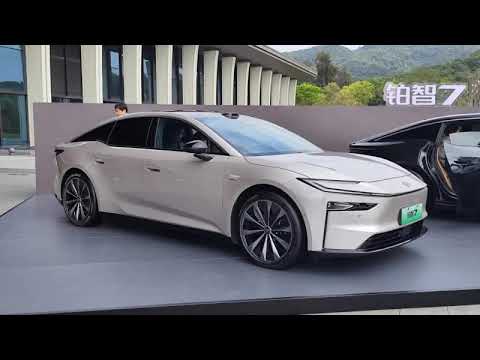
Toyota’s joint venture in China, GAC-Toyota, launched its new all-electric sedan, the bZ7, yesterday and saw over 3,100 confirmed orders within the first hour. The vehicle’s success underscores the growing demand for EVs in China and Toyota’s strategic integration of local technology.
Key Specs and Pricing
The bZ7 is available in five configurations, priced between 147,800 and 199,800 yuan (roughly $20,400–$27,700 USD). It offers three range options: 600 km, 700 km, and 710 km (CLTC standard). Deliveries are already underway. The vehicle’s immediate availability is a key differentiator in a competitive market.
Tech Partnership with Huawei
The bZ7 is notable for its deep integration with Huawei technologies. It features:
– Huawei HarmonyOS 5.0 cockpit for a seamless user experience
– Momenta R6 ADAS (Advanced Driver-Assistance System) for enhanced safety
– Huawei Drive ONE electric powertrain for efficient performance
This partnership highlights a trend where traditional automakers increasingly rely on tech giants to accelerate EV development.
Design and Interior
The bZ7 adopts a modern fastback design with signature styling elements, including horizontal LED light strips and C-shaped daytime running lights. The interior features ventilated, heated, and massaging seats for both front and rear passengers. The front seats include a “dual-motor zero-gravity” function designed for maximum comfort.
Smart Features
The bZ7’s smart cockpit runs on Huawei’s HarmonyOS 5.0 and supports Apple CarPlay. It boasts an AI-powered voice assistant (MoLA) with four-zone recognition and continuous dialogue. The vehicle also integrates natively with Xiaomi’s in-car ecosystem.
Advanced Driver Assistance
The LiDAR-equipped version of the bZ7 comes with a comprehensive sensor suite (27 sensors total) and supports Highway NOA (Navigate on Autopilot) and full-scene parking without subscription fees. This is a competitive advantage in a market where many automakers charge ongoing fees for advanced features.
Powertrain and Charging
The bZ7 uses Huawei’s Drive ONE powertrain, delivering 207 kW (278 hp) and 97.5% efficiency. It’s powered by Lithium Iron Phosphate (LFP) batteries in 71.35 kWh and 88.13 kWh capacities, providing up to 710 km of range. The vehicle supports fast charging, adding 300 km of range in just 10 minutes, and also offers a 6.6 kW external discharge function.
Suspension System
The bZ7 features a “dual-chamber air suspension + SDC shock absorber + pre-scanning system” that actively adjusts to road conditions for a smoother ride. This highlights Toyota’s commitment to ride quality in its EV lineup.
The rapid initial sales of the bZ7 demonstrate that a combination of competitive pricing, cutting-edge technology, and established brand recognition can be a winning formula in the Chinese EV market. This launch is a significant step for Toyota as it seeks to strengthen its position in the world’s largest automotive market.