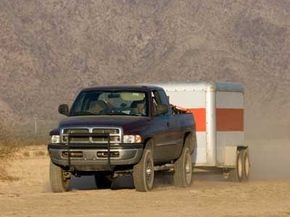
You spent years saving. You picked the model. You even named the boat. Now you’re staring at a 24-foot bass fishing boat that weighs 5,000 pounds empty. Your trusty small truck? It maxes out at 4,000 pounds towing capacity.
Bad news. You can’t just bolt on a stronger axle or swap the engine to fix this. The gap between what you want to tow and what your truck can handle isn’t a hardware problem. It’s a structural one.
Why you can’t boost towing capacity with mods
Manufacturers build vehicles to a specific Gross Vehicle Weight Rating (GVWR ). This isn’t a suggestion. It’s a hard limit defined by the wheel axles, suspension geometry, braking system, and steering components. Every bolt and beam is engineered to handle that specific load.
Think of it this way. The GVWR dictates the total weight of the vehicle itself plus passengers, cargo, and the trailer tongue weight. If you exceed it, you aren’t just breaking a rule. You’re overloading the physical components that keep you from flipping or skidding.
Some vehicles aren’t rated for towing at all. In those cases, adding a hitch is illegal and dangerous. But even in trucks built for towing, you can’t arbitrarily raise the ceiling. You can’t “upgrade” the GVWR with an aftermarket part. The chassis is already cast. The brakes are already sized.
What actually determines how much you can haul
To understand why your 4,000-pound limit is fixed, you have to look at the math behind the GVWR. It comes down to three metrics:
- Base curb weight : The weight of the truck with fluids but no people or gear.
- Cargo weight : Everything inside the cab and bed, plus gear strapped to the exterior.
- Allowable payload : The remaining weight budget. You get this by subtracting the curb weight and cargo weight from the GVWR.
If your truck has a GVWR of 6,000 pounds and weighs 4,000 pounds empty, your payload capacity is 2,000 pounds. If you load 1,500 pounds of gear into the bed, you only have 500 pounds left for the trailer tongue weight. That’s where most people crash the system. They forget the trailer pushes down on the rear axle.
Can hitches or weight distribution help?
Here is the nuance most guides miss. You can improve how the weight is managed, but you cannot increase the limit.
If you are maxing out your hitch receiver’s rating, switching to a fifth wheel hitch or gooseneck hitch might help. These move the pivot point forward, over the rear axle, which reduces leverage and stress on the frame. A weight distribution system can also help by shifting the tongue weight from the rear axle to the front axle and the trailer axles.
This doesn’t increase your vehicle’s towing capacity. It only relates to the towing equipment.
These tools make towing feel more stable. They might allow you to utilize your existing capacity more effectively. But if the boat weighs 5,000 pounds and your truck can only tow 4,000, a fancy hitch won’t save you. You are still exceeding the GVWR.
Exceeding the limit reduces braking distance and steering control. Push it too far, and you aren’t just risking a fine. You’re risking a total loss of control.
How do you calculate your actual towing capacity?
People often confuse towing capacity with payload. Here is the breakdown.
Does towing capacity include trailer weight?
Yes. It is the maximum weight the vehicle can pull. This includes the trailer frame, the boat, the fuel, and the tackle.
How do you calculate it?
You look at the Gross Combined Vehicle Weight Rating (GCVWR ). This is the max weight of the truck plus the trailer. Subtract the truck’s curb weight from the GCVWR to get a theoretical max.
If your GCVWR is 12,000 pounds and the truck weighs 5,000 pounds, you have 7,000 pounds to play with. But you have to subtract passengers and cargo in the bed first. If you have three people and a cooler in the bed, that eats into the 7,000.
What is a safe percentage?
Experts suggest staying at 75% to 80% of the recommended capacity. Why? Because real-world conditions vary. Wind, hills, and brake fade aren’t in the lab test. Leaving a margin prevents mechanical failure.
What is a good towing capacity?
For light duty, 3,500 to 7,000 pounds is standard. Heavier trucks go higher. But “good” depends on what you’re towing. A 3,500-pound capacity is fine for a small utility trailer. It’s useless for that 24-foot bass boat.
The hard truth? If your truck’s manual says 4,000 pounds, that’s the number. No mod changes that. You need a different truck. Or a smaller boat.