They said it wouldn’t happen.
Some prayed it never would.
The first fully electric Ferrari has arrived.
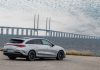
Meet the Luce.
If you thought this was going to be a sensible Purosangue in electric clothes, look away now. This thing is a statement. It is, by all accounts, the most controversial car Ferrari has built in decades. Maybe ever.
Who designed it?
Not Flavio Manzoni.
Not Ferrari’s internal design team.
Ferrari handed the keys to LoveFrom.
Yes. The design collective co-founded by Sir Jony Ive —the guy who shaped the iPhone—and Marc Newson. Two giants of industrial design who have likely touched your life every single day since 2007. Until now? Neither had designed a car.
The designers were given the freedom to conceive of a disruptive, coherent form.
That’s a nice way of saying Ferrari stepped back and let them do whatever they wanted. The guiding principle? Simplification. Pure shapes. Closed forms.
The result looks like it fell off the assembly line from Mars.
It’s the first four-door Ferrari in history. The first five-seater. But don’t call it an SUV. It stands only 1,544mm high. Long. Low. Slashed into a silhouette that feels aerodynamic before it even moves.
A massive glasshouse runs from the nose to the tail, interrupted only by floating wings at each end. The windscreen wipers? Hidden. Camouflaged inside the A-pillars so you almost don’t see them. It’s obsessive attention to clean lines.
Then there’s the glass front panel. Black. Matte. A nod to the Ferrari F80 and 849 Testarossa, but on steroids.
Aerodynamics didn’t just suggest the shape—they dictated it. Every surface is smooth. No sharp edges. No recesses for dirt. It achieves the lowest drag coefficient of any Ferrari road car.
Active grilles. A ride height that drops 10mm when you’re trying to go fast.
And wheels?
The biggest ever put on a production Ferrari.
23-inch up front.
24-inch in the back.
Custom staggered rims. They look like they’re from a different planet.
The tail lights, however, are a whisper of the past.
Double-round clusters. Like the 360 Modena. Like the 458 Italia. A retro anchor in a sea of future-tech.
The Interior Is An Apple Store With A Soul
You’ll want to sit inside this thing just as much as drive it.
The cabin feels… curated. Expensive in a way that isn’t flashy.
No giant floating iPad for the dashboard centerpiece. Instead? The steering wheel is king.
It’s a three-spoke beast, machined from one solid block of recycled aluminium. Hand finished. Inspired by the Nardi wheels of the 1950s.
Remember when Ferraris had buttons? Thousands of them? Cluttered like a spaceship cockpit?
The Luce strips them out.
Two analog groups per upper spoke.
One button each for the indicators.
Simple.
Behind it, a 3D OLED instrument cluster. Not one screen. Two. The front screen has cut-outs that show the layer behind. Move the wheel and the perspective adjusts automatically. It creates a watchmaker’s level of depth and clarity.
The main infotainment screen is mounted on a ball joint.
It pivots.
Drive left, it leans left. Drive right, it leans right. There’s even a palm rest. Because holding a touchscreen for 15 seconds while moving at 40mph is awkward. Ferrari solved it.
But here’s the twist.
They didn’t remove mechanical soul.
Top right corner: a mechanical Multigraph. An aluminum bezel sits over digital glass.
It’s a clock. A compass. A stopwatch.
Want launch control?
This tiny dial counts down five seconds. The hands sweep. It feels like piloting a jet.
Activating that launch control? Also manual.
There’s a physical switch on the roof liner.
You pull it.
Tactile. Deliberate. Not a screen tap.
Climate controls at the bottom? Physical toggles. Clicky. Satisfying.
The key? Made of glass-crystal. E-ink display. Changes color when you dock it in the center console. No charging anxiety this time. BMW tried that trick before and it drained batteries overnight. The Luce uses e-ink that only powers up to change state. Smart.
We are told this display draws energy only during colour changes.
Ironically, BMW is catching up. Later this decade. Maybe.
Fake Gear Changes And Real Physics
So you’re in the seat. You press go.
There’s no engine rev. No scream.
Does that mean the drama is dead?
No.
Ferrari built a virtual gearbox.
Pull the right paddle.
You get torque shifts.
Five levels. Each one ramps up the power delivery like an engine blowing past redline. It’s artificial. It’s fake. It works.
Pull the left paddle.
Engine braking simulation.
The car slows like an internal combustion engine downshifting. It hooks up. It holds the corner.
This is called Torque Shift Engagement.
It tricks the brain into thinking the machine is louder, more visceral, more angry.
Will you be fooled? Probably.
The numbers are violent.
1,035 horsepower.
11,500 Newton-meters of torque.
That torque number is insane.
Ferrari 849 Testarissa? Hybrid V8.
Can’t touch the Luce’s raw twist.
0 to 62mph in 2.5 seconds.
0 to 124mph in 6.8 seconds.
Top speed 193mph.
Powered by four independent motors. Two front. Two rear.
The motors? Based on Formula 1 tech. Tiny. Water cooled. Packed into thermal resin that sucks heat away efficiently.
At the front, the motors can disconnect.
500 milliseconds is all it takes.
If you’re cruising? They cut power to the front axles completely. Saves battery. Cuts drag. 70% lighter than previous iterations.
Cornering? They reconnect instantly for torque vectoring. Each motor speaks separately. The car turns tighter, lighter, than a 2.3 tonne brick should.
Range?
Big.
122 kWh battery.
Most energy-dense cell Ferrari has ever used.
15 modules arranged weirdly to fit inside a tight chassis without widening the track. Two stacked under the rear seats. Pouch cells. Not cylindrical. Lighter. Better fit.
There are three modes:
– Range (RWD usually. Efficient.)
– Tour
– Performance (Full AWD. Chaos.)
Selected via an eManettino on the steering wheel. Old habits die hard.
Noise And Weight
The chassis is recycled aluminium.
6.7 tons of CO2 saved per build.
But does it handle?
Center of gravity?
Low.
The battery sits flat. Between the axles. 80mm lower than a petrol Ferrari with equivalent dimensions.
They tweaked the active suspension from the Purosangue and the F80. Lengthened the screw pitch by 20% inside the dampers. Absorbs potholes better.
At the rear?
First-ever separate subframe in a Ferrari.
One-piece hollow cast aluminium. Elastomeric bushings.
Reduces noise. Keeps weight down. Lets the rear wheels steer—up to 2.15 degrees—either for stability at high speed or agility when parking.
Braking is massive.
390mm carbon ceramic discs. 6-piston front calipers.
The regen alone gives 0.68Gs of stopping power. Rimac gets 0.4. The Luce bites harder electrically.
But real brakes matter too.
Brembo hardware is here. For when regen isn’t enough.
Sound?
This is where things get interesting.
Ferrari didn’t put in a speaker playing a pre-recorded V12 scream. That’s lazy.
They didn’t silence it completely.
They used an accelerometer in the rear e-axle housing.
Think of a microphone pickup on a bass guitar. It vibrates with the motor. Amplifies those subtle tremors through the speakers. The result sounds unique. Artificial. But organic in its origin.
Not fake engine noise.
Just amplified motor noise.
At normal speeds? Silent. Relaxing.
The seats are positioned near the front. Close to the wheels. For dynamic feedback.
Comfort is prioritized too.
Rear hatch. Coach doors.
Space for three people in the back?
Actually?
Yes.
597 liters of trunk. Bigger than an Mercedes S-Class.
No transmission tunnel. The floor is flat.
Who buys a five-seat Ferrari?
Someone who has enough cars that they need to drive four people to lunch without asking their friends to wait outside.
Or maybe they just really love Apple.
The Ferrari Luce exists.
It costs whatever it costs.
And whether you love it or hate it?
It’s undeniable.