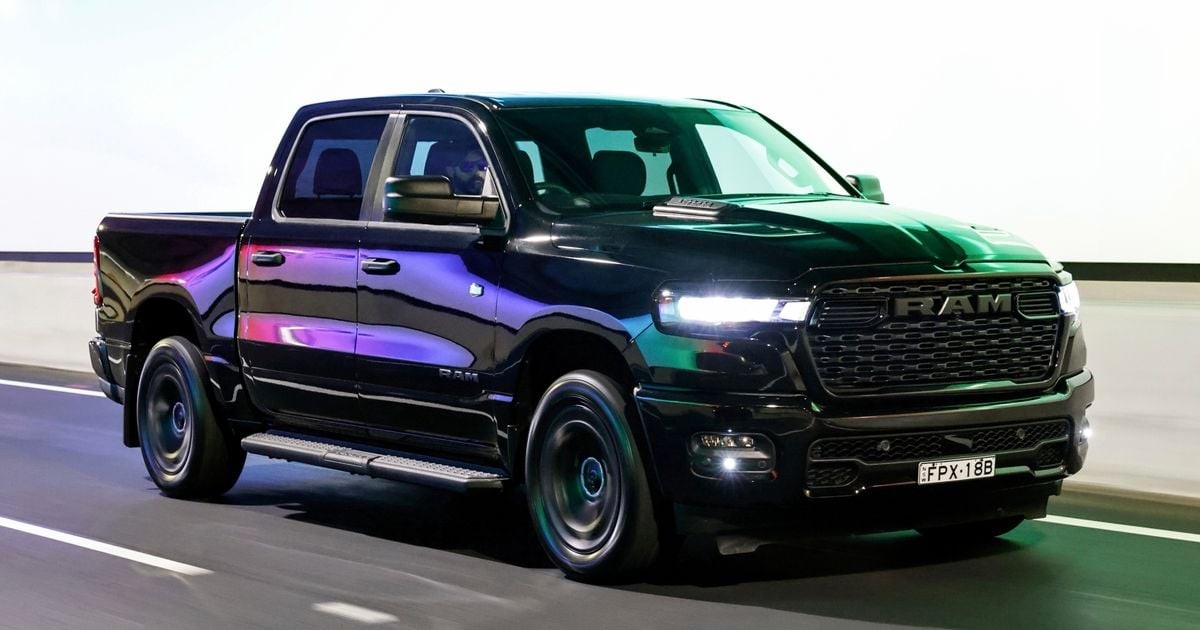
The Ram 1500 loses the V8 again. Or rather it stays lost. In Australia, that iconic rumble hasn’t made an appearance for two years. Instead, the DT-series range runs on the Hurricane straight-six. We got the Laramie first then the Rebel and now the budget option lands: the 2026 Express Black Edition.
The badge is back after a hiatus. It marks the bottom tier of the lineup. And the price drop? Massive. It costs more than $30k less than the Laramie above it. That isn’t rounding. That is a chasm.
Ram needs this. The 1500 was the only American truck seeing sales dips until the Ford F-150 edged it out in May 2026 still strong overall but losing the top spot. Unusual territory for Detroit. So they invite us to central Victoria to see if the Express can fix that with sheer value.
How much is cheap?
$109,950. Before on-road costs.
The entry price plummets by that same $30k margin. But don’t expect a chrome Black Edition later. Ram Australia isn’t planning other Express trims even if the US offers them. Just this one. Black. Basic.
The truck arrives left-hand drive and gets flipped to right-hand drive by Walkinshaw Automotive in Melbourne. Twelve hours of labor using factory parts. It’s engineering-heavy conversion work.
Competitors? The Ford F-150 XXT starts higher at $114,905. The Chevy Silverado? $134,909. The Toyota Tundra Limited sits even higher at $155,909 and there’s no base Tundra here at all. On price alone the Express wins by default.
The interior: Utility first luxury second
Walk inside and you’ll notice the vibe shift immediately. If you’re used to the Laramie leather and ambient lighting this feels jarring. Harshly so.
American trucks sell on two pillars: size and luxury. The Express nails the size but ditches the luxury entirely. The interior resembles a base-spec Toyota Hilux WorkMate more than a full-size Ram. Plastic steering wheel cloth seats tiny 7.0-inch driver display. Even the infotainment shrinks to an 8.4-inch screen. The Hilux has a 12.3-incher.
A Hilux WorkMate costs $33,000. Nearly $75,000 cheaper. Do you cross-shop them? No. But it highlights how stripped back this cabin feels.
Despite the austerity the space remains immense. Your front passenger sits in their own zip code separated by a cavernous center console. It begs for armchair cruising. But touch the door armrests and you’ll wish you hadn’t. They are hard plastic. Uncomfortable.
Seats are manual. No heating no cooling. Cloth instead of leather. They sit high up though. You feel like you’re piloting a tank aided by the narrow windshield and that massive hood. The view is commanding but the isolation is real.
Then there is the tech gap. The 8.4-inch touchscreen feels aftermarket compared to the massive vertical slabs in other Rams. It’s small basic and occasionally lags. Apple CarPlay works wireless but stumbles now and then. Native software is functional but plain.
One benefit: physical buttons. Climate controls are real knobs. Tow mode has a real switch. Parking sensors too. The glossy touch panels on other models were fiddly. Here it is tactile. Welcome relief for workers.
But you lose ports. Fewer USBs no HDMI no wireless charger. Storage wins though. No useless passenger screen means a deep shelf that actually holds gear without sliding out. The center bin is massive deep with a sliding tray. Rubberized phone holder. It is practical in a way that doesn’t rely on gimmicks.
Rear seats are spacious legroom endless. Flat floor no hump. Metal side steps help ingress because the cabin is high. Three adults fit back there but amenities vanish. Just air vents cupholders no USB no armrest. The seat folds up to make room for cargo inside. Practical over pretty.
The engine that stays
Under the hood sits the Standard Output Hurricane. 3.0-liter twin-turbo inline-six.
313kW of power 635Nm of twist. An 8-speed auto does the rest. No 4WD.
That’s the key difference. All other 150s get full-time 4WD. This is RWD only. Like the F-150 XT. The limited gets the high-output version but we’re looking at the base here.
We drove it. Short drive mostly highway. The gauge read 1L/00km. A reasonable estimate but not definitive.
Driving a giant
The interior might bore you. The driving will not.
Call it Standard Output if you must but it pushes over 0kW and Nm. That’s serious for a vehicle this heavy. Zero to a hundred takes around six seconds. Insane for a truck.
Highway tires mean it sits flatter than the Rebel all-terrains. It’s stable predictable less skittish. But put the steering into lock and mash the gas and the rear steps out. Rear-wheel drive dynamics remain wild. Stability control kicks in hard to save you from tank-slippers.
It’s RWD on the street. Easy to lose traction if you’re not paying attention. But once it’s planted? It goes.
And tows. 4.5 tonnes is still on the table. Boats caravans machines no problem. Yes we miss the V8 growl. But this straight-six makes enough noise and actually makes sense. Better power better efficiency than the old Hemi. The most logical use for this engine is right here. In the cheap truck.
Ride quality remains excellent. Suspension eats Victorian road defects without complaint. Cabin isolation is good though wind noise creeps in at speed. A bit of hiss at cruising pace but it’s not deafening.
Steering is weighted but the big rim feels light. Lane-keeping assist isn’t annoying. Cornering stays controlled though tires complain if you’re fast on entry. It handles bends well despite the mass.
One gripe: the stereo. Weak. The wind noise reveals it lacks punch. But there are no drive modes. No screens to dig through. Get in. Turn key. Go.
Simple. That’s the point. The Express isn’t a garage queen. It’s a tool that moves fast and costs little for the performance. Is that what you want? Or do you need the bells? The question stays open.