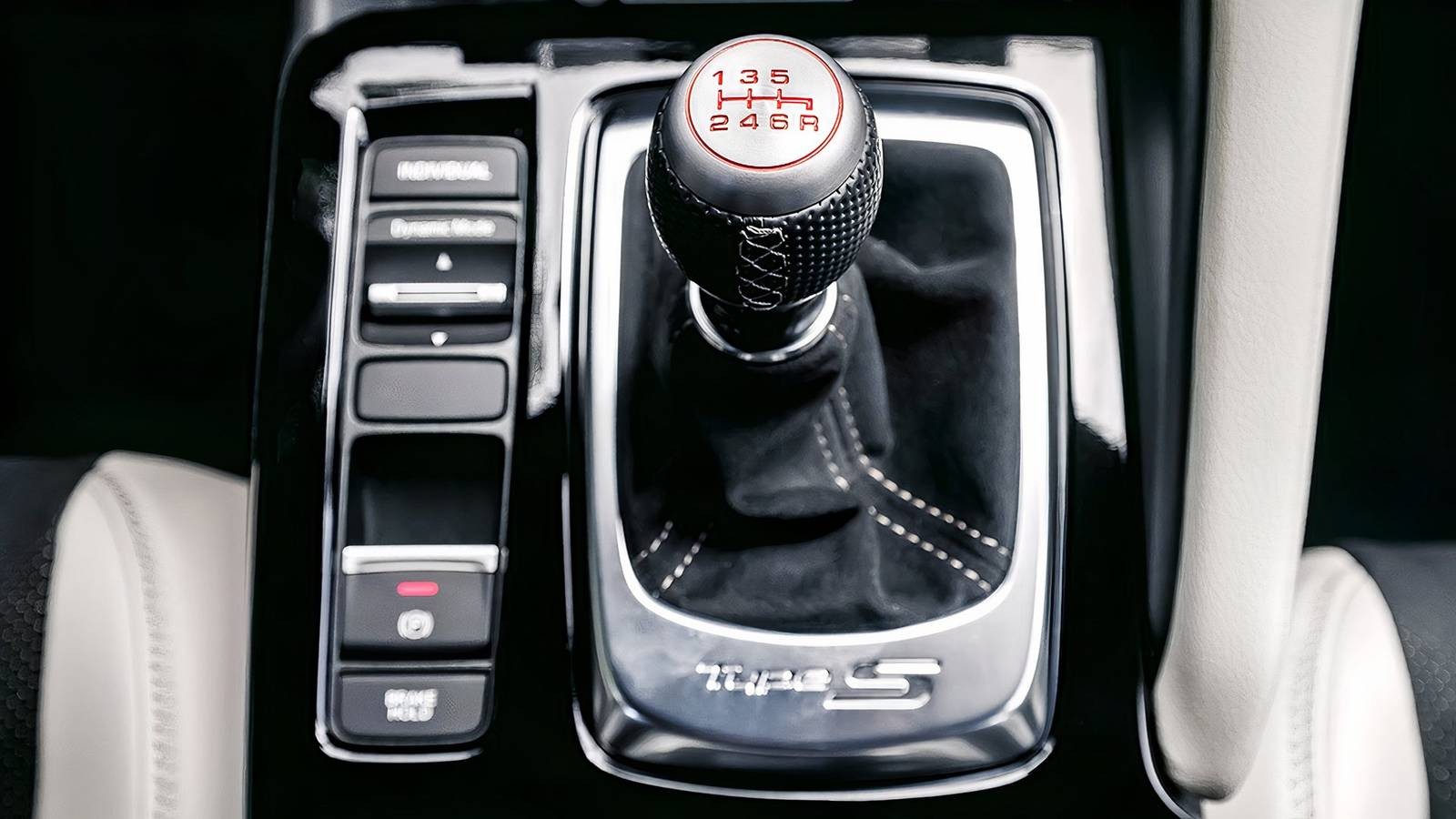
The Washington Post recently declared the manual transmission “almost dead.” Looking at the 2026 lineup, they aren’t wrong. Of the hundreds of new cars available in the US, fewer than 24 still offer a clutch pedal. This list shrinks every year. Several manufacturers have already confirmed the stick shift is gone for good.
For anyone who wants to actually drive—a three-pedal, engagement-focused experience—the window is slamming shut. But it hasn’t locked yet.
Here is a clear-eyed breakdown of which cars still let you shift gears yourself, what executives are saying about the death of the clutch, and why the business math behind this phase-out is undeniable.
Sports Cars: The Defenders of the Clutch
Porsche is one of the most prominent voices still shouting for the manual. The current 2nd-gen 992.2 911 Carrera and Carrera S let you choose a seven-speed manual. You can still pair it with the PDK dual-clutch, but the stick is there. Porsche has publicly stated it will keep offering the manual as long as customers demand it. That is a serious commitment from a brand that could easily just standardize PDK across the entire lineup to save money.
Chevy’s Corvette story is messier. The C8 moved to a mid-engine layout. That packaging change made a traditional manual nearly impossible. So now? You get an eight-speed dual-clutch auto only. Interestingly, GM filed patents years ago for a “by-wire” clutch system. Think of it as a fake manual. It mimics the feel without the mechanical linkage. For now, though, you have to use the paddle shifters.
BMW M Division is fighting back. They still offer a six-speed manual in the M2. The M440i xDrive coupe keeps the manual option in certain trims, too. BMW M frames the three pedals as central to its philosophy. It is brand identity. But that stance will face a hard test as the M division pivots toward electrification. Can a battery-powered M car feel the same without gears? We’ll see.
Hot Hatches: Where Buyers Demand Engagement
The hot hatch segment holds the line because the customers shopping here are different. They want engagement over convenience. They want to work for the speed.
The Honda Civic Si comes standard with a six-speed manual. There is no automatic option. Pull that clutch pedal away, and you remove the car’s soul. It exists because you can shift it.
The Hyundai Elantra N pairs its 2.0L turbo four with either that six-speed manual or an eight-speed wet clutch automatic. It gives you a real choice.
Volkswagen still offers the six-speed manual with the Golf GTI, right next to the DSG.
These cars survive with manual gearboxes because the buyers demand them. It is a different business calculus than a mainstream sedan. Most sedan buyers never wanted a stick shift. Hot hatch buyers? They specifically searched for it.
Performance Sedans: A Shrinking Niche
The landscape for performance sedans has narrowed drastically.
Take the Cadillac CT4-V Blackwing. This is Cadillac’s highest-performance compact sedan. It offers a six-speed manual as the standard. You have to option the automatic. That is rare. Luxury performance brands rarely make the manual the default.
Then look at the BMW M340i. It pairs its inline-six with an eight-speed auto in most markets. The manual has been phased out in recent configurations. It used to be an option. Now it is a memory.
The broader segment has moved on. Audi killed the manual entirely from its lineup. They lean on S tronic dual-clutches and torque-converter autos. Mercedes-Benz does the same with AMG; no manuals there. Even Lamborghini, which once gave us the iconic gated manual in the Gallardo, now builds exclusively on dual-clutch systems.
Why Automakers Are Killing the Manual
The business case is brutal in its simplicity. Modern automatics shift faster. They return better fuel economy, which is critical for regulatory compliance. And, statistically, the majority of new-car buyers prefer them.
Then there is the elephant in the room: electrification. The International Energy Agency (IEA) projects nearly one-in-three cars sold globally by 2026 will be electric. Electric motors do not use multi-speed gearboxes. The manual transmission simply cannot exist in that architecture.
The brands still offering stick shifts are not doing it for profit. It is a deliberate enthusiast signal. It is marketing theater. Porsche and BMW M frame manual availability as a brand value. It separates them from the herd. Honda treats the manual as the product itself with the Civic Si, not just an option.
They know it is a niche. They know it doesn’t scale. They keep it alive because for some of us, driving is a skill. For the rest of the world, it is just transport. Which side of that divide are you on?
The window is closing. Fast.