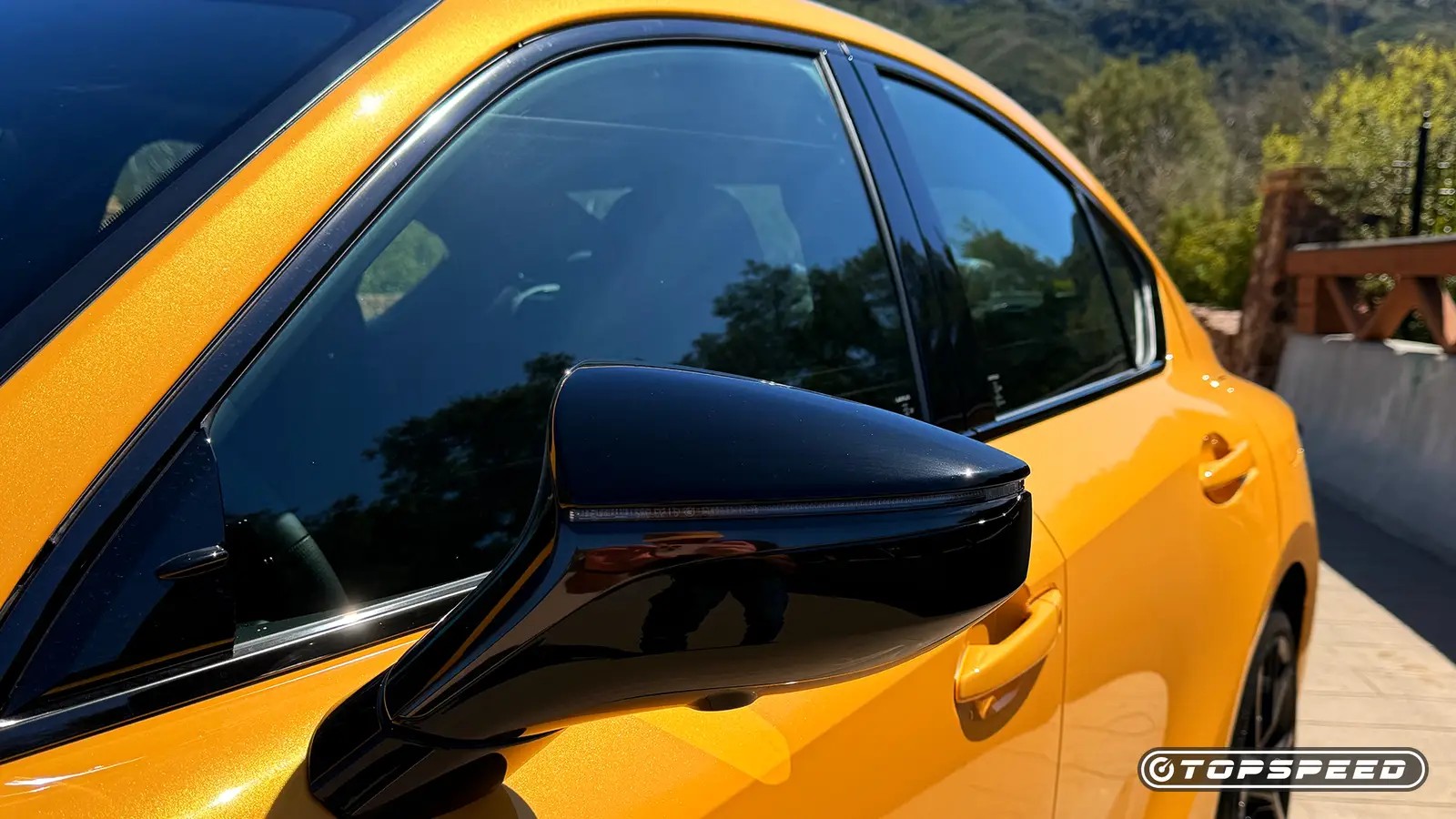
There is a car sitting on a dealer lot somewhere. It costs less than a fully loaded BMW 3 Series. It revs until it screams at 7,100 RPM. It sounds like it belongs to a muscle car, not a compact sedan. And yet, it embarrasses cars that cost significantly more and wear fancier badges.
The company that built it just killed it. No farewell tour. No fanfare. You have probably walked past one without noticing. That was the plan. Or rather, the lack of one.
The Compact Sedan Lost Its Soul
For a while, the compact performance sedan was the enthusiast’s go-to. It was the default choice for people who cared about how a car drove, not just how it looked on Instagram.
Then the class changed its mind. Turbos replaced high revs. Screens replaced physical switches. Spec sheet numbers replaced the noise that made you choose the long way home.
Take the Mercedes-AMG C43. It used to have a six-cylinder. Now? A 2.0-liter turbo four with an electric turbo. Most of its engine noise gets pumped through the speakers because the real sound was too… well, real. BMW’s M340i has a straight-six. It’s good. Audi’s S4 leans on a V6. It gets you there. It doesn’t make you feel anything.
All of them are fast. Very few are memorable. The formula became simple: more torque, less character, bigger screens.
One car refused to follow the memo.
The Holdout That Ignored the Trend
While everyone else downsized, this car held onto a naturally aspirated V8.
Not a turbo six faking it. Not an electric motor simulating gear changes. An actual eight-cylinder. It made its peak power right at the redline, just like engines used to do before boost flattened everything into a low-down shove.
On paper? It’s slower than its rivals. Inside? It’s dated.
On the road? It’s the most joyful thing in the segment.
And yes, it’s Japanese. That’s the part nobody saw coming.
Meet the Lexus IS 500: A V8 That Shouldn’t Exist
The car is the Lexus IS 500. Lexus took the 5.0-liter 2UR-GSE V8 from the LC 500 GT and shoved it into the smallest sedan it could fit it in.
The result makes 472 hp at 7,100 rpm. 395 lb-ft of torque hits 4,800 rpm. It sends power to the rear wheels through an eight-speed auto. And the sound? It is unlike anything else in this price bracket.
Here is the argument in one sentence: no other car in this class offers a naturally aspirated V8 anymore.
The C43 traded its six for four. The M340i uses a turbo six. It sounds great, sure, but it’s still boosted. Its personality peaks early and fades as you climb. The Lexus does the opposite. It pulls harder and sounds better as you near that 7,100 redline. There is no lag. No boost spike. Just linear power.
In 2026, a combo like that is extinct.
Where It Wins (and Where It Loses)
Let’s look at the losses first. Be honest.
The M340i hits 60 mph in about 4.1 seconds. The Lexus claims 4.4. Close. The C43 is in the mix, too. The Germans also bring newer cabins, better infotainment, and actual usable back seats. The IS rides on a platform that’s over a decade old.
On a spec sheet? The Lexus loses.
Now the wins.
For around $59,500 (MSRP when new), you get 472 hp for the money. That undercuts the BMW on horsepower per dollar. It revs higher. It sounds better. It gives back the one thing turbocharging confiscated: a linear, building rush of power tied to an exhaust note you actually want to hear.
The Germans win on paper. The Lexus wins on the drive home.
Narrow the scope to what an enthusiast actually feels, and it’s not close.
Why You Never Heard About It
A 472-hp V8 sedan should be headline news. This one was closer to urban legend.
Blame Lexus. Park an IS 500 nextto a base IS. Most people can’t tell them apart. The V8 is hidden behind quad exhaust tips and a tiny badge. It’s subtle. If you know what you’re looking for, it’s cool.
If you’re just buying a car? It’s commercial poison.
Nobody cross-shops a vehicle they can’t pick out of a crowded lot. To the average buyer, the IS 500 just looked like a sensible Lexus their neighbor leased.
Lexus didn’t market it. It sat quietly at the top of a aging lineup while the brand pushed hybrids and SUVs. When it ended, there was no send-off. Just a limited Ultimate Edition. Officially? A clean business decision.
Unofficially? It looked like a car the company didn’t believe in enough to sell.
How embarrassing is it to have a rival that forgot to announce its existence?
Now It’s Gone. And That Changes Everything.
Here is the twist that stings. The IS 500 isn’t just overlooked. It’s dead.
For 2026, Lexus refreshed IS line but quietly deleted the V8. It’s just the IS 350 now. A 3.5-liter V6. 311 hp. Pleasant. Boring.
Lexus says it’s streamlining. We know better. They never marketed it properly, so they killed it when sales didn’t explode.
But the naturally aspirated V8 compact sedan is now extinct. The IS 500 was the last standing.
This makes the used examples fascinating.
Everything that killed it new — dated tech, high price, near-invisibility — matters less on the pre-owned market. What’s left is what matters: a stout Toyota-Lexus V8. Rear-wheel drive. A sound nobody else builds anymore.
As the class turbocharges and electrifies, this last NA V8 only gets more special. The car the marketignored when it was new? It’s becoming the car enthusiasts hunt down now.
The Used Lexus IS 500 Is the One to Buy
On paper, the case against it is solid. It’s not much cheaper than the M340I. It trails to 60 mph. The cabin lags behind the Germans by a decade in screens.
Lexus barely tried. Then they killed it.
Shop with a spreadsheet? Buy the BMW. Drive home. Forget the Lexus.
Numbers were never the point.
The IS 500 is for people who care about the engine sound at 7,000 RPM more than a tenth of a second on a stopwatch. And on that measure, it has zero rivals.
There are no rivals left.
Everything else downsized. Turbocharged. Or died.
Strip away the new-car premium, and a used IS 5050 is exactly what it should have been. The last naturally aspirated V8 sedan. Waiting for the people who missed it to realize they messed up.
The Germans won the showroom.
The Lexus won the long game. Or rather, it won the only game that still exists.
There is no one left to play against.