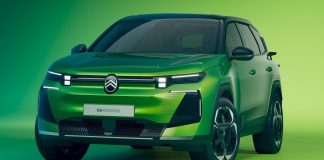
Electric vehicles are cool. Let’s get that out of the way first. They have evolved wildly since HowStuffWorks covered the GM Sunraycer prototype back in the day—a conceptual racer that eventually helped spark the creation of the EV1, the first mass-produced electric car.
It has been almost thirty years since General Motors leased that EV1 to a tiny group of willing early adopters between 1996 and 1999. Back then, driving electric was a niche experiment. Today, the landscape is unrecognizable. Walk into almost any dealership, and you are staring down a sea of fully electric options. We are talking about affordable compact commuters alongside high-performance electric trucks and SUVs that can tow and haul.
The infrastructure has caught up, too. Public charging stations are now scattered across grocery store parking lots and highway rest stops. Your smartphone knows exactly where the nearest plug is, calculates the cost of a charge, and tells you when your battery hits 100%. Try explaining that level of real-time data to your late-’90s self. You would have thought it was science fiction.
But EVs are not without problems. Despite the flashy features and environmental promises, adoption has not hit the explosion point that automakers, environmentalists, and some legislators hoped for. The transition is slower than the hype suggests.
Before we dive into the engineering of how electric cars work—and how the US auto industry is reshaping itself to accommodate this tech—we have one piece of advice.
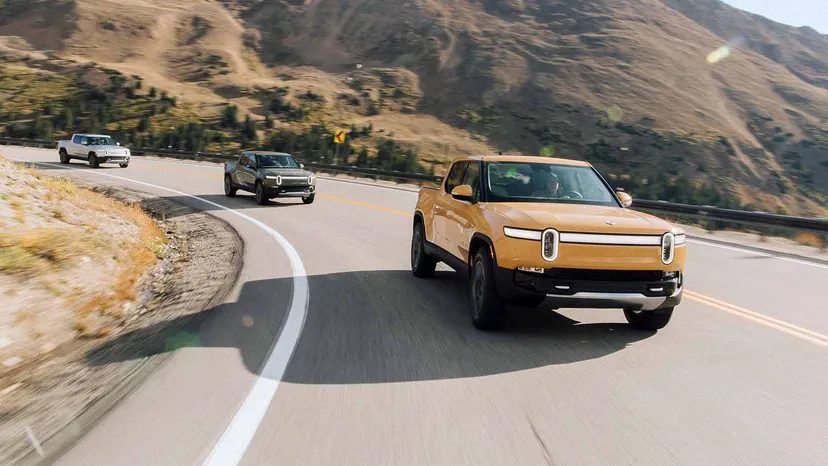
If you have never driven an electric car, you need to go drive one. The experience is fundamentally different from what you know. These cars are quiet. They are quick. They are packed with technology that feels like the future.
Because EVs are engineered differently than gas-powered machines, they handle in a way that feels almost unnatural at first. The heavy battery pack sits low to the ground and is distributed evenly across the chassis. This lowers the center of gravity significantly. The result? Better handling. They corner with a stability that internal combustion engines struggle to match without complex weight management.
Then there is the acceleration. Electric motors deliver instant torque. There is no wait for the turbo to spool or the gearbox to downshift. The power is there the moment you touch the pedal. This simplified powertrain allows electric vehicles to smoke gas vehicles in a zero to sixty race almost every single time.
Is it fun to drive? Absolutely.
Electric Vehicle Engineering
The core of this difference lies in the engineering philosophy. Gas cars are complex mechanical beasts involving thousands of moving parts, fluid dynamics, and thermal management systems designed around explosions. EVs strip all that away.
Under the Metal and Glass
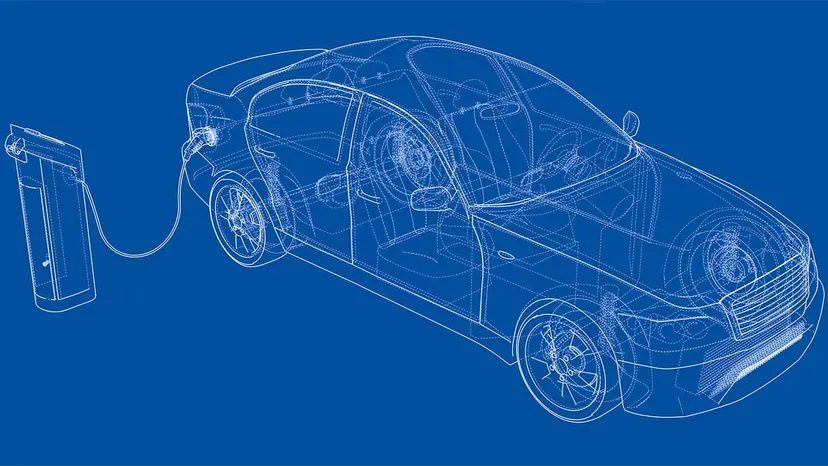
Stop looking at the hood. There is nothing mechanical waiting for you there, just a frunk or a bundle of high-voltage cabling. That’s the first shock of ownership. You are looking at a rolling battery.
The engineering is fundamentally different. You don’t have an internal combustion engine turning a crankshaft. Instead, you have electric motors. One. Two. Maybe three if you bought a performance variant. These motors spin the wheels directly or through a single-speed transmission. That’s it. No clutch. No multi-gear gearbox to shift or break. Just power.
All-wheel drive isn’t a mechanical link from the engine to the rear axle. It’s separate motors on each axle. Simple. Efficient. Some builders add a third motor for torque vectoring or extra horsepower. The result is instant torque delivery that feels like being pushed from behind, not pulled by a spinning mass.
Plugging In
You don’t pump fuel. You plug in.
The charge port location is a quirk of design. Tesla puts theirs in the rear quarter panel. Hyundai often hides theirs on the front fender. Ford might put it on the side. But the interface at a public station? That’s standardized. CCS combo connectors or Tesla’s proprietary NACS port. It looks like a thick cable running from a box on the wall to your car.
At home, it’s simpler. A Level 2 charger, hardwired into a 240-volt circuit in your garage, looks like a heavy-duty outlet. You plug in. You walk away. You wake up with a full “tank.”
The battery doesn’t just sit there. It’s managed. A thermal management system circulates coolant to keep the lithium-ion cells in the sweet spot. Too hot? Degradation accelerates. Too cold? Charging slows to a crawl. Computers and DC-DC converters monitor every cell, ensuring power goes exactly where it’s needed, when it’s needed.
The Hybrid Compromise
Not everyone wants to go fully electric. Not yet.
Plug-in hybrid electric vehicles (PHEVs) exist in that gray area. They have a gas engine and a battery. They can run on electricity alone for 20 to 40 miles. That’s enough for the daily commute. Then the gas engine kicks in. It’s a transition tool. A way to dip your toe in the water without drowning.
But PHEVs are complex. They have all the maintenance of a gas car plus the battery and electric drivetrain. They only make sense if you can charge at home or work. If you’re driving around town with a dead battery and a half-empty gas tank, you’re paying for the luxury of complexity without the benefit of efficiency.
The Software Glitch
Here is the counterintuitive part. Electric vehicles are more reliable mechanically. No oil changes. No spark plugs. No timing belts. No transmission fluid replacements. Yet, owners report more problems.
The 2022 J.D. Power U.S. Initial Quality Study showed EV owners reporting 39% more issues than gas car owners. Why?
Because EVs are computers on wheels. The problems aren’t mechanical. They’re digital. The infotainment system freezes. The app won’t connect to the car. The charging schedule gets messed up. The touchscreen unresponsiveness drives people crazy. Gas cars have buttons. EVs have menus. And menus fail.
So, the car works fine. The battery holds charge. The motor spins. But the screen is black. The app says “vehicle offline.” You’re standing in your driveway, plugged in, wondering why the car won’t start charging because the software thinks it’s in sleep mode.
That’s the new maintenance. It’s not under the hood. It’s in the settings.
Charging Realities
Charging isn’t one thing. It’s a spectrum.
Level 1. The 120-volt outlet in your garage. It’s slow. agon
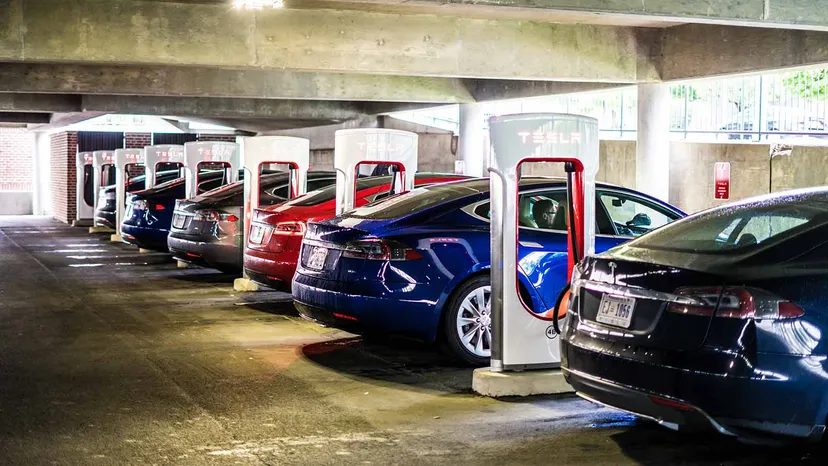
Waiting at a pump is the classic ICE anxiety. Electric vehicles swap that wait for something arguably worse: uncertainty. You aren’t just buying fuel; you’re buying time. And unlike gas, where you know you’ll get a tank in five minutes, public charging is a gamble.
The clock starts ticking the moment you plug in. Even under ideal conditions, expect to surrender 30 to 60 minutes of your life. Maybe more. It’s not a fixed number. It’s a calculation involving variables you can’t always control.
Your car’s battery capacity matters, but so does the specific trim level. A smaller battery charges faster, sure, but it also empties faster. The charger type plays a role too. A Level 2 station is slower than a DC fast charger, but availability is trickier. Then there’s the car itself. Older models manage power flow differently than new releases. Weather throws a wrench in the works. Cold batteries accept charge sluggishly. Hot batteries throttle themselves to avoid thermal runaway.
Public charging stations are designed to get you on your way as quickly as possible.
You might sit in your car reading emails while the needle climbs. That’s allowed. But don’t expect top speeds once you hit 80 percent. The software deliberately throttles the flow to a trickle at that threshold. It’s a two-pronged strategy. First, it preserves battery health by reducing stress on the cells. Second, it’s a behavioral nudge. The grid doesn’t need you hogging a $150,000 piece of hardware for the last 20 percent of juice. Other drivers are waiting.
Home charging is the sanctuary. Plug into a Level 1 (120-volt) outlet or a Level 2 (240-volt) station, and let the car sleep. Overnight is the sweet spot. Nine to thirteen hours is all it takes to fill the tank while you dream. It’s convenient. It’s quiet.
But Stanford University researchers in 2022 questioned whether this habit is sustainable for the grid. They argued that overnight charging isn’t the optimal strategy if daytime chargers are accessible. The logic is simple load balancing. If everyone plugs in at 10 PM, the grid spikes. If they charge between 9 AM and 5 PM, demand spreads out.
The stakes are rising. Electric cars will cut emissions, no doubt. But the electricity demand could surge by up to 25 percent by 2035. That’s not a trivial number. It requires infrastructure upgrades, new power plants, or smarter charging algorithms. We’re just starting to figure out the logistics.
Range Anxiety Isn’t Just in Your Head
Range is theoretical. Reality is weather.
When temperatures plummet, your EV’s range can evaporate by 25 percent or more. It’s not magic. It’s physics. Cold lithium-ion chemistry is sluggish. The battery needs heat to function efficiently. Meanwhile, you’re blasting the defroster and cabin heater. That HVAC system is a massive energy drain. It pulls directly from the range you’re trying to preserve.
Heat does it too. High temps force the battery management system to work overtime to cool the pack. Climate control works double duty. You’re fighting the environment with electricity that would otherwise move you down the road
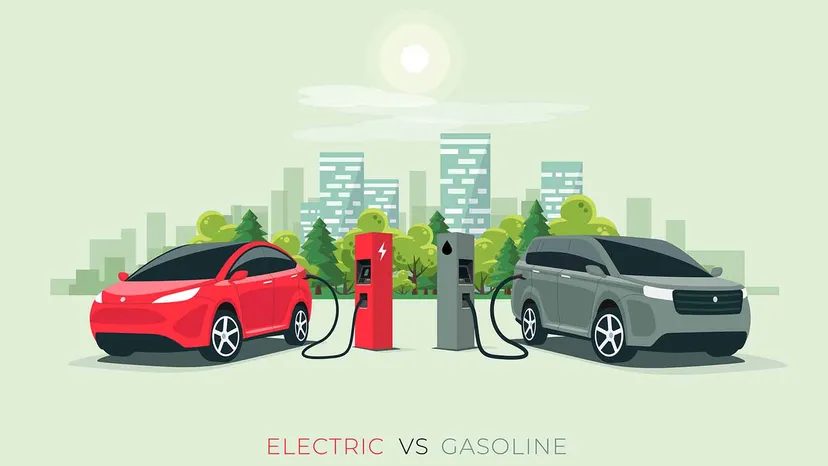
The real cost of going electric
You’ve likely heard the pitch: zero tailpipe emissions, clean air, saving the planet. But the reality is messier. Electric vehicles (EVs) don’t emit greenhouse gases while driving, sure. But they aren’t carbon-neutral miracles. The environmental footprint starts long before you turn the key.
It begins with the grid. Charging an EV isn’t a magic act; it’s drawing power from the same electrical system that lights your home. That power source matters immensely. If you plug in a Tesla in Washington State, where hydropower dominates the mix, the carbon intensity is low. Plug the same car into a socket in West Virginia, where coal still fuels a large portion of the grid, and the emissions profile changes dramatically. The car still has no exhaust pipe, but the pollution has simply moved upstream to the power plant.
Despite this regional variance, the Environmental Protection Agency (EPA) maintains that even on the dirtiest grids, charging an electric car results in fewer total greenhouse gas emissions over its life cycle compared to the average gasoline vehicle. The math holds up, but it’s not a free pass.
The battery burden
Here is where the argument gets complicated. The heart of an EV is its lithium-ion battery. It’s heavy, expensive, and environmentally taxing to produce.
Lithium isn’t just sitting under your driveway. It’s a scarce resource found in specific, often remote, geological formations. Extracting it is energy-intensive. It requires vast amounts of water in arid regions and generates significant industrial waste. And lithium isn’t the only culprit. These batteries also demand cobalt and nickel. Cobalt mining, particularly in the Democratic Republic of Congo, has been plagued by reports of unethical labor practices and severe environmental degradation. Nickel production is equally dirty, often involving sulfide ores that release sulfur dioxide if not managed perfectly.
Then there is the manufacturing phase itself. Building an EV is a carbon-heavy endeavor. According to the 2022 GREET Model from Argonne National Laboratory, producing a new electric car generates approximately 80 percent more emissions than producing a comparable internal combustion engine vehicle. That’s a huge upfront carbon debt. Why? Because the battery factory is essentially a high-heat, high-energy beast. You are burning fossil fuels today to build the machine that will save fuel tomorrow.
Paying down the carbon debt
Is that 80 percent penalty a dealbreaker? Not necessarily. Experts estimate that modern lithium-ion batteries will last between 15 and 20 years. Over that decade-plus lifespan, the efficiency of the electric motor and the gradual decarbonization of the power grid allow the EV to pay off its initial manufacturing carbon debt.
When you look at the total lifecycle emissions—including mining, manufacturing, driving, and charging—the electric car still comes out ahead of the gas guzzler. But it’s a slower start. You drive with a heavier environmental footprint initially. It takes time for the clean operation to outweigh the dirty production.
The disposal dilemma
Once those batteries die, we’re still figuring out the next step. Theoretically, you could repurpose a degraded EV battery for stationary storage. Maybe it powers a home backup system or stabilizes a local grid. In practice, though, most end up in landfills.
Recycling lithium-ion batteries is currently a headache. It’s expensive. It’s labor-intensive. And the process is inconsistent, varying wildly depending on the battery chemistry and the recycling facility’s capabilities.

The 2024 EV Landscape: Specs and Reality
The envelope isn’t just pushed anymore; it’s been torn off. Automakers are throwing everything at the electric wall to see what sticks, and what’s sticking is a staggering variety of steel and silicon. If you’re looking at the 2023 and 2024 market, here is the raw data on what’s actually on the road.
- Audi e-tron Sportback : Five-passenger electric SUV. Range: 225 miles (362 km).
- BMW i7 : The flagship luxury sedan. Range: 318 miles (511 km).
- Chevrolet Blazer EV : A sporty take on the utility SUV. Range: 320 miles (514 km).
- Chevrolet Silverado EV : Pure electric pickup truck. Range: 400 miles (643 km).
- Ford F-150 Lightning : The electric workhorse. Range: 321 miles (516 km).
- Ford Mustang Mach-E : The Mustang, but without the noise. Range: 314 miles (505 km).
- Hyundai Ioniq 5 : Sporty, retro-futuristic SUV. Range: 303 miles (487 km).
- Hyundai Kona Electric : Compact entry-level EV. Range: 258 miles (415 km).
- Lucid Air : The range king of luxury sedans. Range: 425 miles (683 km).
- Mercedes EQS SUV : Flagship luxury utility. Range: 305 miles (490 km).
- Porsche Taycan Sport Turismo : An off-road capable wagon. Range: 235 miles (378 km).
- Rivian R1S : Adventure-focused electric SUV. Range: 321 miles (516 km).
- Rivian R1T : Electric-only pickup. Range: 328 miles (527 km).
- Volvo XC40 Recharge : Sporty, all-wheel-drive compact. Range: 223 miles (358 km).
Range figures like these are marketing gold, but they are also theoretical maxima. You will not hit 400 miles in a Chevrolet Silverado EV if you are towing a boat. Aerodynamics change when you’re dragging mass behind you. Efficiency drops. Real-world driving is messier than the EPA sticker. But the technology itself? It has matured. We aren’t talking about the awkward, wedge-shaped GM EV1s of the early 2000s anymore. Those were compromises. Today’s EVs are deliberate products for specific consumers.
Policy and The Charging Grid
The industry didn’t just get better; it got subsidized. The Biden administration’s legislative push in 2022 changed the economics of ownership. We are talking about federal rebates for purchases and leases, direct funding for grid upgrades, and massive investments in domestic battery manufacturing. The goal is explicit: accelerate the phase-out of internal combustion engines.
But hardware doesn’t matter without infrastructure.
The US charging network is still patchy. It needs expansion. Yet, it is expanding. Tesla’s Supercharger network, once a walled garden for Model S and Model 3 owners, is slowly opening its ports to other brands. This is a pivotal shift. Competitors like Mercedes-Benz are building their own high-speed networks, aiming for 400 hubs across North America. Meanwhile, Electrify America and EVgo are continuing to lay down concrete and cables.
Federal funds are targeting interstate corridors and underserved areas specifically to kill range anxiety. The government isn’t seizing your gas guzzler. It’s not kicking you off the road. But the trajectory is set. The next car you buy will likely have a plug.