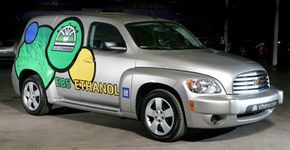
The EPA numbers don’t lie, and they sting. You buy a new V6 Chevrolet Impala, expecting it to sip fuel responsibly. Run it on standard gasoline, and you get 21 miles per gallon in the city, 31 on the highway. Switch that tank to E85—a blend of 85 percent ethanol and 15 percent gasoline—and those figures evaporate. You’re looking at 16 mpg city, 23 highway.
It’s not just GM. Ford’s two-wheel-drive V8 F-150 takes a similar hit. On regular unleaded, the EPA rates it at 14 city, 19 highway. Put E85 in the tank, and it drops to 11 city, 14 highway.
Fewer miles per gallon. That’s the raw tradeoff.
Why E85 fuel economy is lower than gasoline
You might wonder why a cleaner-burning fuel delivers worse range. It’s basic physics. Ethanol contains less energy per gallon than gasoline. To move the same weight over the same distance, the engine has to burn more volume of E85 than it would gasoline.
So why push it? The logic isn’t about your fill-up cost. It’s about supply. A mile driven on ethanol is a mile not driven on imported petroleum. That’s the argument from President Bush, Detroit’s chief executives, and the ethanol lobby. They’re pouring billions into new refineries. They want to break the chain of foreign oil dependence.
A mile driven on E85 ethanol fuel is a mile not driven on conventional gasoline.
But for the driver, the math is messy. You trade efficiency for energy independence. You trade higher pollution potential (from production costs) for cleaner tailpipe emissions.
What is E85 ethanol flex fuel?
Most gasoline in the U.S. already has ethanol in it. Usually about 10 percent. That’s E10. E85 flips the script. It’s 85 percent ethanol, 15 percent gasoline.
Only certain cars can run on it. These are flex-fuel vehicles. They have sensors that detect the fuel mix and adjust engine timing accordingly. They can run on pure gas, pure E85, or anything in between.
But here’s the catch. Even if your car can take it, you might not find it. Stations are sparse. They cluster in specific regions—mostly the Midwest corn belt. Elsewhere? Good luck.
We’ll dig into the performance claims next. Ford and GM say there’s no power loss. We’ll see if the real world agrees. And we’ll look at the wallet impact. Does the lower price per gallon of ethanol offset the higher consumption?
Stay tuned.
The E85 Ethanol Debate: Benefits vs. Hidden Costs
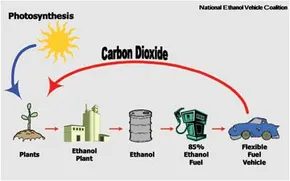
It’s basically fermented corn. That’s the bottom line on ethanol. You take starch crops, mostly corn from American farms, ferment them, and distill them. One acre of corn yields roughly 330 gallons of fuel. Not bad for a vegetable.
Proponents love this math. Mixing 85 parts ethanol with 15 parts gasoline creates E85. The argument is simple. It stretches our finite oil supply. The Renewable Fuels Association pushes this hard. They say it expands the market for U.S. crops. It creates jobs in agriculture and refining. Less oil imported means a better trade balance. Fewer tax dollars and military resources spent keeping foreign oil flowing.
The environmental pitch is even cleaner. The U.S. Department of Energy says E85 vehicles emit less carbon monoxide and carbon dioxide than gas or diesel cars. Ethanol is water-soluble, non-toxic, and biodegradable. Gasoline? Not so much. E85 has far fewer contaminants.
But for every green virtue, there’s a dirty counterpoint.
Producing ethanol isn’t free energy. You need fossil fuels to plant, grow, and harvest the corn. You need them to run the refineries. A Cornell University expert argues that the energy cost of growing and converting corn exceeds the energy you get back. It’s a net loss. A University of California study disagrees, citing modern farm efficiency. The debate rages on.
Then there’s the food argument. Critics say we’re diverting corn from human and animal consumption. Less corn supply means higher food prices. You’re eating your fuel.
Environmentalists have other worries too. New refineries are cutting costs by switching to coal. Natural gas is the norm, but coal is cheaper. It also pollutes more. The EPA warns that more E85 flex-fuel vehicles mean more airborne chemicals. Smog increases. Respiratory ailments follow.
And the taxpayer picks up the tab.
For decades, the federal government and agricultural states have subsidized ethanol. Critics call it a handout to giant agribusinesses and corporate refiners. Illinois dropped the sales tax on E85 in 2003. The federal government offers up to $30,000 in tax credits for stations that convert pumps.
The 2005 energy bill mandated more ethanol production. President Bush pledged federal research dollars for new production methods. Regulators, eager to ease burdens, proposed relaxed air pollution limits for these refineries.
This political tailwind sparked a boom. By mid-2007, some 40 new facilities were expected to open. That would push the national total past 100. In 1996, there were only 50.
Yet all this infrastructure supports a tiny slice of the fleet.
Of the 250 million cars, trucks, and SUVs on American roads, only about 6 million can burn E85. Half of those are in commercial or government fleets.
Which Cars Can Run on E85 Ethanol?
If you’re driving a private car, your best bets are Ford and General Motors. But Chrysler, Dodge, Jeep, Mercedes-Benz, and Nissan have models too. These aren’t modified later. They leave the factory with special components. These parts monitor the ethanol-to-gasoline mix and adjust on the fly. The fuel systems are fortified against corrosion. E85 eats through standard rubber and plastic.
Henry Ford started this trend with an ethanol-burning Model T before World War I. Thousands of fleet vehicles got converted over the years. In 1998, U.S. automakers began making E85-compatible components standard on certain models.
Recently, Ford, GM, and DaimlerChrysler have embraced E85. They pitch it as fuel-saving and pro-environment. They claim it supports domestic agriculture. These manufacturers plan to put 2 million additional flex-fuel vehicles on the road each year starting in 2007.
They lobbied Congress. GM and Ford fund campaigns to promote E85 use. They help convert gas stations. GM even gave Chicago and Minneapolis owners a $1,000 gas card for E85 purchases.
For 2007, 29 models are E85-capable in the U.S. That’s up from 20 in 2006. GM offers 17 models, totaling about 400,000 vehicles. Ford expects to sell 250,000 E85 models in 2006.
Spotting them takes effort.
Early E85 Fords have a small road-and-leaf logo and an “FFV” decal. GM uses yellow gas caps. Look for the “Flex Fuel E85” badge.
It’s a niche market. A political project. A fuel of the past and future.
Identifying Flex-Fuel Compatibility
Skip the guesswork. Your owner’s manual holds the answer. Flip to the fuel section. Look for the phrase “flex fuel.” If it’s there, you’re good.
Check the fuel door too. A sticker inside usually spells it out. It’s a quick visual check. No tools required.
Still unsure? The internet has your back. Sites like fueleconomy.gov and e85fuel.com maintain updated lists of E85 ethanol flex fuel-compatible vehicles. Search your model year. See if it makes the cut.
Why bother checking? Because pumping ethanol into a car not built for it can wreck the fuel system. Rubber seals shrink. Lines crack. You don’t want that repair bill.
Real-World Impact on Daily Driving
So you have a flex-fuel vehicle. Now what?
E85 changes how you drive. Mostly in the wallet.
Ethanol has less energy per gallon than gasoline. You’ll get fewer miles per gallon. Significantly fewer. We’re talking a 15-30% drop depending on the car.
But E85 is often cheaper per gallon. The math sometimes works out. Sometimes it doesn’t.
You need to do the calculation. Cost per mile matters more than price per pump.
“Flex fuel isn’t about performance. It’s about economics and availability.”
Does it affect performance? Usually no. Modern flex-fuel engines adjust fuel injection on the fly. They detect the ethanol blend and compensate. Power stays consistent.
The catch? Consistency varies by pump. One station might sell true E85. Another might sell E70. Or E60. The blend changes with the weather. Cold weather requires less ethanol to keep the engine running smoothly.
This variability messes with your mileage calculations. You can’t predict exactly how many miles you’ll get on a tank. It’s a rolling experiment.
Which cities have the most E85 stations? The Midwest leads. Iowa, Illinois, Minnesota. Corn grows there. Ethanol production is local. Prices tend to be lower.
Coastal states lag behind. California has very few stations. New York? Sparse. If you live in the Northeast or West, E85 might be a weekend novelty, not a daily fuel.
Where do you find these stations? Not at every corner. Specialized pumps exist. Often at truck stops or rural stations near refineries.
Use an app. E85fuel.com has a map. It’s the most reliable source. Don’t rely on Google Maps alone. Those listings get outdated fast.
Is it worth it? For some, yes. The octane rating is higher. High-performance cars benefit. You might squeeze out a bit more power in a tuned Mustang or Camaro.
For a commuter? Probably not. The mileage penalty usually outweighs the savings unless local prices are skewed heavily in ethanol’s favor.
You’ll have to decide based on your local pump prices and your tank’s efficiency. There’s no universal answer. Just the numbers at your nearest station. And the next time you fill up, you’ll know exactly what you’re putting in the tank.
Driving dynamics and the hidden costs of flex fuel
You don’t need to change how you drive. That’s the good news. If you buy a flex-fuel vehicle, or realize the one you already own can run on ethanol, the steering wheel feels the same. The transmission shifts the same. The brake pedal has the same travel.
The “flex” part means exactly what it says. Run it on 100% E85. Run it on pure gasoline. Mix them. The onboard computers adjust the timing and fuel mixture automatically. You don’t do anything. The car figures it out.
Manufacturers claim it costs them about $150 to make a car ethanol-capable. They don’t charge you extra for that hardware. They don’t list higher horsepower numbers for the E85 version either. Even though E85 has an octane rating of 100-105, compared to 85-95 for regular pump gas, the engines are tuned for efficiency on gasoline. Not performance.
You won’t feel a difference. Consumer Guide tested a Chevrolet Impala on both fuels. Same acceleration. Same smoothness. Same noise. The editors couldn’t tell which was in the tank just by driving.
There is a rumor that ethanol cleans the fuel system better than gasoline. Maybe. Maybe not. Ford and GM say you don’t need special maintenance. Other makers might. Check the manual. If you do use E85, tell your mechanic. Some parts behave differently with alcohol in the mix.
Where to find E85 and why it might cost more
Here is the catch. Finding the fuel is hard.
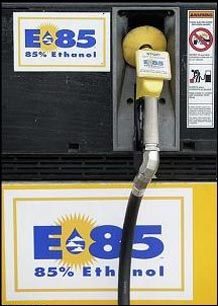
Automakers and the government pushed hard to add stations. They added about 100 last year. So what? There are 180,000 gas stations in the US. Only about 800 carry E85. Another 200 are for fleets or government trucks. Not for you.
Most of those pumps are in the Midwest. The corn belt states get the benefit of subsidies. In November 2006, Minnesota had 300 stations. Illinois had 132. Missouri had 63. Iowa had 56. South Dakota had 50.
Most states had fewer than a dozen. Alaska, Delaware, Hawaii, Maine, New Hampshire, New Jersey, Rhode Island, and Vermont had zero. If you live there, forget it. Check E85refueling.com if you want to play the odds elsewhere.
Price is another trap. You might think E85 is cheaper. Sometimes it is. In the Midwest, it can be 30 cents less per gallon. But nationally? The EPA listed the average E85 price at $2.41 in November 2006. Regular gas was $2.23.
Why is it more expensive? Distribution. Ethanol corrodes pipelines. You can’t pump it through the same lines as gasoline. It costs more to move. Oil companies were also stocking up on ethanol to replace additives suspected of causing cancer. That drove up wholesale prices. Supply is tight. Demand is rising. Retailers charge what the market will bear.
The mileage penalty you can’t ignore
You find a station. You pay the price. You fill the tank. How far do you go?
Not as far as gas. This isn’t a glitch. It’s physics. E85 has less energy per gallon. Measured in BTUs, a gallon of E85 has only 72% of the energy in a gallon of gasoline.
Your mileage drops by 20% to 30%. The Impala test showed this clearly. It got 24.2 mpg on gas. On E85, it dropped to 16.9 mpg. Same driving. Same roads. Just less range.
A tank of E85 gets you about 80% of the distance a tank of gas does. You will stop more. You have to plan your route around the 800 stations that actually have the fuel. You might pay more per gallon. And you get fewer miles.
Check fueleconomy.gov. Look at the estimates for your specific flex-fuel model. The math doesn’t lie.
So is it worth it? For your wallet? Probably not. For your convenience? Definitely not. The fuel economy hit is real. The availability is sparse. The price is often higher.
But performance isn’t hurt. The car drives fine.
Maybe you don’t care about the cents. Maybe you want to support American agriculture. Maybe you want to reduce dependence on imported oil. Those are valid reasons. Just know what you are signing up for. You are paying a premium for a political statement. Not for better driving. Not for lower costs.
The choice is yours. But do the math before you pull the lever.
The Heavy Hitter: Diesel Mechanics
Gasoline engines are polite. Diesel engines are brute force. The fundamental difference isn’t just fuel type. It’s compression.
A diesel engine compresses air until it gets hot. Really hot. We’re talking temperatures high enough to ignite fuel on contact. No spark plugs needed. That’s the big distinction. When the diesel spray hits that superheated air, boom. Combustion. Instant. Violent. Efficient.
This process is called compression ignition. It’s why diesels squeeze more energy out of every drop of fuel. Higher compression ratios mean more heat, more pressure, more work extracted from the chemical bond. It’s physics, plain and simple.
“Diesel fuel has a higher energy density than gasoline.”
That’s why your truck pulls a trailer uphill without screaming. The torque curve sits lower in the RPM band. You get shove-off-the-line power, not redline adrenaline.
Ethanol and the Biofuel Reality Check
So where does ethanol fit? Mostly nowhere in a diesel context, actually. Ethanol is a gasoline additive. Or a standalone fuel for flex-fuel vehicles. It’s made from corn, sugarcane, or cellulose.
Trying to run ethanol in a standard diesel engine is a bad idea. It doesn’t lubricate the fuel pump injectors. It corrodes rubber seals. It has poor cold-flow properties. Your high-pressure common rail system will hate it. You’ll hate the repair bill.
Biofuels for diesel are different. B20. HVO. Renewable Diesel. These are engineered to drop into existing diesel infrastructure without tweaking the hardware. They burn cleaner. They reduce particulate matter. But they’re not ethanol. Don’t confuse the two.
Why MPG Matters More Than You Think
You care about mileage. Everyone does. Gas prices fluctuate. Wallets shrink. The math is undeniable.
fueleconomy.gov is the gold standard for this data. It’s not marketing fluff. It’s EPA-tested figures. Real-world driving cycles. City, highway, combined. Check it before you buy. Compare the Ford F-150 EcoBoost against the RAM 1500 HEMI. See the gap. It’s often wider than you’d guess.
TreeHugger’s take on ethanol offers a different angle. Environmental impact. Lifecycle emissions. Corn farming subsidies. It’s a messy debate. But for the driver, the immediate concern is the pump. And the tank. And the distance between stops.
The Bottom Line on Fuel Types
Gasoline. Diesel. Ethanol. They aren’t interchangeable.
Your car dictates the fuel. The engine design locks it in. Spark ignition needs gasoline. Compression ignition needs diesel. Flex-fuel sensors allow ethanol blends. Mix them up, and you break things.
Know your engine. Read the door jamb sticker. Ignore the rumors. Fill up with what the manufacturer specifies. It’s the cheapest insurance policy you’ll ever buy.