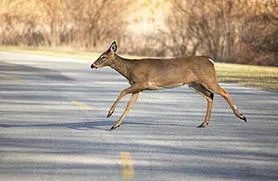
Getting hit by a deer is a nightmare for every driver. Even if you walk away without a scratch, you’re just lucky. The statistics are grim: over 1.5 million deer-vehicle accidents happen annually in the US, sending 10,000 people to the hospital and claiming roughly 200 human lives. Nobody keeps score on how many deer die, but the toll is massive.
Why Swerving Is the Wrong Move When Hitting a Deer
Most people panic and swerve. That’s exactly what kills people. According to the Minnesota Department of Transportation, most serious injuries and fatalities from deer collisions come from drivers taking evasive actions, not from the impact itself.
Do not speed up into a deer. You will not pop the hood. You will just increase the force of the impact.
Here is the correct procedure if a deer is in your path and you can’t miss it:
1. Apply your brakes firmly.
2. Hold onto the steering wheel.
3. Bring your vehicle to a controlled stop.
It is safer to hit a deer than to risk hitting another vehicle or a fixed object like a tree. A tree is unforgiving. A deer is not.
How to Prevent Hitting a Deer at Night
Deer are nocturnal. If you drive at night, you are in the danger zone.
– Slow down the moment you see one deer.
– Assume there are more. Deer travel in groups. If you see one, another is likely following.
– Watch the edges. Deer often enter the road from the side, not the front.
What to Do If You’ve Already Hit a Deer
The crash is over. Now comes the cleanup.
If the deer is moving:
1. Pull your car over.
2. Position your vehicle in front of the deer if possible, blocking oncoming traffic.
3. Turn on your hazard lights to warn others.
4. Call 9-1-1.
If the deer appears dead:
Do not touch it. It might be alive. A deer’s legs are powerful enough to break your bones. You will not be saving a life; you will be creating a second accident scene. Let the authorities handle it.
Can You Keep the Deer Meat?
Probably not, unless you follow the rules. It is illegal to claim a deer carcass without a permit.
– Report the accident to the police.
– Ask a law enforcement officer for a permit to keep the carcass.
– If you get permission, you can eat it or donate the meat to charity.
You still need to file an accident report for insurance purposes. The police will contact the proper local wildlife authorities. Make the best of a terrible situation, but follow the law first.