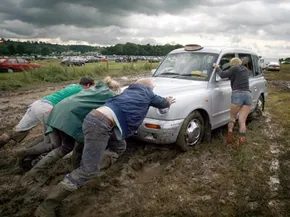
Rain and mud turn capable off-roaders into expensive paperweights. Even the most prepared 4×4 drivers end up stranded in bad places. A tow hook attached to a capable tow vehicle offers the escape route. Sometimes the issue isn’t terrain. A breakdown in decent weather might still require a tow hook and strap to move the car to a safer position for professional recovery.
Knowing how to use tow hooks and the right kind of straps correctly saves you from disaster. Stressful situations demand precision. You must consider how much weight is being pulled. The terrain matters. The angle of approach changes everything. One wrong move damages one or both vehicles. That leads to expensive repairs and more frustration.
How to use a tow hook without wrecking your truck
Proper attachment is non-negotiable. The tow hook must be bolted to a solid frame point. Never use a bumper. Bumpers are designed to absorb impacts. They are not designed to pull a half-ton of metal up a slippery slope. If your vehicle has factory tow hooks, use them. If not, verify the load rating of any aftermarket hook.
The strap or chain connects the two vehicles. The tow vehicle gets the hook. The stuck vehicle gets the hook. The strap goes between them. Keep the line as short as safely possible. A long line creates slack. Slack causes a violent jerk when the tow vehicle accelerates. That jerk breaks things.
Why tow angle determines survival
Approach from behind if possible. Pulling a vehicle straight out of a rut is mechanically superior to pulling it sideways. Side-loading the transmission or differential causes immediate stress. If you must pull from an angle, keep it under 30 degrees. Exceed that and you risk tearing the hook off or bending the frame.
Check the ground conditions. If the tow vehicle is on dry pavement and the stuck vehicle is in mud, traction is the limiting factor. Use a winch or additional traction boards if the tow vehicle spins its tires. Do not floor it. Gentle, steady pressure moves a stuck vehicle. Aggressive acceleration digs it deeper.
A tow hook is a recovery tool, not a daily driving accessory. Treat it like a winch.
Which straps handle heavy loads safely
Synthetic webbing straps are standard. They are lighter than chain. They do not damage paint. They have a higher weight capacity than steel cable for their diameter. However, they degrade with UV exposure and abrasion. Inspect them before every use. Fraying means replacement.
Chain is durable. It lasts longer. It is heavy. It can damage paint if not padded. Use chain only for extreme loads or when synthetic straps are unavailable. Always use a shackle or proper connector. Never tie a knot in a chain.
Safety checks before you pull
- Clear the area of bystanders.
- Ensure both vehicles are in Park or Neutral with the parking brake on.
- Confirm the tow hook is securely attached.
- Check that the strap is not twisted.
- Agree on a signal for starting and stopping.
The tow vehicle driver needs a clear view. The stuck vehicle driver should monitor the angle. Communication prevents sudden movements. If the stuck vehicle starts to move, the tow driver must modulate speed. No sudden jerks. Ste
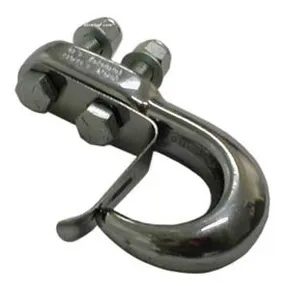
Why Bolted Frame Mounts Beat Bumper Attachments
Tow hooks look basic. They are hooks bolted to the frame or receiver. That simplicity hides a critical structural truth: the chassis is the only part of a vehicle built to handle the lateral and longitudinal forces of a dead weight. Bumpers are crush zones. Wheel axles are designed for vertical load, not horizontal drag. Attaching a strap to either can snap a component in seconds.
The U.S. Department of Transportation mandates four attachment points in the frames of American-made vehicles. These are your anchors. You bolt the hook into these specific holes. If you have the welding skills and the right equipment, you can also fabricate and weld custom hooks directly to the frame, but factory points are the standard for a reason.
Tow Straps vs. Recovery Straps: The Stretch Factor
Once the hook is on the frame, you need a strap to connect the two vehicles. This is where most people get it wrong. There are two distinct types, and using the wrong one for the job creates a hazard.
Tow straps do not stretch. They have a hook on each end. They are designed for moving a vehicle that is drivable but broken down, or for short, controlled movements. Do not use a tow strap for off-road recovery. If the vehicle being pulled hits a bump or the rope goes slack and then tightens suddenly, the lack of elasticity sends a shockwave through the frame. This can crack the frame, break the hooks, or launch the operator into the air.
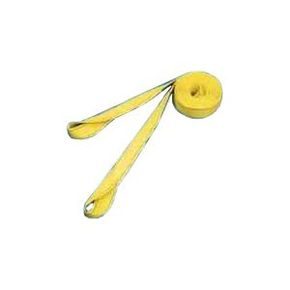
Recovery straps are different. They feature loops, not hooks, and they stretch. When you pull a vehicle out of mud or sand, the recovery strap stretches like a rubber band. As the pulling vehicle moves forward, the strap elongates. When it reaches its limit and tries to snap back to its original length, that stored energy transfers into the stuck vehicle. This gradual pull is what extracts the vehicle without snapping the hardware.
Safety Considerations for Off-Road Recovery
Using the right hardware is only half the equation. How you execute the pull matters just as much.
- Keep people clear. The biggest risk to humans is the elastic recoil. If a recovery strap breaks, it retracts with the force of a whip. Nobody should be standing in the line of fire.
- Angle matters. You want the pulling vehicle and the stuck vehicle aligned as parallel as possible. A wide angle increases the tension on the hooks and the straps exponentially. If the angle is too wide, you are not pulling the vehicle; you are trying to bend its frame.
- Check your load. Know the weight of the vehicle you are pulling and the breaking strength of your strap. A standard 12-inch or 15-inch recovery strap is usually sufficient for light to mid-size trucks, but heavier SUVs or trucks may require a longer strap to stretch properly.
The mechanics are simple. The physics are not. Respect the stretch, respect the frame, and keep your body out of the elastic zone.
Why the frame is the only valid anchor point
You already know the drill: do not hook into the bumper. Modern bumpers are plastic composites. They flex. They break. You will either shear the plastic off or leave the passenger car with a bent, useless front end. The same logic applies to axles. They look like solid metal, but under the load of dragging a few thousand pounds of trapped mud, they can bend out of alignment or tear right off.
The frame is the structural backbone. It is the only component rated for that kind of static and dynamic tension. If your vehicle does not have factory tow points on the frame, you are limited.
Tow straps vs. recovery straps: the safety difference
This is where people get hurt, so pay attention. A standard tow strap is heavy. It has rigid metal hooks. It does not stretch. If you use it to yank a car out of the mud and the connection fails, that strap becomes a projectile. The metal hooks fly. The energy release is violent. Someone standing a few feet away could get killed by a flying hook.
A recovery strap is built differently. It is lighter. It has no rigid hooks, usually using a loop or a soft shackle attachment instead. Most importantly, it stretches. That elasticity is the safety feature. It absorbs the shock load. If it snaps, the energy dissipates differently than a rigid tow strap, reducing the chance of catastrophic injury to bystanders. Use the right tool. Do not improvise with a tow strap if you have a recovery strap.
Pre-flight inspection: check for failure points
Before you connect anything, look at your gear. Seriously.
- Tow hooks: Check for rust. Rust weakens the metal. Look for grime that might hide cracks. Inspect the weld points if it is a welded bracket.
- Recovery straps: Run your hand along the webbing. Feel for frays. Look for cuts. Check the stitching. A small nick in the webbing can fail under the full weight of a stuck vehicle.
If you see damage, do not use it. There is no “it looks fine” for load-bearing gear.
Driving technique: slow, steady, and controlled
The person doing the pulling has a specific job. Drive slowly. Apply light, consistent pressure to the throttle. Do not rev. Do not jerk. A sudden spike in tension is exactly what breaks straps or bends axles. You want to build tension gradually until the vehicle breaks free.
One more critical rule: the driver of the stuck vehicle must be in the driver’s seat. They need to be ready to steer the moment the car moves. If the vehicle swings wide or starts turning, you need someone at the wheel to control it immediately. If the driver is outside holding a rope, the recovery is over, and you might have a second accident on your hands.
The goal is a steady break-free, not a violent yank.
The physics are unforgiving. Respect the gear, check the connections, and keep the speed low. The mud will let go, eventually. Just make sure the equipment survives the process.