We all know what a semi-trailer looks like. It dominates the highway. It towers over sedans. It is often the longest vehicle you will see on the road. Big rigs move tons of cargo. But how?
Big diesel engines provide the power. That part is obvious. But power is useless if the connection fails. A standard ball hitch would snap instantly. You know the type. The metal sphere on a pickup bumper. It is not built for industrial loads. It would shear off.
So what holds a 40-ton trailer to a tractor?
The answer is a fifth wheel hitch.
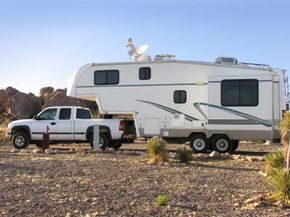
It is not a secret. It is engineering. Semi trucks do not use ball hitches. They use a heavy-duty system that mirrors what you can buy for a Ford F-350 or a Chevy Silverado 3500. The design moves the attachment point from the rear bumper to the bed of the truck.
The Weight Distribution Secret
Here is why the fifth wheel works. The front of the trailer extends over the rear bumper. The connection point sits in the bed. When installed correctly, the trailer’s weight presses down between the cab and the rear axle.
This changes everything.
A rear bumper hitch pushes down on the frame behind the rear axle. It creates leverage that can twist the chassis. A fifth wheel distributes weight over the rear wheels. It allows the truck to carry significantly more mass.
The hitch itself is a large, flat plate. It looks like a horseshoe. Metal rails run beneath it. These rails bolt directly to the truck frame. This provides structural integrity.
The trailer connects via a king pin. This is a downward-facing pin. It drops into the hitch. A plate on the trailer rests on top of the hitch plate. The king pin locks into place. It secures the trailer. It also allows for pivoting. Turning is possible because the connection can rotate.
The two flat plates are in constant contact. They slide against each other during motion. Friction is high. Lubrication is critical. Without grease, the metal grinds. The hitch fails.
Pricing and Features
Costs vary wildly. You can buy an economy model for around $700. A top-tier hitch runs over $3,000.
Price usually tracks with gross trailer weight rating. Heavier loads require stronger hardware. High-end models offer specific features. Sliding mechanisms help with tight turns. Better bearings reduce wear. Heavier attachment hardware increases durability.
These features matter when you are pulling heavy loads. Cheap parts might fail. Expensive parts last longer.
Installation is the next hurdle. Can you do it yourself? Or do you need a professional? The mechanics are straightforward. The physical effort is not.
Let’s look at the installation process.
Before you even unbox the hitch, you need to know if your truck can actually handle the payload. It sounds obvious, but people skip this step constantly. Check your owner’s manual first. If the numbers aren’t there, call the manufacturer. You need a clear answer on your vehicle’s weight capacity before you commit to the job.
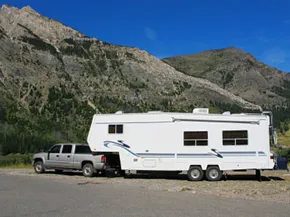
The geometry matters just as much as the weight limit. Once installed, the hitch sits in the bed so the trailer’s weight lands between the cab and the rear axle. You have to follow the manufacturer’s placement instructions to the letter. Get the positioning wrong and you’re messing with the truck’s center of gravity.
You cannot just bolt the hitch directly to the bed. That’s a recipe for disaster. The hitch needs to anchor into the truck’s frame. This is where the rail kit comes in. Think of the rails as the foundation. They attach to brackets, which then bolt to the frame. It’s a layered approach for a reason.
Custom Fit vs. Universal Rail Kits
Here is where you save your sanity. Try to buy a custom-fit installation kit designed specifically for your truck. These kits are worth the extra cash. They require zero drilling or welding. The hardware is pre-cut, and the bracket holes line up perfectly with the pre-existing holes in your frame.
Universal kits are a different story. With those, you might have to drill into your frame or weld brackets in place. That’s messy. That’s permanent. And if you mess up the alignment, you’re stuck.
Bed Liner Compatibility
Watch out for your bed liner type. Never install support rails over a plastic drop-in bed liner. The plastic might hold initially, but it will disintegrate under the stress. You’ll end up with a loose hitch and a broken liner. It’s a costly mistake.
Spray-in bed liners are fine. You can install a fifth wheel hitch in a bed with a spray-in liner without worrying about the material failing. It bonds to the steel and holds up.
DIY or Professional Installation
If you got that custom-fit kit, the job is straightforward. It’s mostly measuring, then bolting brackets and rails to the frame. You don’t need a degree in mechanical engineering. Many people tackle this in their own garage or driveway.
But if you couldn’t find a custom kit, or if you’re nervous about drilling into your frame, hire a pro. A certified mechanic can swap this out in no time. They do it all day long. For someone who installs towing equipment regularly, mounting a fifth wheel hitch is routine. It shouldn’t take them long to get it right.
Just make sure the foundation is solid. Everything else is secondary.