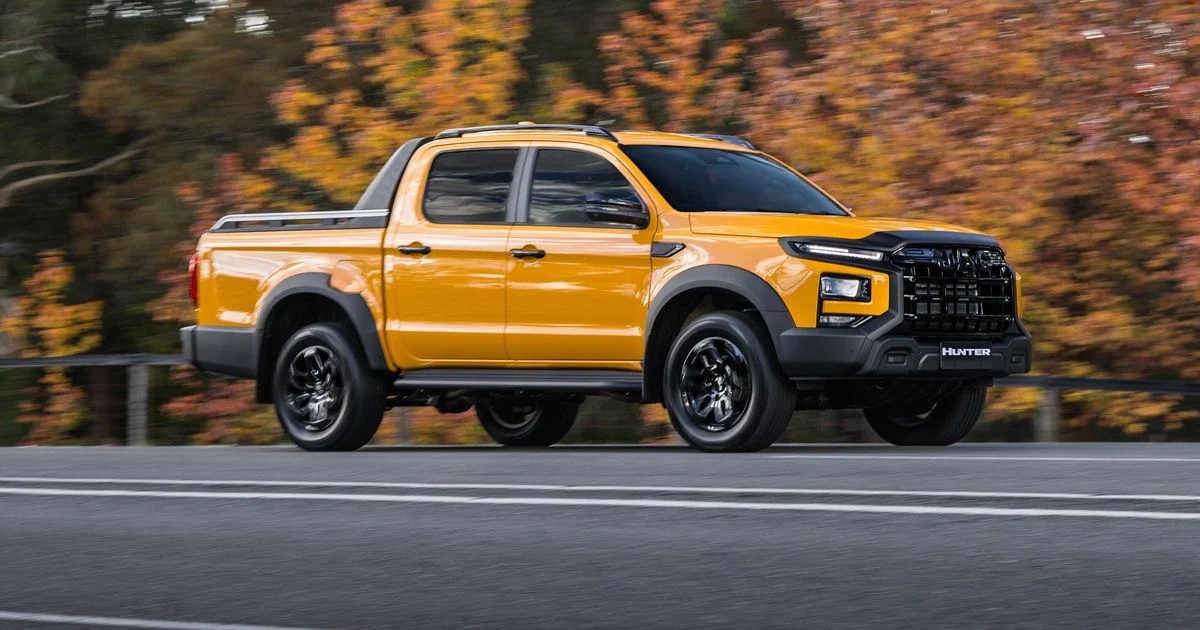
The Australian ute market is undergoing a seismic shift. For years, diesel has been the undisputed king of the pickup truck, but the rise of plug-in hybrid electric vehicles (PHEVs) is challenging that status quo. Enter the 2026 JAC Hunter PHEV, a vehicle that aims to disrupt the market not just with its technology, but with an aggressive price point.
As the cheapest plug-in hybrid dual-cab 4×4 ute currently available in Australia, the Hunter faces a crowded field of formidable rivals, including the BYD Shark 6, GWM Cannon Alpha PHEV, and the Ford Ranger PHEV. But does its sub-$50,000 price tag come at the cost of quality, or has JAC engineered a genuine contender?
A Strategic Upgrade to the T9 Platform
The Hunter is not a ground-up design; rather, it is an evolved version of the existing JAC T9 dual-cab 4×4. However, “evolved” is an understatement for the changes made. JAC has revised the chassis and installed a sophisticated plug-in hybrid powertrain, moving away from the T9’s conventional petrol engine.
Visually, the Hunter adopts a rugged aesthetic with subtle nods to established market leaders. The front guard panel echoes the design of the Ford Ranger, while the vibrant orange-yellow paint option hints at the lifestyle appeal of the Ranger Wildtrak. Inside, the cabin retains a familiar layout for T9 owners but introduces significant upgrades, including leather trim in the top-spec model and a large central touchscreen.
Crucially, JAC has invested heavily in local adaptation. Led by former Holden engineer Michael Barber, the development program involved over 50 different shock absorber calibrations and extensive testing on Australian roads. This local tuning is a direct response to past criticisms of Chinese-branded vehicles lacking refinement on local terrain.
Powertrain and Performance: Numbers That Stand Out
On paper, the Hunter PHEV presents a compelling case. It boasts the highest combined power output in its class at 360kW, surpassing the BYD Shark 6 Performance by 10kW. The system combines a 2.0-litre turbocharged petrol engine with two electric motors, delivering a claimed peak torque of 1000Nm when combined.
The vehicle is equipped with a 31.2kWh lithium iron phosphate (LFP) battery, which JAC claims provides an electric-only range of over 100km. This places it competitively against the Shark 6 (100km) and the Cannon Alpha (115km). When the battery is depleted, the combined fuel and electric range extends to a claimed 1005km, based on a combined fuel consumption figure of 1.6L/100km (NEDC cycle).
Key Spec Highlights:
* Power: 360kW combined
* Torque: 1000Nm combined
* Electric Range: >100km
* Towing Capacity: 3500kg (braked)
* Payload: 915kg
Driving Impressions: Refinement Over Raw Speed
During our pre-production drive, the Hunter was taken immediately off smooth roads to tackle the coarse-chip, pothole-ridden roads near Sydney—a deliberate choice to test its resilience. The result was promising.
The Driving Position
The most immediate improvement over the T9 is the driving ergonomics. The previous model suffered from a fixed steering column, leading to an awkward posture for many drivers. The Hunter introduces telescopic steering adjustment, resolving this major complaint and providing a much more comfortable and accessible cockpit.
On-Road Manner
The powertrain transition between petrol and electric modes is smooth and largely imperceptible, with minimal vibration. While the 0-100km/h sprint time was recorded at approximately 8.5 seconds, the vehicle does not feel as explosively fast as its 360kW figure might suggest. There is a slight delay off the line, but acceleration builds strongly once underway.
The suspension, featuring a multi-link rear setup, handled sharp edges well, though it felt slightly “jiggly” on uneven surfaces. This is expected in a pre-production model, as final calibration is still underway. At highway speeds, wind noise was noticeable, but the cabin remained free of squeaks and rattles, indicating solid build quality.
Off-Road Capability
The Hunter’s electronic four-wheel-drive system includes locking front and rear differentials. In our limited off-road testing, the vehicle climbed steep, muddy tracks with ease, demonstrating sufficient suspension articulation for light to moderate off-roading.
Interior Quality and Technology
The cabin of the top-spec X grade prototype is simple, effective, and surprisingly well-finished. Dark-charcoal quilted leather seats are paired with brushed aluminium-look highlights, creating a modern atmosphere. The fit and finish are reasonable, avoiding the “bargain-basement” feel often associated with budget brands.
However, there are minor quirks. The 10.4-inch portrait-style infotainment touchscreen was slow to start up in our pre-production unit, though its operating graphics were polished. Users must navigate drive modes by selecting through a sequence on the screen, a process that feels slightly cumbersome.
Rear passengers are treated to reasonable head and leg room, a fixed bench seat with a tilting backrest, and dedicated amenities including air vents and multiple charging ports (USB-A, USB-C, and 12V). The tray features a standard tub liner and a new soft-opening tailgate integrated with the central locking system.
Pricing, Warranty, and Value Proposition
The Hunter’s strongest selling point is its price. While exact figures are yet to be confirmed, the entry-level Oasis grade is expected to start from $49,990 before on-road costs. The flagship X grade will command a higher price, while a cab/chassis variant is expected later in 2026, potentially starting around $48,500.
JAC is also targeting commercial buyers with a seven-year, unlimited-kilometre warranty that explicitly covers commercial use. This is a significant differentiator, as many rivals restrict warranty coverage for business fleets. Capped-price servicing is also confirmed, though specific costs remain unannounced.
Safety and Equipment
The Hunter PHEV carries over the five-star ANCAP safety rating achieved by the T9 in 2024. It has been additionally crash-tested to ensure the safety of its high-voltage systems.
Standard safety features include:
* Autonomous emergency braking
* Lane-keeping assist
* Blind-spot monitoring
* Surround-view camera
* Forward and rear collision warning
The top-spec X grade adds premium features such as adaptive cruise control with traffic jam assist, a wireless phone charger, vehicle-to-load (V2L) capability, and powered driver’s seat adjustment.
Final Verdict
The JAC Hunter PHEV represents a significant leap forward for the brand in Australia. It addresses previous criticisms regarding ergonomics and ride quality while offering a powertrain that is competitive on paper. While it may not match the raw punch of the BYD Shark 6, it offers a smooth, mature driving experience at a price point that undercuts most rivals.
With its strong warranty terms, comprehensive safety suite, and locally tuned chassis, the Hunter is poised to be a serious contender for both private buyers and commercial operators. As the final showroom versions approach release in the third quarter of 2026, all eyes will be on whether JAC can deliver on its promise of affordable, high-quality hybrid utility.