Real Peugeots.
That’s what Alain Favey wants you to believe. The CEO insists that despite being built on Dongfeng platforms with Chinese drivetrains, these two new flagships will carry the brand’s DNA.
Don’t get excited yet though.
Europeans aren’t getting them.
The China-Only Reality
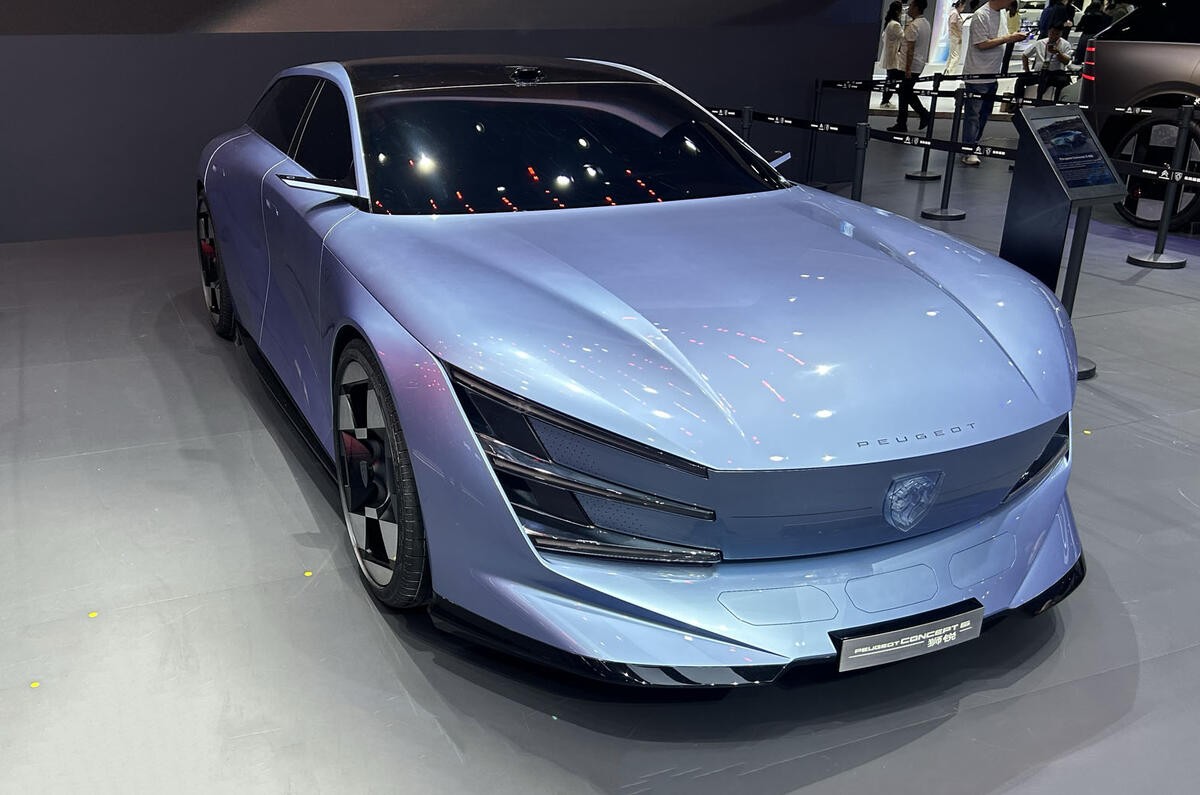
Earlier this year at the Beijing auto show, Peugeot unveiled concepts that look less like French compact cars and more like premium statement pieces.
There is an estate wagon. Think 508 vibes. Then there is an SUV. Huge. Bigger than anything Peugeot currently sells across the channel.
They are striking. They are premium. And they are absolutely nowhere in our market.
Favey confirmed this explicitly. When pressed about quality standards for European buyers, the response was blunt.
“These cars are not planned to be launghed in Europe – neither of two.”
The question of whether they meet European expectations? It doesn’t exist. You can’t buy what isn’t for sale.
Not A Badge Job
Is it just rebranding?
Favey pushes back on that. Hard.
“We are developing the cars with Dongfenq,” he said. “It’s a partnership. Not rebadging.”
He claims Peugeot holds 100% responsibility for the design. Inside out.
The logic follows: if French designers craft the interior and exterior experience, it’s a real Peugeot. Period.
Whether it feels right on Chinese roads versus French highways is another debate. But Favey is focused on satisfying customers outside Europe first.
These models are big because the Chinese market wants size. That’s “spot on” for that demographic. It isn’t necessarily spot on for our parking garages.
Back To Stellantis
So what do we get?
By 2030 Peugeot plans seven new EVs. But these will ride on Stellantis architectures, not Chinese ones.
The lineup includes:
- A next-gen e-208
- The updated 308 hatchback
- Three C-segment models manufactured right here in France
It’s a return to roots. Or at least to internal group synergy.
The Dongfeng duo stays East. We keep waiting.