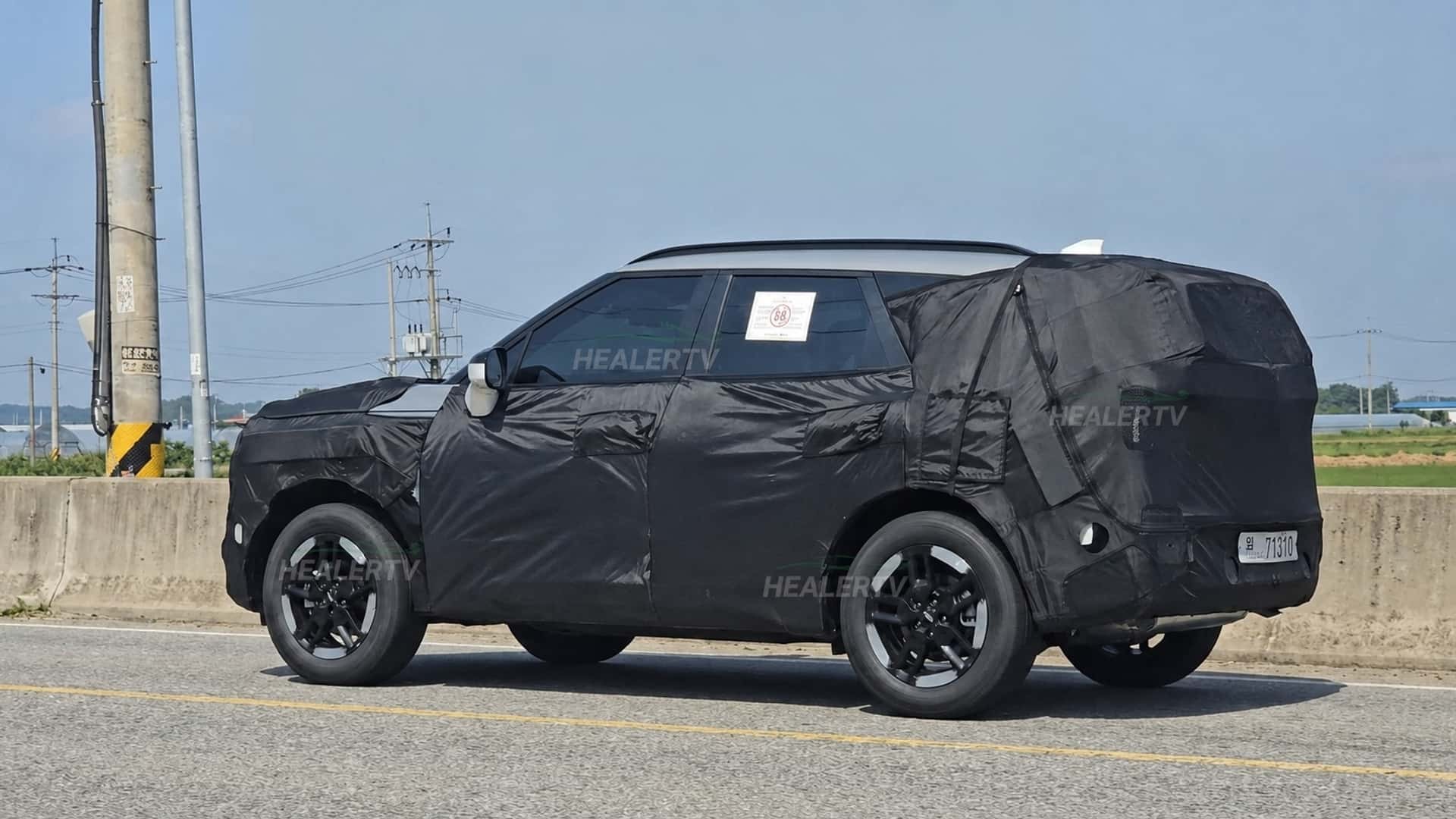
Spy shots hit the web. The disguise is heavy. But you can see the bones.
Kia’s next Sportage is bigger. Boxier, too. They didn’t just tweak it; they rebuilt the stance.
The Breakdown
The exterior goes up and out.
The interior gets a digital brain.
Real buttons might stay.
“Never change a winning team.”
They say that. Kia didn’t listen. They had no choice, really.
Last year, nearly 570,### The Exterior Gets Upright
The fifth gen launched in 2022. Wait, was it 2021? Yes. It got a face lift three years later, but the platform was getting tired. 2025 saw almost half a million deliveries. Over 18 percent of their total business. It is their breadwinner.
You can’t let the champion sleep. Not with competitors circling.
So they started testing. YouTuber Healer TV caught the camouflaged beast on home turf. The prototype is hiding something. A shape.
It looks more upright than the current sloping design.
And taller? Slightly larger overall. The stance is shifting away from coupe-SUV trends back to usable space.
But here’s the oddity. The turn signals. They’re tucked down low. In the corners of the bumper.
Classic Korean automotive strategy.
Hide the signals near the ground to avoid cluttering the main taillight design. It creates a cleaner line visually, but functionally? You might not see them until you’re on them. It’s annoying. It’s consistent.
Inside, Android Takes Over
The shell matters. The cab matters more.
The old screens are going away. Pleos Connect is arriving.
This is Hyundai and Kia’s new Android-powered infotainment system. You’ve already seen it in new Hyundais. It’s slick, fast, and integrates deeply with the vehicle systems. The new Sportage is getting it, no doubt about that.
But the size of the screen raises questions.
Big glass panels are easy to look at. Harder to use with gloved hands. Or sunlight in your face. Or while moving at 65 mph on a bumpy road.
We need tactile feedback.
Recent Hyundai models — the new Elantra, Ioniq 3, Grandeur — show us the template. They kept a row of physical buttons. Climate controls. Volume knobs. Essential functions.
The Sportage should follow. It’s practical. It’s safer.
The instrument cluster changes, too. Expect a rectangular digital unit pushed deep into the dash. It sits within the driver’s sightline, not floating like a tablet in space. It belongs there.
Who Debuts First?
The Tucson probably goes first.
Its sister car in the Hyundai stable usually leads the charge. Reports say we’ll see the new Tucson’s global premiere later this year. It’s already entered its second gen. The Sportage? It’s still riding on 2026/2027 cycles in North America.
So wait.
If the Tucson rolls out next year, the new Sportage won’t hit US showrooms before the 2029 model year, or perhaps late 2028 if they rush it. Global debut happens next year, yes, but American spec often trails by six to twelve months.
Does the order matter?
Not much, if they share the guts.
The screens? Same.
The physical button layouts? Probably shared.
The underlying hybrid tech? Almost certainly.
The Bottom Line
Automakers love economies of scale. Why build two interiors when one platform does both?
But don’t expect clones. The styling cues will differ. Kia wants its own identity. Boxiness is in. Hyundai likes curves. Yet beneath the skin, they are the same machine.
The shift toward hybrid powertrains is the real story here, not the screens. Everyone is going hybrid. It’s not an option anymore. It’s the default.
Kia reinvents its cars every cycle. It’s a habit. A good one, apparently. Their sales are climbing while legacy brands stumble. They take risks. They change shape.
Is it safe? No.
Does it work?
We’ll know when the paint comes off. Until then, just look at the low turn signals. And wonder why.
What will you sacrifice? Space for style? Buttons for screen real estate? Or maybe nothing at all. Maybe you just drive.