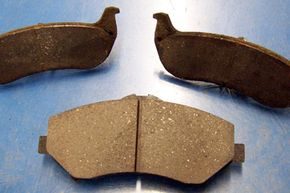
Brake pad lifespan isn’t a fixed number. It’s a range. You’ll hear mechanics say 30,000 to 70,000 miles. That’s the standard. But the real world is messier. Some pads die after 100 miles. Others last 100,000. The variance is huge.
Why? Because physics doesn’t care about your schedule. Brakes deal with insane heat, pressure, and friction. They are the hardest working component in your vehicle. But not all pads are created equal. This article focuses on caliper brake pads. We’re ignoring drum brake shoes. They work differently. We’re looking at the pads you actually see in a shop.
Friction Material: The Core of Wear
To understand longevity, look at the pad’s face. What’s it made of? There are four main types. Each has pros and cons. Each wears differently.
Organic Pads
Organic pads use non-metallic fibers. Think glass, rubber, Kevlar. These are bonded together. Friction modifiers get added. Graphite. Powdered metals. Even crushed nutshells. Why? To reduce noise. To manage heat transfer.
Here is the catch. Organic pads offer the best stopping power. Period. They bite hard. That’s also why they wear out fastest. More friction means more material gets shaved off. If you want short stopping distances, choose organic. If you want longevity, don’t.
Semimetallic Pads
This is what you’ll find on most modern cars. The mix is organic material and metals. Steel. Iron. Copper. These are molded and bonded. The result is a harder pad. It resists heat better than organic stuff.
Do they stop as well as organic pads? No. They’re harder. They last longer. But you trade some initial bite for durability. If you drive normally, this is the sweet spot.
Metallic Pads
These are pure pressure-bonded metals. Once, they were the king of racing. Now? They’re mostly obsolete. Advances in organic and semimetallic tech have pushed them aside. They work. But they’re noisy and hard on rotors. Rarely see them on street cars now.
Synthetic (Ceramic) Pads
“Synthetic” and “ceramic” are often used interchangeably. They aren’t exactly the same thing, but close enough for our talk. These pads use non-organic, non-metallic composites. Fiberglass. Aramid fibers.
Here is the data:
* Weight: Half the weight of average pads.
* Strength: Higher tensile strength.
* Stopping Power: Better in both cold and hot conditions.
* Lifespan: Significantly longer. Last much longer than average pads.
* Cost: About twice as expensive.
Ceramic pads are the luxury option. You pay double upfront. You get longer life. Better performance. Less dust. But expect a slightly longer stopping distance compared to organic pads. You pay for time.
The Physics of Brake Pads
Stopping a car is a mass problem. A car is heavy. A lot of mass. Bringing that mass to a halt requires energy dissipation. The brakes absorb that energy. They turn motion into heat.
More mass = more heat. More heat = faster wear. Or, if the material can’t handle the heat, glazing. Glazing makes pads slip. Slipping makes pads wear unevenly.
So, when you ask how long brake pads last, you’re really asking how much heat and friction your specific setup can handle. Your driving style adds to this mix. Hard stops wear pads fast. Riding the brake pedal? Instant death for pads. But that’s a topic for the next section. For now, just know that the material choice dictates the baseline. Organic wears fast. Ceramic lasts long. Semimetallic sits in the middle.
The rotors matter too. Softer rotors eat pads. Harder rotors save pads. But the pad material is the variable you can control. Pick wisely.
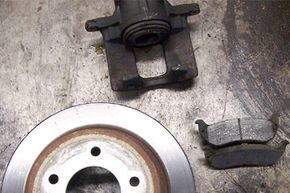
The Physics of Slowing Down
You want to understand brake pad life? Start with physics. Kinetic energy is the enemy of your pads. It’s the energy of motion. A car has it. When you hit the brake, that kinetic energy has to go somewhere. It turns into heat. Friction does the work. Pads press against rotors. The car slows. The system gets hot.
How much energy are we talking about? It’s not just about speed. Weight matters just as much. The formula is simple, even if the numbers are big. Take the weight. Multiply by the square of the speed. Divide by 29.9. You get foot-pounds. That’s the amount of heat energy waiting to be born.
Consider two cars. Both moving at 30 miles per hour. One weighs 2,000 pounds. The other weighs 4,000 pounds. The lighter car generates 60,200 foot-pounds of energy. The heavier car doubles that. 120,400 foot-pounds. Twice the mass means twice the heat. Twice the work for the brakes to absorb.
Thermal Shock and Pad Wear
Now imagine that lighter car hitting 60 miles per hour. You slam the brakes. Emergency stop. The pads don’t just slow the car. They cook. Those pads can hit 450 degrees Fahrenheit in seconds. 232 degrees Celsius. That’s not a gentle warm-up. That’s thermal shock.
This heat changes everything. It affects the material. It changes the friction coefficient. And it destroys the pad. Every time you stop hard, the pad loses a microscopic layer of itself. It’s a slow death by fire. Ride the brakes on a downhill grade? You’re accelerating that death.
The goal is simple. Convert motion to heat. But heat is the byproduct that kills the component. You can’t stop the heat from generating. You can only manage where it goes and how fast the pad wears through it.
The Rotor’s Role in Pad Longevity
Pads don’t work alone. They need a partner. That’s the rotor. It looks like a simple metal disc. It’s not. It’s an engineered heat sink. The mass of the rotor matters. A heavier rotor absorbs more heat before it gets critical. That extends pad life.
Look at the design. Rotors have fins. Internal vanes. They push air through the center. Heat dissipation. That’s the whole point. If the rotor stays cooler, the pad stays cooler. Cooler pads last longer.
The surface finish is a compromise. Too smooth? You lose bite. Braking distance increases. Dangerous. Too rough? The pads wear down like sandpaper on wood. The finish has to be just right. Smooth enough for pad life. Rough enough for stopping power. It’s a delicate balance of friction.
Calipers and the Sticking Problem
The caliper is the muscle. It pushes the pads. Hydraulic pressure moves the pistons. The pads clamp onto the rotor. Then, ideally, they release. Full release. No drag.
But calipers stick. It happens. Corrosion. Bad seals. Age. When a caliper sticks, the pad stays pressed against the rotor. Constant friction. Constant heat. You’re braking while trying to drive. It’s inefficient. It’s dangerous. And it halves your pad life overnight.
A stuck caliper creates a scenario where the brake system is always on. The heat builds up even when you aren’t touching the pedal. The pad overheats. It glazes. It wears out prematurely. Check your calipers if you notice uneven wear or pulling to one side.
How Long Do Brake Pads Actually Last?
There is no single answer. The variables are too wide. Driving style. Car weight. Terrain. Weather. The type of transmission.
Manual transmission drivers have an advantage. They can downshift. Engine braking takes some of the load off the brakes. Automatic drivers rely entirely on the friction system. They wear pads faster.
But style matters more than gear selection. Hard braking? Short life. Riding the brakes? Short life. Smooth, early braking? Long life. You can double your pad life simply by changing how you drive. It’s free. And it saves money.
Semimetallic pads typically last 30,000 to 50,000 miles. That’s an estimate. A guess. Your actual mileage will vary. Don’t wait for the mileage counter. Listen.
Warning Signs and Maintenance
Most modern pads have a squealer. A small metal clip. It’s attached to the pad. When the friction material gets thin, the clip touches the rotor. Squeal. It’s an audible indicator. It’s designed to annoy you into action.
Don’t ignore it.
Other signs are harder to hear but easier to feel. Brake fade. The pedal feels soft when the brakes get hot. Loss of power. Pulling to one side. That indicates uneven wear or a sticking caliper. Both are critical failure points. Brakes are not a component you can ignore.
The best maintenance is routine checks. Ask for a brake inspection at your oil change. A good shop can measure the remaining friction material. They can tell you how many miles are left. Don’t guess. Measure.
Brake pads are a wear item. They are meant to be replaced. But knowing how they work helps you get the most out of them. Heat is the killer. Management is the cure. Drive smooth. Stop early. Listen for the squeal.