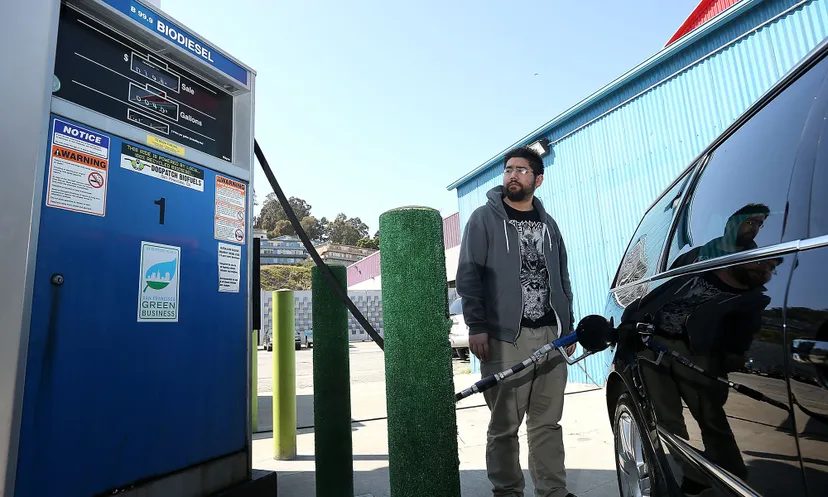

People are asking “what is biodiesel” more than ever. You hear it at dinners. You see it in politics. It’s everywhere. Oil controls too much of our lives. When prices spike, interest in alternatives explodes. Everyone wants off the fossil fuel treadmill. Electric cars get the glory. Hydrogen fuel cells get the hype. But biofuels are still in the mix.
These fuels don’t come from the ground. They come from biology. Waste vegetable oil. Soybeans. Animal fat. The ingredients vary. The process is chemical. The result is a cleaner burn.
We need to strip away the marketing. Let’s look at the science. How does this stuff actually work in a tank?
Biodiesel is a renewable, non-toxic alternative to petroleum diesel, produced via chemical reactions with plant oils or animal fats.
Biodiesel isn’t magic. It’s chemistry. Standard diesel comes from crude oil. Biodiesel comes from renewable resources. Plants and animals replenish these sources. Farming cycles. Recycling streams. It’s circular.
The fuel itself is safe. It’s non-toxic. It doesn’t poison the soil like some petroleum spills. But safety isn’t the only benefit. Performance matters.
Modern diesel engines handle biodiesel well. You don’t need to tear down your motor to use it. Modifications are minimal. Often, none are needed at all.
Blends are the norm. Pure biodiesel exists. It’s called B100. But most people use mixtures. The system uses “B” followed by a number. That number is the percentage of biofuel.
B20 is the standard. That’s 20% biodiesel and 80% petroleum diesel. It’s widely available. It works in most trucks. It doesn’t require new nozzles.
B100 is pure stuff. It’s potent. It’s clean. But it’s less common. Storage gets tricky. Cold weather issues arise. Still, for enthusiasts, it’s the holy grail of biofuels.
Why stop at 20%? Why not go all in?
The answer lies in infrastructure. Blends bridge the gap. They let us use cleaner fuel without overhauling the supply chain. They let engines run smoothly while we figure out the rest.
Biodiesel isn’t just a niche interest. It’s a practical step. A way to reduce dependence on volatile oil markets. A way to burn something that actually grew.
But is it better? Or just different?
We’ll dig into the specs next. The numbers don’t lie.
Biodiesel isn’t just a loose umbrella term. There is a hard, technical definition recognized by ASTM International. This is the same organization formerly known as the American Society for Testing and Materials. They set the industry standards. The National Biodiesel Board (NBB) cites this definition clearly.
Biodiesel is a fuel comprised of mono-alkyl esters of long chain fatty acids. These come from vegetable oils or animal fats. It is designated B100. It must meet the requirements of ASTM D 6751.
That sounds rough. It is technical jargon. But it is more familiar than you think. You encounter these fatty acids every day. We look at them in the next section.
Fats and Biodiesel

The appeal of biodiesel lies in its sourcing flexibility. While animal fats work, plant oils dominate the feedstock landscape. You likely have several of these in your pantry right now. Soybean, rapeseed, canola, palm, cottonseed, sunflower, and peanut oils are all viable candidates for conversion. Even recycled cooking grease from local diners can be repurposed.
The unifying factor in all these sources is fat. Specifically, they contain triacylglycerols (also known as triglycerides). These molecules consist of carbon, hydrogen, and oxygen atoms arranged in a specific structural pattern. They aren’t limited to cooking oil. Butter and lard contain them too. If you’ve ever checked a lipid panel at the doctor’s office, you’ve seen triglyceride levels on the lab report.
To visualize the molecular structure, imagine a capital “E.” The vertical spine of the E is a glycerol molecule. Glycerol is a standard ingredient in soaps, cosmetics, and pharmaceuticals. Attached to this backbone are three horizontal bars. These are fatty acids, long chains of carbon and hydrogen atoms.
But raw vegetable oil doesn’t go straight into a tank. Although early diesel engines could technically run on crude oil, the results were messy. Unrefined fat causes operational headaches. The oil must undergo chemical modification before it becomes a viable fuel. Most industrial facilities use a process called transesterification.
Here is how biodiesel production works. The oil is first purified. Then it’s reacted with an alcohol, typically methanol or ethanol. A catalyst, such as potassium hydroxide or sodium hydroxide, speeds up the reaction. This chemical swap breaks down the triacylglycerol. It separates into esters and glycerol. The esters are what we call biodiesel. The glycerol is a byproduct.
The Origins of Biofuel Usage
The idea isn’t new. Rudolf Diesel, the engine’s namesake, originally envisioned vegetable oil as a primary fuel source. Much of his early development work focused on biofuels. At the 1900 World Exhibition in Paris, Diesel demonstrated his engine running on peanut oil. Henry Ford also anticipated that his Model T would operate on ethanol derived from corn.
Petroleum eventually won out. It offered better supply chains, lower prices, and higher efficiency. Nevertheless, vegetable oils saw limited use during the 1930s and 1940s.
The 1970s and 1980s brought the concept back to the forefront in the United States. The Clean Air Act of 1970 empowered the EPA to tighten emission standards. Regulators targeted sulfur dioxide, carbon monoxide, ozone, and nitrogen oxides. This regulatory environment demanded cleaner-burning fuels and new fuel additives.
Geopolitics played a massive role. The 1973-1974 Arab oil embargo and the 1978-1979 Iranian Revolution disrupted supply. Domestic production couldn’t keep up. U.S. crude oil imports dropped by 30% during the embargo. Prices surged. The world price of crude jumped from roughly $14 per barrel in early 1979 to over $35 by January 1981. Prices didn’t stabilize until 1983, hovering between $28 and $29 per barrel.
Researchers started looking for alternatives. In August 1982, the first International Conference on Plant and Vegetable Oils took place in Fargo, North Dakota. Topics ranged from fuel costs to extraction methods.
Legislation continued to shift. The 1990 Clean Air Act amendments introduced stricter vehicle emission rules. Gasoline required higher oxygen content to reduce carbon monoxide. Diesel fuel needed lower sulfur levels.
The Energy Policy Act (EPACT) of 1992 aimed to increase alternative fuel usage in government fleets. It sought to reduce foreign oil dependency. The 1998 EPACT amendment clarified that existing government diesel vehicles could use biodiesel. This was deemed an acceptable alternative to purchasing dedicated alternative fuel vehicles.
With regulations tightening and oil prices volatile, petroleum alternatives gained traction. But biodiesel isn’t a perfect replacement for gasoline or standard diesel. We’ll examine the pros and cons next.
Why Biodiesel Clears the Air
The environmental case for biodiesel isn’t just buzzwords. It’s measurable. Biodiesel burns cleaner than standard petrodiesel. It breaks down faster. It’s renewable. These aren’t minor tweaks. They are structural advantages that matter when you look at the chemistry of exhaust.
Emissions legislation drives a lot of this interest. Lawmakers care about sulfur compounds. They cause acid rain. Carbon monoxide kills. Carbon dioxide traps heat. There are also the less visible dangers: polycyclic aromatic hydrocarbons (PAHs). These ring-shaped compounds link to cancer. Particulate matter hurts lungs. Unburned hydrocarbons create smog.
Biodiesel cuts into these problems.
It is the only biofuel to pass Clean Air Act emissions testing. Pure B100 reduces carbon dioxide emissions by 78 percent. It drops carcinogenic properties of diesel fuel by 94 percent. That data comes from the National Biodiesel Board and the U.S. DOE Office of Transportation Technologies. Numbers like that don’t appear by accident. They are the result of specific chemical structures in fatty acid methyl esters.
Cleanup Is Easier (And Safer)
Spills happen.
When diesel spills, it stays. It lingers in soil and water. Biodiesel degrades at a rate four times faster than conventional diesel. The EPA confirms this. Natural agents like bacteria eat it up quickly. If you tip over a tank of biodiesel, the cleanup is manageable. The ecological damage is contained. This applies to blends too.
There is also the safety factor. Biodiesel is non-toxic. It is roughly 10 times less toxic than table salt. Its flashpoint is higher. It requires more heat to ignite. This makes storage safer. Transportation regulations are less restrictive. You don’t need the same hazardous material protocols for a truck hauling B20 as you would for pure petroleum diesel.
Your Engine Will Thank You
Mechanics know that fuel acts as a lubricant. Low-sulfur petroleum diesel strips that lubricity out of the system. It leaves metal-on-metal contact vulnerable. Biodiesel fixes this.
It acts as a solvent. It loosens carbon deposits and gunk from the engine internals. Those deposits can cause clogs. Biodiesel removes them. Since it leaves no residue of its own, the engine runs cleaner over time. Long-term wear decreases.
You don’t need 100% biodiesel to feel this. A blend of just 1% increases fuel lubricity by up to 65%. The U.S. DOE Office of Transportation Technology backs this figure. Less friction means less heat. Less heat means longer component life. The injector pumps last longer. The seals stay pliable.
Reducing Import Dependency
Energy security is a national priority. The U.S. imports a massive amount of its petroleum. Global supply is tightening. Prices fluctuate with geopolitical instability. Biodiesel offers an alternative.
Most U.S. biodiesel comes from soybean oil. Soy is a major domestic crop. It is grown in the Midwest, in states like Illinois, Iowa, and Ohio. If you produce the fuel locally, you reduce reliance on foreign oil. You keep capital within the domestic economy. It doesn’t solve every energy problem. But it alleviates demand. It provides a buffer against supply shocks.
This isn’t about replacing all diesel tomorrow. It’s about adding a layer of resilience to the existing infrastructure. You can use it in almost any diesel engine with little to no modification. The hardware doesn’t need to change. The fuel changes.
The benefits are clear. Cleaner air. Safer handling. Better engine lubrication. Domestic production. Yet, there are hurdles. Cold weather performance. Material compatibility with older seals. Supply chain logistics.
The Cons and The Future

Biodiesel isn’t a magic bullet. It has teeth.
You get cleaner particulate matter, sure. But the trade-off bites back in unexpected ways. Some issues live inside the fuel chemistry. Others come from the messy reality of supply chains.
The NOx Problem
Here is the first headache: nitrogen oxides.
When diesel manufacturers scrub out particulate matter, NOx levels often climb. These emissions fuel smog. Biodiesel is no exception.
Some of this is manageable via engine tuning. But tuning isn’t always feasible for every driver. Researchers are hunting for tech to cap these NOx spikes. It’s an ongoing battle.
The Solvent Trap
Biodiesel acts as a solvent. This is great for cleaning tanks. It’s terrible for old filters.
If you’re driving a pre-1992 diesel, watch out.
The fuel loosens decades of gunk in your lines. That sludge then travels downstream. It jams your fuel filter.
Manufacturers warn you to swap the fuel pump immediately when switching to high-concentration blends. Older systems weren’t built for this level of cleaning power.
Worse still, biodiesel breaks down rubber.
Old fuel lines? They rot. Seals? They dissolve. You’ll need to replace those rubber components or face leaks. Many makers include biodiesel in warranties now. That doesn’t mean the parts will survive.
Power and Efficiency Hit
Don’t expect the same pep from your pedal.
There is a slight drop in fuel economy. Power takes a hit too. On average, you lose about 10 percent of your output.
The math is simple. It takes roughly 1.1 gallons of biodiesel to equal the energy of one gallon of standard diesel. You burn more to go the same distance.
The Cost Barrier
The bigger picture is where biodiesel bleeds money.
Cost is the primary drag. According to the EPA, pure B100 runs between $1.95 and $3.00 per gallon. B20 blends sit about 30 to 40 cents above standard diesel prices.
Feedstock and market volatility drive these numbers. One week it’s cheap. The next, it’s a luxury item.
Availability: A Patchwork Map
You won’t find biodiesel at every station in all 50 states. But you can get it everywhere.
There are three main channels:
– Direct from the supplier
– Through petroleum distributors
– At public pumps
Currently, 19 NBB-member producers market biodiesel across the US. If you’re outside the US, check your local biofuels agency for station maps.
The Scale of Production
How much is actually being made?
With so many producers—federal, private, industrial—it’s hard to pin down a single neat figure. Right now, the US produces about 75 million gallons annually.
Production is flexible. It can scale up or down based on demand.
Who Actually Uses It?
Fleet vehicles dominate the market. The Clean Fuels Alliance reports over 100 fleets running biodiesel.
Look at the roster:
– U.S. Postal Service
– U.S. Air Force
– U.S. Army
– NASA
– U.S. Department of Energy
– Duke Energy
– Florida Power & Light
– Cincinnati Metro city buses
Public transit is also jumping on board. Future targets include marine engines, agricultural gear, and home heating systems.
The Political Tailwind
Awareness is growing. Biofuels are moving from niche tech to dinner table talk.
Political support is tightening around them. The 1998 EPACT amendment set a precedent. Alternative fuels will soon be a necessity, not a choice.
It’s a constant work in progress. Whether it grabs the spotlight from electric vehicles or stays in the background, the infrastructure is slowly hardening. The engine runs. The filter clogs. The cost fluctuates. But the momentum is there.