
Swap out a conventional car battery and you’re looking at $30 to $120. It’s a routine chore. Drop that same cash into a transmission job and you’d need a second mortgage. For the average driver, the battery is a disposable commodity. It dies. You replace it. Life goes on.
Hybrids tell a different story.
The battery isn’t just a starter motor helper here. It’s the heart of the propulsion system. Without it, the electric motor that handles low-speed driving stops working. Fuel efficiency plummets. Emissions spike. The vehicle loses the very reason it was built.
Most hybrids use a nickel-metal hydride (NiMH) battery pack. Think of it not as a single unit, but a cluster of modules working in concert. When these fail, the repair bill hits around $3,000. That’s transmission money. That’s headache money.
The Warranty Shield
Rumors about hybrid battery unreliability have haunted the segment for years. Spoiler alert: they’re mostly myths.
Manufacturers know the stakes. They back these packs with warranties that typically last 10 years or 80,000 to 100,000 miles. Some go longer. If the pack dies within that window, the company replaces it. Free charge. No questions asked.
This safety net covers the vast majority of failures. But what happens when you hit 101,000 miles?
Beyond the Guarantee
Once that warranty expires, you’re on your own. And you face a binary choice: replace the entire pack or recondition it.
Replacement is straightforward but brutal on the wallet. You buy a new unit. You install it. You’re done.
Reconditioning is where things get interesting. Toyota pioneered this approach for the Prius. It’s not a full replacement. It’s a rescue operation.
So, what exactly is hybrid battery pack reconditioning? And does it actually save you thousands?
How Reconditioning Works
Most hybrid battery failures aren’t caused by total death. They’re caused by imbalance.
Over time, individual modules within the pack degrade at different rates. Some hold a charge well. Others lose capacity quickly. The system’s management computer sees this disparity. It limits power output to protect the weaker cells. The car feels sluggish. The fuel economy tanks. The check engine light comes on.
The battery isn’t dead. It’s just out of sync.
Reconditioning resets the system. Technicians use specialized equipment to:
– Discharge the battery pack completely.
– Charge each module individually to its optimal level.
– Equalize the voltage across all cells.
This process restores balance. It allows the weaker cells to perform closer to their original specifications. For many owners, this extends the life of the pack for several more years.
Cost Comparison: Replacement vs Reconditioning
Why choose reconditioning? Money, obviously.
A full hybrid battery replacement costs $3,000 or more. Parts alone are expensive. Labor adds to the bill.
Reconditioning costs a fraction of that. While prices vary by shop and location, the process typically runs between $300 and $500. That’s a 90% savings.
Is it permanent? No. You’re buying time, not a new life. But for a car with 150,000 miles on the clock, buying another 50,000 miles for $400 is a smart move.
When to Choose Which
If your battery is under warranty, go to the dealer
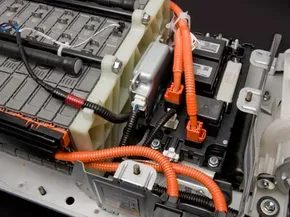
Toyota Prius battery packs are built to outlast most other components in the car.
The warranty covers the life of the vehicle. Drivers have logged at least two 2001 Prius models hitting 200,000 miles without a full pack swap. That is more than double the standard warranty period.
If a failure occurs before 10 years or 100,000 miles, Toyota installs a new unit. They do not throw the old one away.
The pack contains 28 individual modules. A failure usually stems from one specific module. The rest remain functional.
Toyota operates a central recycling hub. They collect packs from scrap yards. Every Prius battery has a toll-free number printed on it.
Callers can earn a $150 rebate. Bring the pack to any Toyota or Lexus dealer. This prevents degradation in landfills. Toyota pays people to reclaim these units.
After the warranty expires, reconditioning is the cheaper alternative. Technicians identify the bad module. They swap it out.
They use harvested cells from recycled packs. The new module matches the chemistry and age of the remaining 27. This extends battery life by six years.
The cost is around $750. That is one-fourth the price of a new pack. It reduces maintenance costs significantly.
How reconditioning affects Prius battery longevity and cost
Reconditioning a Toyota Prius hybrid battery is not just a patch. It is a targeted repair.
The 28-module design allows for precision. You replace only the weak link. This keeps the rest of the pack stable.
Older packs provide donor modules. These have similar wear patterns. The match ensures consistent performance.
The savings are substantial. New packs are expensive. Reconditioning costs a fraction of that.
Where to find recycled Prius battery modules
Toyota’s recycling network is specific. They work with dealerships.
Scrap yards supply the raw material. The $150 incentive drives the collection. It turns waste into inventory.
This system supports hybrid battery reconditioning services. It keeps parts available after warranty expires.
Drivers avoid full replacements. They get extended life. The process is efficient.
There is no middle ground between junk and brand new. Reconditioning sits in between. It uses real data from the pack’s history.
Technicians know which modules fail first. They source replacements accordingly.
The result is a functional pack. It lasts longer. It costs less.
Does the extra six years matter? For high-mileage drivers, yes. The math works out.
The industry relies on this circular flow. Without it, costs would skyrocket.
Parts are available. The method is proven. The Prius remains relevant.
But what happens when the modules themselves degrade beyond repair? The cycle continues.