For a brief window in American history, owning a Packard wasn’t just about transportation; it was a civic duty. By 1929, more people held stock in Packard than any corporation except General Motors. There were far more investors in the company than actual owners on the road. It was the social Standard of America, even if most of those shareholders could never afford to buy one. The brand promised the supreme combination of everything that was fine in a motor car, trading technical purity for social weight.
The story started in Warren, Ohio, in 1899. James Ward Packard decided he could build a better automobile than the Winton he was currently driving. His first attempt was a small one-cylinder machine featuring automatic spark advance—a novelty at the time. James B. Joy took over the operation in 1901 and moved the factory to Detroit three years later. That same year, 1903, saw the debut of Packard’s first four-cylinder model.
Packard climbed the ranks quickly. The 48-horsepower Six of 1912 put them firmly in the industry’s front row. They didn’t stop there. In 1916, Packard leapfrogged Cadillac’s new V-8 with a V-12 engine. They called it the “Twin Six.” It was a legendary powerplant, though the name only stuck until 1923. A straight-eight engine followed in 1924. While they did introduce a less-prestigious Six in 1921, it was dropped before 1930. From then until the company’s sad death in 1958, Packard maintained its reputation almost exclusively with eight-cylinder engines.
Despite its single-minded devotion to luxury, Packard compiled a production record that defied the odds. Between 1925 and 1930, they regularly outproduced Cadillac. This was impressive considering GM had the LaSalle brand helping them from 1927 onward. With the exception of 1931, 1932, and 1934, Packard continued to out-build the GM duo until World War II broke out.
When the Depression hit, luxury makers relied on lower-priced models to survive. Packard introduced the One Twenty in 1935, paired with the One Ten. These cars allowed Packard to transform from a low-volume luxury maker into a true mass-market producer. They endured the hard times and grew rapidly. However, this strategy eventually backfired. Packard was far slower than Cadillac or Lincoln to abandon medium-price products after WWII, sowing the seeds of its own demise.
To track the evolution of these cars, historians use “series” numbers that Packard began using in 1923. This practice continued into the 1950s. For example, the Seventh Series corresponds to the 1930 model year. Understanding this hierarchy helps clarify the differences between the models.
The 1930 Packard Eighth Series Breakdown
The 1930 lineup began with the standard Eight. These cars had the least pretentious bodies and sat on relatively short wheelbases of 127.5 or 134.5 inches. Power came from a 320-cubic-inch inline engine making 90 bhp.
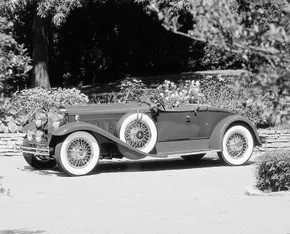
Above that was the dashing Speedster Eight. It offered lithe boattail and standard roadsters, plus phaeton, victoria, and sedan bodies. All sat on a 134-inch chassis. The price tag was steep—$5200 to $6000. Only 150 were built before the series was canceled after 1930. These cars used a larger 385-cid eight engine delivering between 125 and 145 bhp.
The Custom and DeLuxe Eights sat in the middle. They used the 385 engine but tuned for 106 bhp. Wheelbases stretched to 140.5 inches for the Custom and 145.5 inches for the DeLuxe. These were generally built with closed bodies but were available in phaeton, roadster, and convertible styles. Some were built by Packard, others by various custom coach-builders. Prices ranged from $3200 to over $5000. Keep in mind that such sums could buy a rather nice house at the time.
1931 Eighth Series Mechanical Updates
The 1931 Eighth Series comprised standard, Custom, and DeLuxe Eights. The standard line now offered “Individual Customs” on the 134.5-inch chassis. Options included a Dietrich convertible sedan and victoria, plus Packard’s own cabriolet, town car, and landaulet styles.
Mechanically, the standard models retained the 320 engine. It was now 10 bhp richer. The Custom and DeLuxe models carried the 385 unit, now producing 120 bhp. This extra power came from modified intake and exhaust passages, similar to those found on the 1930 Speedsters.
Linewide mechanical changes were also significant. Packard added an automatic Bijur chassis-lubrication system. They also introduced a new quick-shift mechanism for the four-speed gearbox to reduce driver effort. These updates kept the brand relevant, even as the market shifted beneath their feet.
Packard Ninth Series
The ninth series arrived shortly after, carrying forward the legacy of the eighth while preparing for a world that was changing faster than any engine could handle.
The 1932 Packard Ninth Series arrived with a modest but meaningful update: a conventional three-speed all-synchromesh transmission. It was a move toward mechanical refinement, though the exterior styling remained largely faithful to the upright, formal aesthetic of the 1930–31 models, just with a slightly more streamlined, lower profile.
The real story, however, was split between the top and bottom of the lineup.
Leading the charge was the new Twin Six, which was renamed the Packard Twelve for this single year of production. This was not a revival of the original 1916–23 model. It was a brand-new 445.5-cubic-inch V-12, originally designed for an aborted front-wheel-drive chassis project. While a lower numerical axle ratio was an option, most buyers specified gearsets of 4.41:1 or higher.
The result was not blistering acceleration, but rather whisper-quiet, shift-free cruising. Packard claimed the engine could sustain 100 mph, but that figure relied on idealized test conditions. In stock tune, the 160-horsepower engine typically topped out around 90 mph. At highway speeds of 60 or 70 mph, however, the refinement was unmatched.
These 1932–34 V-12s shared their wheelbases and most body styles with the upper Eight series, which was marketed as the “DeLuxe” in 1932 before shifting to the “Super Eight” nameplate. The longer chassis was reserved for Individual Customs and a standard seven-passenger sedan or limousine.
Despite being the pinnacle of Packard engineering, the V-12 carried a surprisingly small premium—only $100 to $200 over the factory-bodied DeLuxes initially. That gap widened significantly over time, especially when comparing the various custom-bodied models.
The Death of the Light Eight
Packard’s financial situation was precarious. As an independent manufacturer without the financial backing of a large parent company, the Depression hit harder. To survive, Packard attempted to enter the medium-priced market well before competitors like Cadillac or Lincoln.
The 1932 Packard Light Eight debuted two years before GM’s smaller LaSalle and four years before Lincoln’s Zephyr.
It was a genuine Packard, built with the same meticulous care as its larger siblings, but on a lighter, 127.8-inch chassis. It used the standard Eight’s 320-cubic-inch engine, rated at 110 bhp that year. Because it was lighter, the Light Eight was actually faster than its bigger sisters. Body styles included a four-door sedan, a five-passenger coupe-sedan, and a rumble-seat roadster and coupe.
Visually, it looked chunkier than other 1932 Packards simply due to its shorter length. The pricing was attractive at around $2,000, but that affordability became its undoing.
Building a Light Eight cost nearly as much as building a standard Eight, yet it sold for $500 to $850 less. Packard was lucky to break even on any unit sold. The line was dropped after just one year.
The financial toll was severe. Packard lost $7 million in 1932, much of it bleeding out through the Light Eight division.
Leadership Shifts and the Rise of the One Twenty
Company president Alvan Macauley realized that traditional high-end craftsmanship alone wouldn’t save the company. He began scouting GM executives for someone who understood volume production.
Ironically, the company still managed to net $500,000 in 1933, capturing 38% of the high-priced market—surpassing Cadillac’s share. But the high-end market was shrinking. The volume was gone.
Macauley’s search for leadership reform soon yielded results. Two key figures arrived to transform the company:
- Max Gilman, described as a “hardboiled guy in New York,” who had started as a Brooklyn truck salesman in 1919. He replaced Macauley as president in 1938.
- George T. Christopher, a production expert enticed out of retirement from GM. He modernized Packard’s plants end-to-end for much higher volume. Christopher later replaced Gilman as president in 1942.
Gilman set the stage for publicity, while Christopher re-engineered the manufacturing process. Their combined efforts culminated in the unveiling of the One Twenty on January 6, 1935.
The Twelve Evolves
When senior production was consolidated in 1935 to make room for the new, high-volume One Twenty, the Twelve received a significant update.
The engine was stroked to 473 cubic inches, boosting power to 175 bhp. The wheelbase shifted to 139 and 144 inches. The Super Eight models offered similar body styles on these same chassis, alongside a trim 132-inch platform.
Custom coachbuilding was in steep decline. Many coachbuilders went bankrupt or were acquired, causing the custom body market to thin out rapidly. Yet, a few bespoke options remained available through 1942, keeping the tradition of individual customization alive until the end of the era.
The Packard One Twenty wasn’t just a new model. It was a survival strategy wrapped in chrome.
Before 1935, Packard was a boutique marque. You bought one because your name was on a trust fund, not because you needed transportation. The Light Eight was the benchmark. It was beautiful. It was expensive. And it was killing the company.
Enter the One Twenty.
It cost roughly $1,000 to $1,100. That was less than half the price of the flagship Eight. For the first time, the middle class could touch a Packard badge. It was a massive gamble. If it failed, Packard went under. If it succeeded, the brand would change forever.
It succeeded. Violently.
The Look of Compromise
The styling team—largely recruited from General Motors—didn’t throw out the Packard DNA. They kept the “ox-yoke” radiator grille. They kept the red hexagon hubcaps. But they softened everything.
The One Twenty featured rounded contours. The windows were what critics later mockingly called “potato-shaped.” The fenders were full, sweeping arcs. The most daring move? The radiator was raked back 30 degrees from vertical. It looked modern. It looked fast. It looked nothing like the stiff, upright luxury cars of the early ’30s.
“The One Twenty was a genuine Packard in appearance, road behavior, and workmanship.”
It wasn’t cheap looking. It was smart looking.
Under the Hood: Granite Strong
Packard needed an engine that could move a 3,500-pound car without breaking the bank. They built an L-head eight.
The 1935 version displaced 257.2 cubic inches. It made 110 horsepower. It wasn’t a powerhouse by modern standards, but it was reliable. The block was heavily ribbed for rigidity. Individual exhaust ports reduced heat transfer to the intake. The water jackets were deep. There were five main bearings. The crankshaft journals were counterweighted and overlapping.
It was smooth. It was efficient. It was granite strong.
Most One Twentys hit 85 mph. 0 to 60 took just under 20 seconds. Not fast by today’s metrics, but respectable for a prewar family sedan.
In 1935, Packard upped the ante. Stroke length increased. Displacement jumped to 282 cubic inches. Power rose to 120 bhp. The car aged well.
The Dietrich Deception
For 1936, Packard launched a convertible sedan. It carried “Dietrich” badging.
Here is the twist. Ray Dietrich, the famous coachbuilder, had nothing to do with it. His name had been acquired by the Murray Body Company in the early 1930s. Murray built the bodies. Packard sold them. It was a marketing play, pure and simple. It worked.
The lineup expanded rapidly. 1937 brought a station wagon. It brought three DeLuxe closed models. It brought a 138-inch wheelbase sedan and a limousine.
Technology caught up too. The One Twenty joined the Senior Packards in offering independent front suspension. They swapped the complex Bijur automatic grease system for simple manual grease fittings. Hydraulic brakes replaced the old mechanicals.
By 1938, the “One Twenty” nameplate vanished. For one year, it was just called the “Eight.” The standard wheelbase stretched to 127 inches. The car was getting bigger. The masses were buying.
The Numbers Don’t Lie
Packard was long criticized as “cheap” by purists. They said it lacked soul. They said it was a watered-down luxury.
They were wrong about the sales.
In 1934, Packard produced about 8,000 cars. It ranked nowhere near the top. In 1935, production nearly quadrupled to 32,000. Packard jumped to 12th in the industry.
1936 saw 61,000 units.
1937 shattered records with 122,000 units.
The Great Recession hit in 1938. Volume dropped to 56,000. But the trend held. Packard remained a top-tier producer through the end of the decade and into World War II.
The engine was the key. But so was the sibling rivalry.
The One Ten Factor
In 1937, Packard introduced an even cheaper line. The Six.
For 1940-42, it would be called the One Ten. Back then, it was just the Six. It sat on a 115-inch wheelbase. It used an over-bored version of the One Twenty’s engine block. They cut two cylinders.
The result was a 237-cid six making 100 bhp.
It wasn’t as smooth as the eight. It didn’t have the same low-end torque. But it offered excellent mileage. And it cost about $150 less than the One Twenty.
The market voted. In 1937, the One Ten outsold the One Twenty 13 to 10.
The wheelbase stretched to 122 inches for 1938-39. Displacement bumped to 245 cid. Horsepower stayed flat. The offerings mirrored the One Twenty’s body styles. It was volume, not prestige, that drove the numbers.
The End of an Era
The One Ten/Six completed Packard’s transformation. It went from a hand-built luxury workshop to Detroit’s top-10 producer.
But the soul of the brand was shifting.
Packard still sold regular Eights. Super Eights. Opulent Twelves. They moved about 6,000 of those per year. But the breadwinner was the budget models. The One Twenty cost roughly $1,200 less than a standard Eight.
The Super Eight lost its 385 cubic inch engine after 1936. It was demoted to the 320 unit used in the standard Eight. The standard Eight itself disappeared after 1937, though the name lingered for a while.
The small, dumpy One Ten wasn’t a traditional Packard. It lacked the presence. It lacked the exclusivity.
Some blame George Christopher, Packard’s president. He pushed for higher production. He chased volume. He may have been too greedy.
The result? By the end
While Cadillac was busy climbing the luxury ladder with modern Harley Earl designs, Packard doubled down on tradition. By 1939, that tradition looked stiff. The brand’s tall, formal aesthetic hadn’t shifted since its major design overhaul four years prior, making it feel dated next to the sleeker competition. But the engineering pedigree remained, and the lineup was structured to catch every buyer from the budget-conscious to the ultra-wealthy.
The entry-level Six, soon to be rebranded the One Ten, started at a modest $1000 for the business coupe. For context, a Ford or Chevy cost between $600 and $900 that year. Above that, the One Twenty nameplate returned for the entry-level eight-cylinder models. These came on 127- and 148-inch wheelbases, priced from $1245 to $1700. The Super Eight line shared those chassis but narrowed the focus, offering a price spread from $1650 to $2300.
Then there was the Twelve. It still offered a massive variety of custom bodies by prestigious coachbuilders like Rollston and Brunn, with prices ranging from $4155 to a staggering $8355. But this was the end of the road for the marque’s flagship. The Depression had stripped the Twelve of its necessity, rendering it an anachronism. Only 5744 units were built during its eight-year reign as the queen of the Packard line, including the earlier Twin Sixes from 1932. The era of the ultra-luxury V12 was closing.
Under the Hood of the New Super Eight
Styling adjustments continued into 1940, but the real story was mechanical. Packard introduced a new 356-cubic-inch, 160-horsepower engine that expanded the Super Eight line. This powerplant was split between the One Sixty and Custom One Eighty models. These cars spanned wheelbases of 127, 138, and 148 inches, with standard bodywork pricing between $1500 and $2900.
The new 356 engine was an engineering marvel in its own right. It featured nine main bearings and a crankshaft weighing 105 pounds, resulting in an impressively quiet operation. Performance matched that refinement; the engine was potent enough to push lighter models well over 100 mph. This engine would become the heart of Packard’s performance lineup, powering the Supers through 1947 and the Customs until 1950.
Packard also made history in 1940 by becoming the first production car company to offer air conditioning. It wasn’t exactly efficient by modern standards—the units were bulky and lacked the cooling power of later systems—but it was a forward-thinking feature that set Packard apart from rivals who were still ignoring climate control.
The Darrin Coupes: High-Style Custom Orders
While the standard Six remained a One Ten and the One Twenty saw minor changes, the most exciting developments for 1940 came from outside the main factory. Packard introduced four new custom-built Darrin models, designed by the renowned Howard A. “Dutch” Darrin. These cars effectively filled the glamour gap left by the discontinued Twelve.
The lineup included:
* A One Twenty convertible victoria on a short wheelbase.
* A Custom Super Eight One Eighty version on the same short wheelbase.
* A long-chassis Custom Super convertible sedan.
* A closed Sport Sedan.
Dutch Darrin hated running boards, and his designs reflected that disdain. The complete absence of them gave the cars a sleek, ground-hugging silhouette that was rare for the time. The victoria models were particularly exquisite, balancing smooth, low lines with just enough of Packard’s traditional dignity to keep the brand identity intact.
These weren’t just random concepts. Darrin had been building specials at his Hollywood studio for celebrities, including actor and crooner Dick Powell. The response to those early builds was strong enough that Darrin convinced Packard to catalog them as special-order vehicles. His clever marketing ploy involved parking the Powell car at the Packard Proving Grounds during the summer of 1939. When dealers attended their annual sales meeting, they were greeted by the vehicle, and the reception was overwhelmingly positive.
Save for sectioned radiators and hoods, the Darrin-Packards featured unique body panels. The Sport Sedan was a handsome “gentleman’s” car, echoing the curved, blind-quarter roof and chrome-edged windows of Bill Mitchell’s 1938 Cadillac Sixty Special. But the real star was the sleek victoria. It featured a cut-down windshield and an abrupt kickup to the rear flanks from a gradually sloped doorline. This detail became known as the famous “Darrin notch,” a signature that would make these cars instantly recognizable on any road.
For more on defunct American cars, see:
-
AMC
-
Duesenberg
-
Oldsmobile
-
Plymouth
-
Studebaker
-
Tucker
The Packard Clipper
The Darrin-bodied Packards occupied a lonely rung on the price ladder during the 1940s. With a One Twenty Victoria starting at $3,819 and a Custom Super convertible sedan commanding $6,332, they were luxury items for a luxury audience. Sales were naturally minuscule. Packard knew this. Production at the old Auburn plant in Connersville, Indiana, was deliberately capped to keep supply tight and exclusivity high. In 1940, only 50 victorias rolled off the line. Just 12 convertible sedans were built, and nine of those survive today. It’s a rarity that collectors obsess over.
The Request Car That Wasn’t
Packard marketed the Sport Sedan as a “request car,” positioned for clients who expected the brand to define the pinnacle of motorcar transportation. The promise was newness. Fineness. Luxury. The reality was quieter. The Sport Sedan never gained traction. Dutch Darrin’s own shop completed just two examples before the project was shelved. Packard itself tried its hand at the concept, building two “Darrinized” sedans using stock 1940 front ends. They weren’t as visually striking as Darrin’s full commissions. They led nowhere productively. Today, all Darrin-Packards are recognized as “Classics” by the Classic Car Club of America.
1940 Volume and Scarce Variants
While the Darrins were the crown jewels, other custom bodies also floated in the upper tiers. Rollston offered an all-weather cabriolet for $4,473 and a town car for $4,599 in 1940. Only a handful were produced. Even the standard models carried an air of scarcity. Of the 98,000 Packards built that year, only 5,662 were Super Eights. Customs numbered just 1,900. The vast majority were One Tens and One Twentys—the volume sellers that kept the factory lights on.
The 1941 Refresh
Packard rebodied its entire lineup for 1941, but the changes were subtle at first glance. The visual cues? Slightly larger windows. And a significant styling shift: headlamps set firmly within the front fenders rather than mounted on them. It was a move toward a cleaner, more integrated look. Underneath, wheelbases remained unchanged, but floors were lowered. Suspension was revised. Motor mounts were enlarged. Engines received steel-backed rod bearings and an oil-bath air cleaner. These upgrades trickled down to the Darrin line, but there was only one model now: the Custom Super Eight One Eighty Victoria. It kept the 1940 silhouette, swapping in minor trim updates, a different “notch” treatment, and those flush headlamps.
Cincinnati and Clutchless Driving
Production of the final Darrin Packard moved to Cincinnati. Sayers and Scoville, known for building ambulances and hearses, handled the coachwork. They crafted 35 units as 1941 models and another 15 to nearly identical 1942 specifications. On the mechanical side, overdrive remained optional across the Packard range. But 1941 introduced a new $37.50 option: the “Electromatic” clutch. It used manifold vacuum to disengage the clutch when you lifted off the accelerator. This allowed for “clutchless” driving in second gear, which covered most daily commuting. You could still floor it to grab first gear when you needed it.
The Clipper Emerges
Packard’s biggest news of 1941 arrived mid-season with the unveiling of the Clipper. Priced at $1,420, it sat squarely between the One Twenty and One Sixty. Built on the One Twenty chassis, it looked unlike any Packard that came before. Smooth. Modern. A bold bid for design leadership. The industry took notice.
The Clipper bore the unmistakable Darrin touch. But it was actually a joint effort. Packard’s own stylists, led by Werner Gubitz, contributed alongside several external consultants. Still, the design was mostly Dutch. You could see it in the descending beltline. The tapered tail. The long prow-front featuring the slimmest Packard radiator yet. Darrin predicted post-war styling here: nearly flush-sided “envelope” bodies, front fenders swept through into the doors, and a width that exceeded height.
The Unpaid Debt
Dutch Darrin dashed off the Clipper design in just ten days to meet Packard’s deadline. He never received the promised $10,000 fee. That was poor form. The Clipper went on to sell approximately 16,000 units, accounting for 22 percent of Packard’s total 1941 volume. Total volume was down about 25,000 units from 1940, but the Clipper’s success was undeniable. It proved that clean, modern lines moved metal.
Linewide Styling and War
That performance encouraged Packard to make “Clipper styling” virtually linewide for 1942. There were exceptions. Commercial vehicles stayed utilitarian. The One Sixty and One Eighty convertible coupes kept their distinct shapes. Custom bodies remained separate, including Rollston styles, new LeBaron-built long sedans and limousines, and a beautifully formal Sport Brougham. But for the mainstream buyer, the look was unified.
Then came the war. Like every other American make, Packard’s production was cut short by America’s entry into World War II. Total output ended just shy of 34,000 units. Mostly Clipper-styled 110/120 models and One Sixty/One Eightys. The golden age of independent coachbuilding was winding down. The factory was taking over the art. Or at least, the aesthetics of it. The road ahead was going to be very different.
For more on defunct American cars, see:
-
AMC
-
Duesenberg
-
Oldsmobile
-
Plymouth
-
Studebaker
-
Tucker
Packard After World War II
Packard exited World War II with a rare advantage. Having manufactured Merlin aero engines and military power units, the company returned to civilian production as the only major Detroit automaker free of debt. But then came a decision that would ultimately prove fatal.
Instead of reverting to luxury cars alone, Packard continued to stress medium-price models in the One Twenty tradition. While such cars had been vital during the Depression, they simply weren’t needed in the hectic sell-everything postwar economy, and they severely squandered what remained of Packard’s grand-luxe image.
Still, disaster was a long way off in 1946, when Packard followed most other Detroit makes in reprising its final prewar line, though abbreviated. That year’s low-priced Clipper Six sedan and coupe looked exactly like the Clipper Eight models, which included DeLuxe versions. All used the familiar 120-inch wheelbase.
Clipper Super and Custom sedans and coupes had the equally familiar 127-inch chassis save the seven-passenger Custom sedan and limo (which had a 148-inch wheelbase). Basic Eights retained the 282 engine with 125 bhp, Supers and Customs kept the 165-bhp 356 from ’42, and the Six continued with its 105-bhp 245. Overdrive and Electromatic clutch returned as options. Customs were trimmed with plush broadcloth and leather upholstery, special carpeting, and beautiful imitation wood paneling. Packard moved more than 30,000 cars in 1946 and over 50,000 of the ’47s, which were identical except for serial numbers.
There was just one problem. Most automakers were able to stretch their prewar tooling through 1948, then issue all-new postwar designs that were ahead of the Clipper in style. But Packard, despite its postwar financial health, couldn’t afford to junk its prewar dies so soon because they hadn’t been amortized over sufficient production.
Accordingly, Packard stylists loaded on heavy chunks of sheetmetal to give the Clipper a modern “flow-through-fender” effect. It also added 200 needless pounds in curb weight.
The result looked fatter too, aggravated by a short, squat grille — eggcrate on Customs, bar-type on other models — that was far-less-elegant than the slim prow of 1941-47. All this moved auto writer Tom McCahill to pronounce the ’48 Packard fit for “a dowager in a Queen Mary hat.” Many simply called it a “pregnant elephant.”
Still, in 1948 it didn’t matter whether a Packard looked trim or tubby or cost $2500 or $4500. Like most everyone else in the postwar seller’s market, Packard could sell every car it built, and it sold a respectable number: some 92,000 for model-year ’48 and about 116,000 of the similar ’49s — two of its best years ever.
Engine and chassis assignments altered somewhat for the ’48 line of standard, DeLuxe, Super, and Custom Eights. Customs retained their 160-bhp 356 engine, but Supers got a new 327 unit with five main bearings and 145 bhp; standard Eights used a much squarer new 288 engine with 130 bhp. These powerplants carried through to May 1949 in the Twenty-Second Series. Then the Twenty-Third series appeared with horsepower raised to 135 for standards and to 150 for Supers.
As before, sedans and coupes were Packard’s mainstays in 1948-50. Standards, DeLuxes, and Supers kept to 120-inch wheelbases, Customs to a 127-inch chassis; a 141-inch platform supported four new Super Eight long sedans and limos, while a 148-inch chassis continued under counterpart Customs. Packard also crafted a few long Custom commercial chassis, plus some six-cylinder 1948 platforms for taxi and export use.
Also new for ’48 were Custom and Super convertibles and the novel four-door Station Sedan in the standard Eight series. The last, priced at $3425, had a wagonlike body made almost entirely of steel, though it employed structural wood at the tailgate and decorative timber on the doors. It was unusual for a Packard, which may be why it didn’t sell too well: just 3864 copies through 1950. The Custom Eight convertible was Packard’s priciest standard model tagged at $4295 for 1948-49, then $4520.
For more on defunct American cars, see:
-
AMC
-
Duesenberg
-
Oldsmobile
-
Plymouth
-
Studebaker
-
Tucker
The Ultramatic Compromise
The 1949 Packard Twenty-Third series brought Ultramatic, a transmission that stood alone as the only automatic unit developed by an independent automaker without outside assistance. It wasn’t just a torque converter. The system layered multiple-disc and direct-drive clutches over forward and reverse bands.
Start from a standstill? The torque converter handled the load. Hit 15 mph? The transmission locked into direct mechanical drive. It was smoother than GM’s Hydra-Matic. That was a high bar. But the trade-off was sluggish acceleration. Drivers who relied on Low range for quicker starts often faced premature wear. The engineering was clever. The driving experience was leisurely at best.
The Facelift That Failed
The Twenty-Third series also delivered a mild visual update. Most models got a beltline spear. New Deluxe-trim Eight and Super Eight bodies joined the lineup. Here was the problem: the Super versions came with a 327-cid engine and the same eggcrate grille found on the more expensive Customs. They cost roughly $1000 less.
Logical? Maybe. Effective? No. Custom sales collapsed. Packard’s total sales plummeted to just under 42,400 units. The seller’s market, where demand outpaced supply for years, was dead. The numbers reflected the reality.
A Radical Redesign in 1951
It took until 1951 for Packard to pull off a genuine redesign. John Reinhart’s design language introduced the “high-pockets” notchback shape. It was squarish. It was praised. It broke completely with the rounded “elephant” aesthetic of the previous decade.
The chassis split into two platforms. A 122-inch wheelbase supported the standard and DeLuxe 200 series sedans. This line also included a new 250 convertible and the Mayfair hardtop coupe, a body style Packard had never offered before. The 127-inch platform carried the larger 300 and Patrician 400 sedans.
The 200 series echoed the old One Ten. They weren’t traditional Packards. They used the same 288 engine as the previous standard Eight. There was even a $2302 business coupe. That was $529 less than the cheapest 1951 Cadillac. In a market that had normalized, those price wars were suicide. The 200s didn’t stand a chance against established rivals.
The real money was in the 250s, the 300s, and the Patrician. The Patrician, priced just under $3700, effectively replaced the broad Custom Eight line. The Custom Eight’s 356 engine was smooth and reliable. It was also too expensive to build for the sales volume it generated. So Packard stroked it down. The new destroked 327 became the biggest engine in the lineup. It made 155 hp in Patricians and Ultramatic-equipped 250s and 300s. Otherwise, it pushed 150 hp.
The 1951 Spike
The new package worked. Probably because it was new in a year when little else was. Production surged to 101,000 units. That was more than double the dismal 1950 total. Packard also built 401 “300” chassis for the professional car market and the remnants of its once-thriving custom-body business.
1952 was a different story. Production slid to just under 63,000 units. Changes were minimal. The 200 business coupe vanished. Power brakes arrived as a first-time option for the postwar era. Interiors got a boost from fashion designer Dorothy Draper, who supplied high-quality fabric and leather schemes. Styling remained untouched. The only visual shift was the wing position of the traditional “pelican” hood ornament.
The Executive Shakeup
The real change happened in the C-suite. Hugh Ferry, the aging president who replaced George Christopher in 1949, stepped down in May 1952. He was replaced by James J. Nance. Nance was a market-wise hotshot recruited from Hotpoint with a mandate to turn Packard around.
It was a desperate move. The Detroit plant was operating at only 50 percent capacity. Long-time executives seemed content with that. They thought it was enough. Nance saw the truth. At that pace, Packard was doomed.
For more on defunct American cars, see:
-
AMC
-
Duesenberg
-
Oldsmobile
-
Plymouth
-
Studebaker
-
Tucker
James Nance Revamps Packard
James Nance arrived at Packard with the force of a weather event, aggressive and undeterred. His mission was clear: pivot hard toward military contracts and abandon the mid-market segment that he believed was “bleeding the Packard name white.” To him, the brand’s identity was being diluted by cheaper models, and he intended to correct that course immediately.
For 1953, this meant a strategic divorce. The 200 and 250 series were rebranded as Packard Clipper models. This was stage one of a two-part plan to separate the volume sellers from the luxury halo cars in both name and reality. Nance declared that Packard would henceforth build only luxury vehicles. He wanted to refocus on the long-wheelbase formal sedans and limousines that had been neglected in recent years.
The 1953 Lineup: Luxury on a Budget
There wasn’t enough time or capital for a full line redesign in 1953. Instead, Nance made targeted moves at the top of the stack. He introduced an eight-place Executive Sedan and a Corporation Limousine, both built on a massive 149-inch chassis. These ultra-luxury machines carried price tags around $7000.
To add exclusivity, Nance contracted with the Derham Body Company. They produced a handful of formal Patrician models featuring leather-covered tops, tiny rear windows, and a $6531 price tag. These were niche products for a niche strategy.
But the real star of the 1953 lineup was the Caribbean. Positioned at the top of the standard range, this glamorous convertible was built on the short wheelbase. Its styling, handled by Richard A. Teague, was heavily inspired by Richard Arbib’s 1952 Packard Pan American show car, which had been built by Henney.
The Caribbean looked the part. It featured:
* A 180-bhp 327 cubic inch engine
* Rakish circular cutouts around the rear wheels
* A jaunty “Continental kit” spare tire mounted outside
* Chrome wire wheels
It came loaded with every optional amenity Packard offered. At $5210, it was expensive. Nance limited production to just 750 units, a move designed purely for snob appeal. The strategy worked. The Caribbean was received as enthusiastically as Cadillac’s new 1953 Eldorado.
Anchoring the rest of the line were the Clippers. These included two- and four-door sedans in standard and DeLuxe trims, powered by the unchanged 288 and 327 engines. A standout in the standard group was the Sportster, a pillared two-door with a hardtop-style roof, priced attractively at $2805. The 250 series was dead. The Mayfair and standard convertible returned, while the Cavalier sedan replaced the 300 as the cheapest long-wheelbase option.
The 1954 Interim: More Power, Less Hope
Nance had hoped for a completely new line for 1954. Time and money conspired against him. The result was a look-alike interim series. The only visible differences were rimmed headlamps and integrated backup lights.
Under the hood, things changed. The 327 engine was bored out to 359 cubic inches, producing 212 bhp. This powerplant powered the Patrician, Caribbean, standard convertibles, commercial chassis, and a new hardtop named the Pacific. Air conditioning also returned, marking its first appearance since the war.
1954 turned out to be a disaster. Production plummeted to just 31,000 vehicles. Of that number, roughly 23,000 were Clippers. The range included Specials and DeLuxes as before, plus new Super sedans and a Super Panama hardtop coupe.
Engine allocation became fragmented:
* Specials kept the 288 engine.
* DeLuxes saw their 327 bumped up by five bhp.
* Supers were also powered by the 327.
* The Cavalier sedan used a detuned 185-bhp version.
Chassis production hit a low of only 335 units. The luxury vision was failing to find a buyer base.
The Merger That Killed Packard
The revolutionary new model Nance had envisioned for 1954 was postponed to 1955. The delay was partly due to the Studebaker-Packard merger, which was, in reality, a Packard buyout.
Nance signed the papers without knowing the full extent of Studebaker’s troubles. Studebaker was plagued by huge productivity problems in its high-overhead South Bend, Indiana plant. Their break-even point sat somewhere over 250,000 cars. They simply couldn’t sell enough vehicles to stay afloat.
Contrary to many historical accounts, Packard was still a fairly healthy company when the deal was signed. Studebaker was the one sinking. But by dragging Packard into
The 1955 Packard arrived with a manufacturing crisis that nearly buried it before the paint dried. Since 1940, Packard had relied on Briggs Manufacturing for body construction. Then Chrysler bought Briggs in 1954. Packard lost its supplier overnight. Forced to build bodies in-house again, management made a baffling choice. They didn’t use their spacious main plant on East Grand Boulevard. Instead, they crammed body production into a cramped facility on Conner Avenue in Detroit.
The result was chaos. The shop was never large enough. Production tie-ups were constant. Quality control suffered. These issues hampered sales of the ’55 Packards and forced the immediate cancellation of the long-wheelbase models. Packard still managed to build roughly 55,000 cars in a prosperous ’55, but they would have sold more if they had just used their old, adequate East Grand Boulevard plant.
Despite the factory headaches, the ’55 Packard was a technological marvel. The headline feature was Torsion-Level suspension. Long torsion bars connected the front and rear wheels on each side. A complex electrical system monitored load weight and corrected the suspension automatically. It effectively interlinked all four wheels. The result was extraordinary ride and handling for a two-ton bulk.
The engines saw a major overhaul too. Powerful new short-stroke OHV V-8s finally ousted the aging flathead straight-eights. Clipper DeLuxe and Super models used a 320-cid V-8 rated at 225 bhp. The Clipper Custom used a bored-out 352-cid engine delivering 245 bhp. The Caribbean model pushed that 352 to 275 bhp with twin four-barrel carburetors. Patrician sedans and the new “Four Hundred” hardtop coupes got 260 bhp from the same 352 block. The Ultramatic transmission was modified to handle the increased torque.
These components gave the ’55 chassis a fine foundation. These were impressively fast and roadable cars. Real Packards in every sense. Styling didn’t disappoint either. Dick Teague’s clever facelift of the old ’51 body introduced “cathedral” taillights, peaked front fenders, and an ornate grille. It also featured the ’55 must-have: a wrapped windshield. Clippers kept their own special grille and retained the 1954-style taillights.
The Conner plant problems were eventually fixed, but not in time for 1956. Customers were already spooked. They were watching Studebaker’s desperate struggle. They remembered the notorious quality and service issues of the ’55 models. Ironically, the ’56 cars were better built.
Nance’s corporate “divorce action” came to fruition that year. He created an entirely separate Clipper line. He registered the name as a distinct make. He mandated separate dealer signs for Clipper and Packard. He changed Packard Division to the Packard-Clipper Division of Studebaker-Packard Corporation. In a final stroke of separation, the word “Packard” disappeared from ’56 Clippers. It appeared nowhere except for tiny decklid script on some models. Some didn’t even have that.
The line still offered five models: DeLuxe, Super, and Custom four-door sedans, plus Super and Custom Constellation hardtops. Wheelbase stayed the same. Horsepower jumped to 275 for Customs and 240 for other models. Torsion-Level suspension remained standard, though DeLuxe models could opt for conventional suspension. Options included a $110 overdrive manual transmission, a $199 Ultramatic, power steering, power brakes, and air conditioning.
These Clippers were luxuriously trimmed and nicely styled. Sales weren’t sufficient to help the floundering S-P Corp. The DeLuxe sedan was the most popular, attracting 5,715 buyers. The handsome Custom Constellation hardtop was the least popular, garnering under 1,500 sales. The ’56 Clippers retained their own grille and taillamp designs, making them look even more distinct from their Packard relatives.
The Packard line tried to bridge the price gap with Clipper in 1956. The Executive model arrived midyear. It was a sedan and hardtop coupe. Executives shared the Clipper’s chassis, 275-bhp 352 V-8, and pointy taillights. They wore “senior” ’56 front-end styling. Prices sat in the $3,500 to $3,600 range.
The longer 127-inch chassis returned for the Patrician, Four Hundred, and two Caribbeans. The Caribbeans included the familiar convertible and a new hardtop. Both featured unique reversible seat covers that flipped from fabric to leather. All these models upgraded to a bored-out 374 V-8. It packed 310 bhp in Caribbeans and 290 bhp elsewhere. None of this helped. Only 10,353 Packards were built for ’56. That included just 263 Caribbean hardtops and 276 convertibles.
For more on defunct American cars, see:
- AMC
- Duesenberg
- Oldsmobile
- Plymouth
- Studebaker
- Tucker
The Packardbaker and the End of Packard
The collapse was swift and brutal. With Studebaker dragging it under, Packard’s production numbers cratered. In 1956, total output including the Clipper line fell to 28,835 units. That was barely over half the volume from the previous year. The brand was bleeding out.
Management had a plan for 1957. It was supposed to be a redemption arc. The strategy involved a shared bodyshell but radically distinct styling for Studebaker and Packard. For the top-tier Packards, they wanted a larger, separate platform. These would be high-luxury vehicles styled after Dick Teague’s 1956 Packard Predictor show car. It sounded ambitious. It sounded like survival.
Money didn’t materialize. S-P was too deep in the hole for any external backing. August 1956 saw President Nance resign. He didn’t disappear; he just moved to another sinking ship, joining the Edsel Division at Ford.
Then came Curtiss-Wright Corporation. They bought S-P not out of passion, but for tax write-offs and minor corporate dalliances. Roy Hurley took the wheel. His first major decision was pragmatic and fatal for the brand’s soul: end Packard production in Detroit. They would build cars in South Bend instead.
This decision birthed the 1957 Packard Clipper. The automotive press and the public had a simpler name for it: the Packardbaker.
It was a good car. It was a solid Studebaker. But it had nothing to do with the prestige of the 1955-56 Packards. The lineup was stripped down to two models: a four-door Town Sedan and a Country Sedan station wagon.
The sedan rode on Studebaker’s longer 120.5-inch wheelbase. The wagon used the shorter 116.5-inch chassis. Under the hood, a supercharged Studebaker 289-cid V-8 pushed 275 bhp—the same powerplant found in the 1955 Caribbean and 1956 Executive models. But the soul was gone. Ultramatic transmissions, Torsion-Level suspension, and other features that defined “real Packards” were deleted.
Styling attempted to mimic Packard’s heritage. Prices were set higher than comparable Studebakers: $3,212 for the sedan and $3,384 for the wagon. The market saw through the charade. Only about 5,000 units moved in 1957, most of them sedans.
For 1958, there was a final, desperate gasp. S-P hoped a revival was still possible, so they stretched the timeline. This time, there were four variants of the Packardbaker. Prices climbed to $3,995.
Studebaker’s shorter 116.5-inch platform carried a two-door hardtop and a wagon. The 120-inch chassis supported a sedan and the infamous Packard Hawk. The Hawk was arguably the most famous of this series—a luxurious, bizarre reimagining of Studebaker’s Golden Hawk.
Every model featured full-leather interiors. The styling was, to put it mildly, contentious. It started with low, “fish-mouth” grilles. Stylist Duncan McRae gets some credit, but not much. The Hawk existed largely because of Roy Hurley’s dictate. Hurley demanded a long, bolt-on fiberglass nose and gaudy gold-mylar tailfins.
McRae, however, gets the blame for the exterior “armrests” and the styling on the other three models. They were garishly finned. They featured hastily contrived four-headlight systems, a clumsy attempt to keep pace with industry trends. Only the Hawk retained the supercharger. The other 1958 Packards used a stock 289 producing 210 bhp.
Production numbers were pathetic.
– 159 wagons
– 588 Hawks
– 675 hardtops
– 1,200 sedans
With that, the story ended. The once-proud Packard vanished from the automotive scene. Its name lingered in the corporate title until 1962, but the brand was dead. It was a loss. A significant one. But it did give Studebaker a new lease on life, however short-lived that life would prove to be.
For more on defunct American cars, see:
-
AMC
-
Duesenberg
-
Oldsmobile
-
Plymouth
-
Studebaker
-
Tucker