Sir Herbert Austin arrived in the United States in 1929 with a plan that should have been a surefire hit. The English automotive giant wanted to build its cars on American soil. Detroit skeptics rolled their eyes, but Butler, Pennsylvania, made logical sense. The town had industrial infrastructure, a ready workforce, and proximity to East Coast ports for importing British components.
When production kicked off in May 1930, the company boasted nearly 200,000 pre-orders for what they marketed as an ultralight, ultra-economical vehicle. The enthusiasm was real. The execution was flawed.
The Engine and Body Configurations
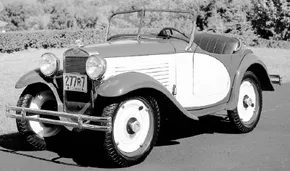
The American Austin relied on a single engine throughout its entire production run from 1930 to 1934. It was an L-head four-cylinder displacing just 46 cubic inches. The block featured only two main bearings. Power output sat at a modest 13 to 14 brake horsepower at 3200 rpm. That powertrain moved a car weighing between 1100 and 1200 pounds.
Early models included a roadster and a coupe. The lineup expanded in 1931 to add a business coupe, a Deluxe coupe, and a two-or-four-passenger cabriolet. Prices dropped initially after launch, then fell again in 1933 as sales stagnated.
Production Numbers and Economic Reality
The 1930 output of 8,558 units remained the peak for the American Austin. Two forces crushed demand. First, the Great Depression tightened consumer wallets. Second, and more fundamentally, Americans rejected the concept of the midget car.
Even during economic hardship, buyers preferred larger vehicles. The American Austin’s 75-inch wheelbase was 16 inches shorter than the future Volkswagen Beetle. Its light weight made it feel flimsy to many drivers. Alexis de Sakhnoffsky, a famous artist, helped design the body. It was attractive. That didn’t matter. Production stopped in 1935.
Celebrity Endorsements and Cultural Impact
For a brief period, the Austin offered levity in a drab era. It became a reverse status symbol. Owning one signaled independence rather than wealth.
Al Jolson, who typically drove Packards or Lincolns, bought the first Austin coupe sold to a private buyer. He wasn’t alone. Buster Keaton, Slim Summerville, and the Our Gang comedy troupe drove them. The cars even appeared in films. Will Rogers used Austins as mounts for a knightly battle scene in A Connecticut Yankee in King Arthur’s Court.
The movie exposure looked great on screen. It did nothing to boost sales figures.
Defunct American Cars
- AMC
- Duesenberg
- Oldsmobile
- Plymouth
- Studebaker
- Tucker