The Venturi Eclectic sounds like the plot device for a cheap techno-thriller. A vehicle that powers itself with sun and wind. No gas. No diesel. Just raw, renewable energy. You can picture spies and governments fighting over the blueprints. You can also picture oil companies praying it never hits the assembly line. A car that doesn’t need petroleum changes the entire geopolitical landscape. It needs less maintenance. It lasts longer. It is revolutionary.
Or so you’d think.
Conventional automakers can sleep soundly. The Eclectic, built by the tiny Monaco-based firm Venturi, poses no immediate threat to the oil giants. It’s a novelty. A glimpse. Not a revolution.
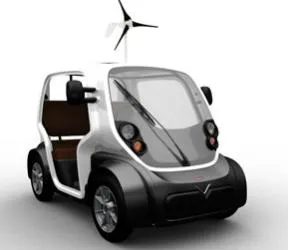
The design is as eccentric as its powertrain. Boxy shape. Four skinny wheels. It looks like a carriage from 1910 that got lost on its way to a cyberpunk convention. The roof is covered in photovoltaic cells to catch sunlight. There’s also a removable wind turbine you can clip on if the breeze cooperates. It’s green. Very green.
But let’s look at the claims. Venturi calls the Eclectic “solar-electric autonomous.” That’s a bold title for a car that still needs to plug into a wall outlet. Because the sun doesn’t shine at night. The wind doesn’t blow in still air. Renewable energy is intermittent. The Eclectic needs a battery. And that battery needs charging from the grid.
It isn’t the first solar car. It’s just the first mass-produced one. Most others are concept cars or prototypes. The Eclectic is real. It’s also limited. Top speed? 30 mph. Range? 30 miles. That’s it.
For urban commuters, that range might be enough. For anyone who wants to drive to the coast for the weekend? Not a chance. Environmentalists love it though. They’re excited by the reduction in emissions. They’re ready for the future.
We’ll dive into the design philosophy next. Then we’ll crack open the hood.
The Logic Behind the Quirky Design
Venturi is upfront about why they built this thing. Geopolitics. Environmental collapse. Soaring gas prices. Climate change. The company argues that the world is on the edge of chaos, driven by energy scarcity. They don’t claim to have solved energy production. But they think we need to cut our consumption. Fast.
The Eclectic is their answer. It’s designed for daily urban driving. Nothing more. Nothing less.
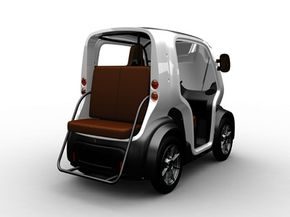
Step inside and you’ll notice the layout. It’s open. Airy. Retro. The square contours give it a boxy charm. There are no doors as standard, though you can order them. It’s minimalist. Functional.
The seating is where it gets strange. The driver sits in the middle. Front and center. Like a go-kart. The two passengers sit side-by-side in the back. It’s not a configuration you see in modern production cars often. It feels futuristic. Or maybe just weird.
The solar roof is the main attraction. It feeds energy into the battery. The wind turbine is an accessory. A nice touch. But don’t expect to power a cross-country trip with it.
We’ll look at the specs next. The numbers are… specific.
How the Venturi Eclectic Moves
The logic behind the Eclectic is simple enough to appeal to the eco-conscious but complex enough to frustrate traditionalists. Venturi isn’t building this for the guy who wants to burn rubber (or rubber and exhaust) at a stoplight. This car is for the grid-connected driver. The pitch is that if everyone plugs their EV in when they aren’t using it, the collective energy storage could stabilize the electrical supply. You aren’t just a consumer; you’re part of the infrastructure.
But let’s talk about how this thing actually rolls. Under the composite bodywork sits an aluminum frame chassis that weighs in at a featherlight 882 pounds (400 kg). Power comes from an 11-kilowatt, air-cooled asynchronous electric motor. It’s not a supercar, but it’s not a golf cart, either. You get two forward gears and two reverse gears. That’s it. No complex transmission logic. Just plug and go.
The electricity feeding that motor comes from a Nickel Metal Hydride (NiMH) battery pack. Recharging doesn’t require a proprietary DC fast charger or a visit to a specialized station. A standard European electrical outlet and the onboard 1.5-kilowatt charger handle the job in about five hours. That’s it. Standard plug. Five hours.
Powering Up: Solar, Wind, and the Grid
You have options. You can park under the sun. The roof panels convert solar energy directly into electricity for the batteries. Or you can deploy the optional 400-watt wind turbine. This isn’t a toy. It includes a fan blade assembly, housing, and a generator to turn kinetic wind energy into usable power. If you live in a breezy area, that turbine can add roughly 9.3 miles (15 kilometers) of range per day.
It’s a tri-power system: grid, sun, wind.
Inside, the aesthetic is… distinct. We’re talking cloth-covered wooden seats. Fabric doors. You can even get custom printing on those fabric doors if you want your personality on display. There’s a WiFi kit for internet access, a locked trunk, and both 220-volt and 12-volt power outlets. It’s less a vehicle and more a mobile room with a motor.
The Numbers Don’t Lie
So, what can you expect from this electric micro-vehicle? The specs are modest by standard automotive metrics, but they tell a specific story about its intended use case.
- Top Speed: Electronically restricted to 30 mph (48.3 km/h).
- Range: 30 miles (48.3 km) on a full charge.
- Dimensions: 113 inches long (2860 mm), 73 inches wide (1850 mm), with a roll-bar height of 69 inches (1750 mm).
- Weight: 882 lbs (400 kg).
The restricted speed and limited range define the niche. This isn’t for cross-country touring. It’s for the last mile. It’s for urban commuting where the distance between home and work fits within that 30-mile radius. The low weight helps efficiency, and the small footprint makes parking a non-issue.
Market Prospects
Venturi is betting on a shift in consumer behavior. They’re targeting people who want to actively reduce their carbon footprint. The idea is that these drivers will plug in when parked, feeding energy back or stabilizing the load. It’s a vision of the car as a stationary power plant that happens to have wheels.
Whether that vision holds up in the real market remains to be seen. The tech is there. The battery chemistry is proven. The solar and wind add-ons are practical, if quirky. The question is whether buyers will embrace the limitations—the 30 mph cap, the 30-mile range—or if they’ll be swayed by the eco-pitch and the unique, customizable interior.
We’ll have to wait and see how pricing and availability shake out. But for now, the Eclectic sits in a category of its own. Not quite a car. Not quite a scooter. Just a very efficient, very quiet box with wheels.
The Reality of Buying a Venturi Eclectic
You want one. How do you get it? What’s the damage to your wallet?
Those are the two burning questions for green tech enthusiasts eyeing the Venturi Eclectic. The short answer? Good luck. The initial run of 200 prototype units? Gone. Sold out before most people even knew the concept existed. But Venturi heard the crowd. The response was so loud they pivoted.
They aren’t just sticking to the wild concept car. They’re building a consumer-ready version. It looks less like a science experiment and more like a car you’d actually park in your driveway. It’s compact. It’s utilitarian. Think of it as a Smart fortwo that learned to carry passengers and harness the sun. Three seats. Solar array on the roof. A family resemblance to the original, but with a roofline that doesn’t defy physics quite as aggressively.
Pricing and Production Plans
Here is the concrete detail you’ve been waiting for. The newer, more practical Eclectic is slated to start at around 15,000 euros. Translate that to dollars and you’re looking at roughly $19,350.
Not bad for a zero-emission vehicle that charges itself via photovoltaic cells while you drive.
Venturi plans to kick off production in October 2009. The factory? A new assembly plant near Sablé-sur-Sarthe in France. Their initial target? 3,000 units a year.
“There is one thing stronger than all the armies in the world, and that is an idea whose time has come.”
That was Victor Hugo. It’s also a decent metric for the automotive industry right now. But don’t get too excited about those 3,000 units. The global economy is softening. Europe’s auto market is taking a hit. That production number is a projection, not a guarantee. If oil prices stay volatile and consumer confidence dips, Venturi might have to adjust its volume. It’s anyone’s guess how buyers will react if the wallet tightens and the gas pump doesn’t.
Who Is This Car For?
Venturi isn’t just waiting for individual hobbyists to buy these. They have a list of target markets that goes beyond the typical eco-car buyer.
- Private individuals who want a second car for the commute.
- Teens with their licenses, needing a safe, slow, electric learner.
- Resorts and industrial parks looking for internal shuttles.
- Professionals needing small utility vehicles for site visits.
- Corporate fleets trying to meet sustainability targets.
- Car-sharing fleets operating in dense urban cores.
They are targeting places where range anxiety doesn’t matter. Top speed is irrelevant. You aren’t taking the Eclectic cross-country. You’re taking it from the apartment to the grocery store. You’re taking it from the hotel lobby to the conference center.
The Big Picture
Why does this matter? In 2007, Time magazine named the Eclectic one of the best inventions of the year. It sat on the same list as the iPhone. That says something about the cultural shift happening right now. We are obsessed with connectivity, but we are also terrified of the environment. The Eclectic tries to bridge that gap.
Designed for urban environments, the Eclectic could be the key to unlocking clean personal transportation in populous giants like China and India. Where space is tight and pollution is thick, a small, self-charging EV is a logical solution.
Is it economically viable? Look at the last few years. Automakers that ignored the demand for fuel efficiency got crushed. Those that embraced it survived. The Eclectic isn’t just a gimmick. It’s a bet that renewable energy-powered automobiles can finally move out of the lab and into the garage.
Can we predict the future? No. The market is fickle. Supply chains are fragile. But the idea is there. The technology is ready. The question isn’t if cars like the Eclectic will exist. It’s if the world is ready to stop pretending that gas is infinite.
It’s an idea whose time has come. Whether the bank accounts agree is another story.