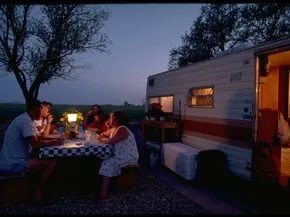
You don’t need to sleep in the dirt to call it an adventure.
Let’s be honest. The idea of hauling a 40-pound backpack into the middle of nowhere and pitching a tent sounds exhausting. But neither does “roughing it” mean swapping the hotel for a room without room service. Most of us want the open road without sacrificing the toilet that flushes or the bed that doesn’t sag. That’s where a camper comes in. It’s the hybrid solution for travelers who want mobility but refuse to give up modern comforts.
Buying or renting a towable unit gives you the freedom to cross the country at your own pace. You can stop at national parks, hit scenic byways, and skip the rigid schedules of commercial lodging. Sure, the upfront cost is steep. But if you drive often, you’ll likely save money on hotels over the long haul.
Before you sign any papers, you need to check your towing capacity. Do you actually have a vehicle that can pull the weight? If not, you’re looking at a new truck or SUV purchase to go with your new home on wheels. The numbers matter. Overloading a hitch is dangerous and expensive.
Towable campers range from basic metal boxes to five-star hotels on rubber. Some are just shelters from rain and wind. Others boast full bathrooms, showers, entertainment systems, and separate bedrooms. The right choice depends on three factors: your budget, your truck’s tow rating, and how fancy you want your roadside living to be.
Types of Towable Campers
The market is flooded with options. We aren’t looking at motorhomes with engines and dashboards here. We’re focusing strictly on units you tow. These range from lightweight pop-ups to heavy-duty fifth wheels.
Travel Trailers
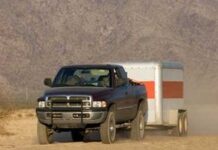
These are the most common towable campers. They come in lengths from 10 to 35 feet. The smaller ones are easy to tow with an SUV. The larger ones require a full-size truck. They offer a good mix of storage space and livability. You’ll find bunkhouses for kids, queen beds, and compact kitchens. They are versatile. You can take them anywhere a parking spot fits.
Fifth-Wheel Trailers
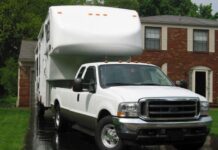
Fifth-wheels connect to a hitch in the bed of a pickup truck. This design offers better stability and more floor space. The hitch sits over the truck’s rear axle, which improves weight distribution. You get more living area than a travel trailer of similar length. The downside? You need a pickup truck. And a big one. These units are heavy. They require serious towing skill. But the ride is smoother, and the interior feels more like a house than a vehicle.
Pop-Up Campers
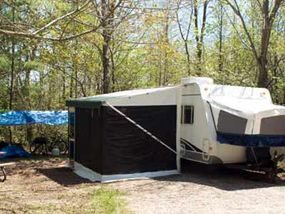
Also known as tent trailers, these are lightweight and affordable. They fold down for easy storage and towing. You set them up at the campsite by extending the canvas walls. They offer minimal protection from the elements. No hard sides mean less insulation in winter and less privacy in summer. But they are cheap to buy and cheap to maintain. If you just need a roof over your head and don’t mind sleeping in a tent, this is the entry point.
Toy Haulers
These dual-purpose units have a garage in the back. You can load ATVs, dirt bikes, or kay
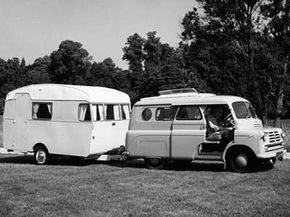
Pick your poison first. You have three main paths when hunting for a towable home: travel trailers, folding camping trailers, and fifth-wheels. Within those buckets, the variance is brutal. You can find stripped-down shells with the bare minimum or luxury pods that feel like a five-star hotel. Then there is the matter of the shell itself. Some builders go heavy-duty with aluminum and steel. Others opt for fiberglass or plastic composites. This choice dictates two things immediately: how well the thing survives a hailstorm, and how much mass you are dragging down the highway. Let’s break them down.
Travel Trailers
These are the workhorses. A travel trailer hooks up to a standard hitch on the rear of your SUV or truck. They span from a compact 10 feet to a massive 35-footer. The big selling point for many is the slideout. Park the rig, flip a switch or crank a handle, and an entire wall extends outward. Suddenly, your cramped box has a living room. Larger models can bunk up to eight people without turning into a sardine can. Expect to pay between $10,000 and $100,000 depending on how much bling you want.
Folding Camping Trailers
Lighter. Smaller. Cheaper. If a travel trailer is a house, a folding camper is a tent on wheels. The floor is rigid, but the walls and roof are collapsible fabric or flexible panels. You tow it in a tight package, unfold it at the campsite, and boom—full size. Some fit six sleepers, which is tight but doable. Prices here start around $4,000 and climb to about $25,000. You save money upfront, but you sacrifice some of the polish and insulation of a full-time trailer.
Fifth-Wheel Trailers
These are the hunchbacks of the RV world. The front half of the trailer juts forward, sitting over the bed of the tow vehicle. Usually, that means a large pickup truck. You can’t just hook this up to a standard ball hitch. You need a special gooseneck or fifth-wheel hitch installed in the truck bed. Why do people do it? Stability. The pivot point is closer to the center of the truck, making these rigs easier to steer than a long travel trailer whipping around behind you. They range from $15,000 to a staggering $150,000.
“The material determines both how well the camper can withstand the elements and how heavy the overall trailer will be.”
Amenities and Infrastructure
Don’t let the basic models fool you. Even the entry-level rigs have a skeleton of functionality. But if you step up to the luxury tiers, the feature list gets absurd. You are looking at:
- Electrical systems: Usually 100-125 volt AC, sometimes with DC converters.
- Entertainment: LCD TVs, DVD players, and yes, video game consoles.
- Propane gas: For cooking and heating water.
- Kitchen gear: Stoves, microwaves, and refrigerators.
- Plumbing: Fresh water tanks, black water tanks, toilets, and showers.
- HVAC: Heating and air conditioning. Note that these are mostly found in travel trailers and fifth-wheels, not the light folding campers.
- Power: Onboard generators or hookups to shore power.
- Comfort: Ceiling fans.
Deciding on the type is step one. But owning the truck that pulls it is step two. Can your vehicle actually handle the job? That is where the real headaches begin.
Durability vs. Weight
Here is the trade-off that trips up most new buyers. A steel or aluminum frame camper is tough. It takes a beating from rocks, branches, and bad weather without flinching. But that durability comes with mass. Heavier campers stress your tow vehicle’s suspension, brakes, and transmission. A fiberglass model might be lighter and easier on your truck, but it can crack under impact or degrade faster in UV exposure. You have to pick your poison: do you want a tank that doesn’t break, or a featherweight that hurts your MPG?
Camper Towing Tips
Before you hit the asphalt, you need to know more than just how to hook up the chains. Weight distribution matters. Tire pressure matters. Braking systems matter.
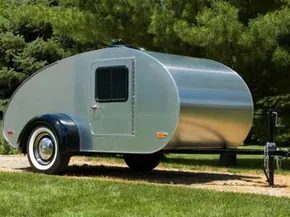
Towing isn’t just about hooking up a hitch and hitting the highway. It’s about understanding the mechanical limits of your rig before you even turn the key. Start by digging into your owner’s manual. That dusty booklet in the glove box holds the hard numbers on how heavy—and in some cases, how large—a load your specific vehicle can haul safely.
This isn’t a suggestion. If you exceed that stated limit and something goes wrong, your insurance provider might look at the paperwork and deny the claim outright. You are on your own.
The Pre-Trip Safety Checklist
Before you roll out, the physical connection must be secure. Connect all safety chains or lines. They are your last line of defense if the hitch fails. You also need to verify the camper’s wiring. Test the brake lights and turn signals. Do this in daylight so you can see them clearly. If the lights don’t work, you’re a hazard to everyone behind you.
But the real lesson here is that practice makes perfect. Towing a large, flexible object turns simple maneuvers into complex physics problems. Even an experienced driver can get caught out.
Get some seat time in a large, open area. An empty parking lot is ideal. You need to feel how the rig responds before you’re stuck in traffic or navigating a crowded campground.
Maneuvers You Need to Nail Down
You aren’t just driving a car anymore. You’re driving a car with a trailer attached. Here is what you need to practice until it becomes muscle memory.
Making Turns
If your camper is wider than your tow vehicle, you need to learn how to take turns without clipping the curb. The trailer follows a tighter arc than the truck. If you aren’t careful, the rear corner of your camper will cross the center line or smash into trees, signs, and other stationary objects. Watch your rear wheels closely.
Accelerating and Braking
Adding a camper increases the total mass of your vehicle. As mass increases, so does momentum and inertia. This is basic physics. It takes significantly more energy to get the rig moving and more distance to stop it. You cannot stop on a dime. Allow yourself more time and distance when slowing down or coming to a complete stop. Leave a huge buffer zone between you and the car in front of you.
Backing Up
This is perhaps the trickiest maneuver of all. You may need this skill to maneuver in and out of tight camp sites. If possible, work with another person who can direct you. Use clear hand signals to communicate.
Here is a trick for steering while reversing: place one hand at the six o’clock position on your steering wheel. To back up in a certain direction, move your hand in that same direction. It feels counterintuitive at first, but it works. Just take your time. Pay attention to your surroundings. Do not rush.
Improving Your Field of View
If your camper is wider than your towing vehicle, you need towing mirrors. These mirrors either replace or extend your existing side view mirrors. They give you a wider view behind you.
Without them, you may not be able to detect cars approaching you from the side or the rear. Blind spots become dangerous liabilities. A set of tow mirrors isn’t just a nice-to-have accessory. It’s a safety requirement for wide loads.
Know the Rules of the Road
Before you hit the asphalt with a camper in tow, do the homework on local statutes. States vary wildly on towing laws, and some are strict about requiring extended mirrors or specific safety gear just to pass inspection. Cross state lines or head south into Canada? The rules shift again. Ignorance isn’t a defense when a state trooper is waving you down. You do not want your adventure derailed by a ticket for a violation you didn’t know existed. Check the DOT guidelines before you load the gear.
The Dreaded Trailer Sway
The biggest fear for any tow vehicle operator is trailer sway. It’s that violent, jerking motion where the rig starts oscillating left and right like a drunk on a trampoline. If you let it build, you lose control. The instinct is to steer into it or hit the brakes hard. Do not do this. Yanking the wheel or slamming the pedal usually amplifies the sway, sending you into a spin-out faster than you can blink.
Instead, ease off the accelerator. Don’t accelerate aggressively, especially on downgrades. If the camper has its own electric brake controller, engage it gently to help stabilize the rear end. Keep a steady, light grip on the wheel. Guide the rig to a safe pull-off point. Once stopped, you can assess the situation. Maybe you need to shift the cargo weight inside. A poorly distributed load is often the culprit behind the shaking.
Critical Safety Taboos
There is one golden rule that cannot be bent. Never, under any circumstances, allow passengers to ride inside a towed camper or trailer while you are moving. They are not protected by the tow vehicle’s safety systems. In a sudden stop or collision, those inside are at severe risk. It’s not worth the gamble for a few extra feet of interior space.
The goal here is simple: get to the destination alive and intact. Keep your eye on the road, respect the physics of a heavy load, and stay aware of your surroundings. The open road is rewarding, but only if you respect the machinery you’re driving. Safe travels.