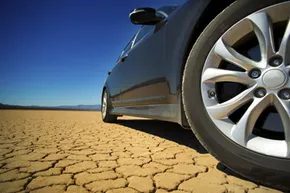
Getting into the car in the sun is a common summer pain. The steering wheel burns your hands, the seats stick to your skin and the air inside the car feels like an oven. Most drivers can handle the heat, but there are logical ways to reduce the heat that could change the way you choose your next car.
This solution reflects summer clothes. Light colors reflect warmth. Dark colors are absorbed.
It’s not just about convenience. In 2008 and 2009, the California legislature seriously debated banning black cars. The goal wasn’t to keep drivers cool. The goal is to reduce harmful emissions. The idea sounded like fringe environmentalism. Even conservative commentators like Rush Limbaugh vehemently opposed it.
But science backs it up.
A 2011 study by Berkeley Lab’s Department of Environmental and Energy Technology directly tested this. They compared a silver Honda Civic to a black Honda Civic. The results are clear. Light-colored cars reflect about 60% of sunlight. Dark cars absorb it.
This difference has a significant impact on performance.
If your car is cool, you don’t need to run your air conditioner as hard. Using the air conditioner consumes fuel. Exhaust gases also increase. The study showed that black cars were 2 percent less fuel efficient than smaller cars. Due to the small decrease in efficiency, CO2 emissions increased by 1.9%. Other hazardous emissions increased by 1%.
The logic is simple. When your car heats up, it needs more energy to cool down. Staying cool requires more energy. Every extra drop of gas burned to run an air conditioner creates smog and greenhouse gases that suffocate the atmosphere. Reducing the number of black cars on the roads would be a small but tangible step in the fight against global warming.
California never passed the ban. For now.
But if you already have a black car, you are not powerless. The vehicle itself plays a big role. Model, size and shape matter. The number and tint of the windows are important.
Parking space is important. Cars exposed to direct sunlight heat up faster. Achieves higher peak temperatures. It retains heat longer than a car in the shade. Partial shade is definitely better than no shade.
The weather is also a factor. Although we cannot control the sky, clouds can block the sun’s heat rays. The wind also helps. It transports heat away from the surface.
Paying attention to these variables can help keep your car cool. It helps the environment. Summer driving is also more comfortable.
The heat is real. The solution is simple. Just pick a lighter color. Or park in the shade.