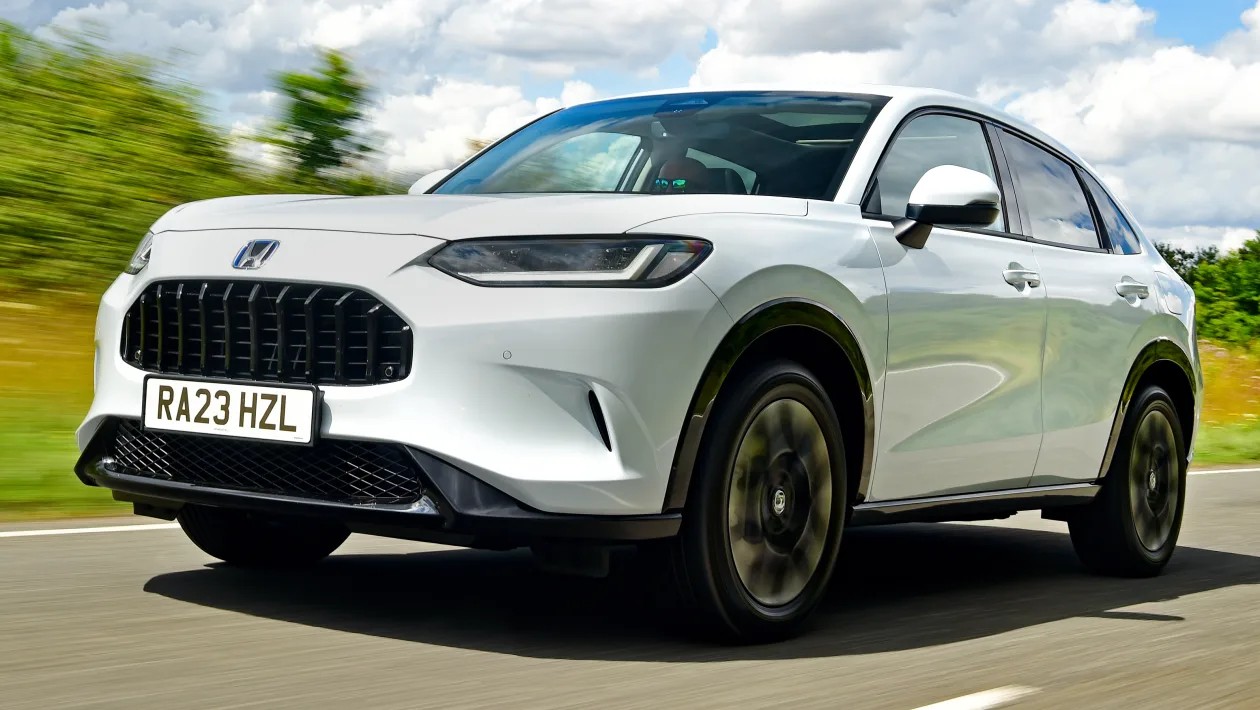
What Is The Honda ZR-V?
It is, essentially, a big Civic. Honda built this SUV on the exact same platform as its beloved family hatchback, which means you are stuck with one choice for power. The e:HEV hybrid system. No petrol-only option. No plug-in hybrid. Just this single, smooth, complex arrangement where a four-cylinder engine mostly acts as a generator to charge a 1.05 kWh battery, which then feeds two electric motors that actually turn the front wheels.
The engine does kick in to drive the wheels directly if you are going very fast, but for 99 percent of driving, the petrol unit just hums in the background while the electricity does the work.
Does it drive like an electric car?
Yes. Almost exactly like one. The power delivery is seamless because you never wait for gear shifts. It is quiet, smooth, and strangely relaxing. We have tested a few versions over the years. Even pitted the top-spec Advance against a Nissan Qashqai in a head-to-head. The conclusion is usually the same. The ZR-V is easy to like. But is it easy to justify?
Price And Value
Here is the problem.
The ZR-V is expensive.
The entry-level Elegance starts around £35,00e00. The Sport trims climb toward £37,500. The poshest Advance? You are looking at roughly £39,50. Compare that to the hybrid versions of the Nissan Qashqai or the Kia Sportage, and the Honda looks pricey. Then remember there is the Civic Hatchback. Same engine. Same hybrid setup. Cheaper price tag.
Most people asking if they should buy a ZR-V are actually people who should just buy a Civic. They want the efficiency and the build quality but might not actually need the slightly higher seating position or the extra length.
If you are spending this much, ask yourself if the “SUV” shape is a necessity or just a trend you feel pressured to follow.
There are used models floating around now. A 2026 model with only a few thousand miles might still cost you £24,000+. Depreciation has not eaten into the ZR-V too badly, honestly. It holds about 50 percent of its value after three years or 36k miles. The Qashqai manages 47-49 percent. So your investment is relatively safe. That does not help much at the dealership counter today though.
Driving Impressions
It is not fun.
Let us be clear. If you buy this for driving pleasure, you are buying the wrong car. The setup prioritizes safety and predictability over agility. It sits a bit lower than a traditional SUV—the seat is only 30mm higher up than in a Civic—so the view from the cockpit isn’t as commanding. It feels like a car that is happy to exist in its own lane and do very little else.
Acceleration from 0-62 mph takes 7.9 seconds. That is adequate. Not exciting. If you are cruising on electric power and floor it, there is a noticeable lag. The petrol engine has to wake up from slumber, spin up to speed, and then take over. For a second, there is pause. Then the noise starts. The 2.0-liter four-cylinder is not aggressive. It is droney. A bit whirry. At high speeds it can get a bit loud, especially over bumpy motorways where the back axle seems to send more noise into the cabin than you’d expect from a £35k vehicle.
Low speeds are where it shines. It feels exactly like an EV. The steering is light. Precise. Visibility is decent, though not brilliant.
The regenerative braking settings are adjustable via paddles behind the wheel. Annoyingly, the moment you touch the accelerator pedal, the car resets the regen to its default setting. Why? Just leave it where I put it.
And the beeps. The warning chimes are excessive. Blind-spot alerts. Lane-departure warnings. They are excitable. Almost annoyingly so. You cannot just turn them all off. The car will judge your driving.
Running Costs And Taxes
Efficiency is good.
The ZR-V claims 49.6 mpg on the combined WLTP cycle. In real-world twin-test conditions against the Nissan Qashqai the ZR-V hit 45.6 mpg. The Qashqai did 45.3. Basically a draw.
But the fuel tank is the big plus over the Civic. The ZR-V carries 57 liters. That is 27 liters more than the hatchback. Even if you burn a little more fuel per mile, you will have to visit the pump less often. Long road trips are less stressful because of the range.
Insurance?
Bad.
All trim levels sit in Insurance Group 35. That is incredibly high for a family SUV. The Qashqai and Sportage stay around Group 26 or lower. Even some electric cars cost less to insure than a hybrid petrol SUV from Honda.
Watch out for the Luxury Car Tax (VCT). If your chosen spec, options, and wheels push the price over £40,00g, you start paying an extra £440 a year in road tax (VED). That applies from the second year of tax until the car is six years old. It is a trap. Stick to the lower trims if you can.
Interior And Tech
It looks a bit like a Civic inside. That is actually fine.
Honda’s designers did a job keeping it logical. Buttons are actual buttons. Not touch-sensitive surfaces on glass that require magic fingers to activate. There are rotary dials for the heating. They click satisfyingly. This is refreshing.
The screen is 9 inches. It is not huge. It is responsive enough but not instant. Loading new menus can take a frustrating second. Wireless Apple CarPlay works perfectly. Android Auto? A nightmare. It either disconnects instantly or fails to pair completely, regardless of which cable you try. Honda needs to fix that.
Build quality is excellent. Soft-touch plastics on the dash. A floating center console that holds USB ports and a wireless charger on the higher trims. It feels solid. It does not rattle.
Storage is a mixed bag. The door bins are tiny. Really narrow. You can barely fit a full water bottle. There is a nice shelf under the console for keys. But why are the door pockets so useless?
Space: The Real Winner And The One Compromise
Rear seat space is brilliant.
This is the ZR-V’s strongest suit. The legroom is simply fantastic. It tops almost every rival in this class. Your back-seat passengers will not be complaining about cramped knees. The cabin is wide too. Headroom is just “fine” though. Not spectacular.
Now, look at the boot.
380 liters.
In a car this size, that is small. It is actually smaller than the Honda Civic’s boot by 30 liters. If you put it on the Sport or Advance trims, Bose puts a subwoofer under the floor that steals another 10 liters of space. Why prioritize rear legroom over boot space? We still don’t fully understand it.
That said, the boot is clever. The loading lip is very low, so heavy bags drop in easily. The shelf is sturdy. The seats fold flat and slide forward to make the load space level and huge (1,301 liters). But for daily groceries, a weekender case, or two kids with gear, you might wish Honda had balanced things differently.
Safety
Here is the hard one.
The Honda ZR-V scored four stars from Euro NCAP.
Five is the new standard. Most family cars get five stars. The ZR-V lost points mostly on side-impact tests, where the dummy’s head struck the interior too hard. There was also criticism of the driver monitoring system not catching distractions adequately, only fatigue.
Every car comes with Honda Sensing though. Lane keep assist, traffic sign recognition, adaptive cruise, parking sensors, a reverse camera. You have plenty of tech to help avoid crashes. You just might not have the passive protection if you get sideswapped at high speed.
The Verdict
It is a strange car.
You pay SUV money. You get hybrid efficiency that is great, not great. You get incredible rear seat comfort and a brilliant driving experience that feels electrically smooth.
But the insurance will hurt. The boot is stingy. The looks are divisive—there is a beak-like grille at the front that isn’t particularly subtle. The Qashqai is nicer to look at. The Sportage feels more modern inside. And the Civic? It does almost the same thing for less cash.
Who is it for?
Maybe you really hate sitting low. Maybe the 30mm of height in the Civic wasn’t enough, and you genuinely feel more secure up higher. Maybe your rear passengers are tall people who will be traveling with you constantly. Then this car makes sense. The depreciation is strong. The running costs are reasonable if you watch the tax thresholds.
If you just want a reliable, efficient, easy-to-drive car for your family, do your wallet a favor and go buy a hatchback or look at a pure EV like the Nissan Ariya where company car taxes are far better. The ZR-V fills a gap that very few people actually need filled. It is comfortable, well-built, and sensible. Just maybe a bit too sensible to be a smart buy.