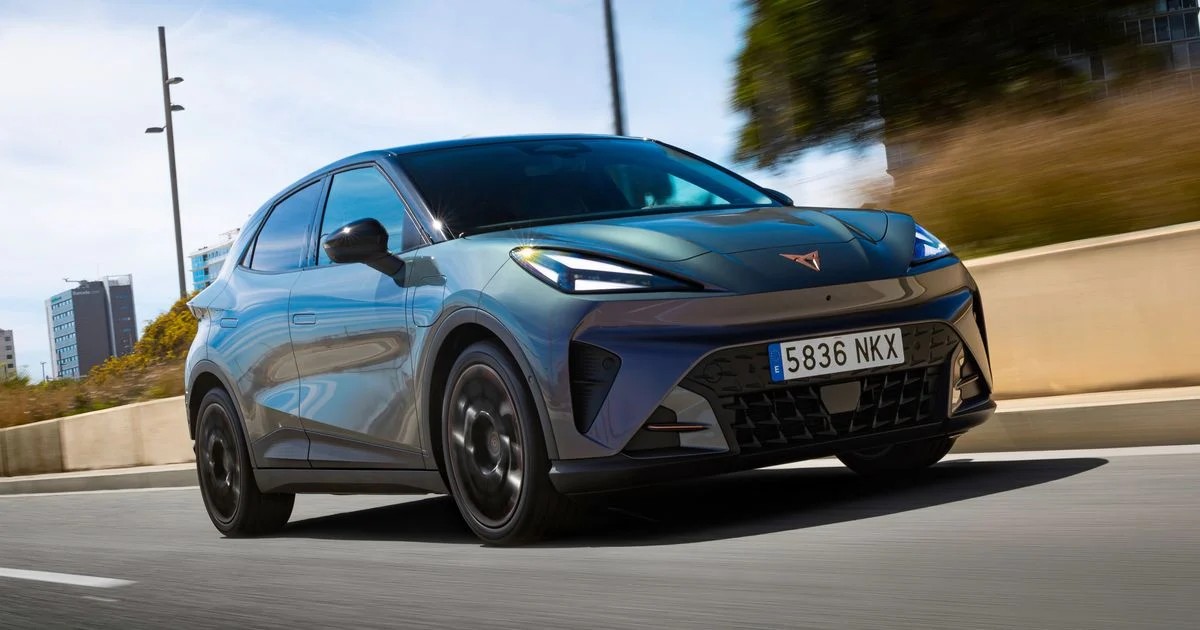
Cupra finally made EVs cheaper. At least, if you live in Europe. The brand just launched a lower-cost version of its pint-sized Raval hatchback, driving the entry price under €30,000.
It is a bold move for a sub-brand that usually charges a premium for sharp design. The Cupra Raval LFP battery option changes the math for buyers who want electric driving without the mortgage-sized bill.
Here is why this matters.
How the cheaper Cupra Raval trims work
The new entry point is called the Cupra Raval Plus. Do not be confused by the name. It sits above the base model but serves as the first door into the range for most buyers. The price? Just under €30k (around A$49k).
They are not stopping there. Cupra plans to drop the bare-bones Raval grade later this year. The target price is a staggering €26,000.
Why the cut in cost? It comes down to two things: motor size and chemistry.
The old Raval Endurance used a 155kW motor and a 51.5kW lithium-ion battery. The new Raval Plus swaps those out. It gets a 99kW motor. More importantly, it uses a 37kWh lithium-iron-phosphate (LFP) cell pack.
“LFP batteries are cheaper to produce. They last longer. But they weigh more and hold less energy per kilogram.”
That weight hit does not show up in the top speed. Cupra claims both trims hit 160km/h. Acceleration figures are vague, however. You have to do the math. 99kW is not going to make you smile off the line. But it is adequate.
Is the WLTP range enough for city driving?
This is where the LFP debate heats up.
The Cupra Raval with LFP battery offers 300km of range. That is WLTP certified. In the real world? You will likely see 230-250km.
Does it charge fast? Yes.
* Supports 88kW DC fast charging.
* Recharges from 10% to 80% in roughly 23 minutes.
It also supports 11kW AC charging at home or on the road. Energy consumption is quoted at a frugal 13.9kW per 100km. For a city runabout, the range is fine. You plug in every night. You don’t think about the trip home.
What do you lose for the lower price?
Standard equipment gets a haircut. The Plus trims get LED headlights, tail-lights, and 18-inch alloys. The interior tech remains impressive though. A 12.9-inch touchscreen dominates the dash. It runs Android Automotive OS, meaning your apps work seamlessly.
You can buy packages. The Edge, Drive, and Light & Sound bundles let you add a Sennheiser stereo, 360-degree cameras, and a digital key. You even get Vehicle-to-Load (V2L). You can power a toaster from your car. Why would you want to do that? Because you are camping. And you have no outlets.
Why Australians should wait for the Cupra Raval
Here is the rub. Europe gets this in mid-September.
Australia? Not soon.
Cupra Australia has hinted the car is coming. They have not said when. Logic suggests late 2027. At least next year.
The Volkswagen ID. Polo connection explains the size. The Raval sits on the same MEB entry platform. It measures 4.0 meters long. Roughly the footprint of a Golf GTi, but tighter inside? No.
Cupra pulled a rabbit out of the hat. Boot space is massive. 441 liters. That beats almost anything in this segment. Even some compact SUVs feel smaller than that trunk.
Pricing parity is impossible though.
In Spain, the base Raval Plus sits below the Leon Hatch. The Leon starts around €31k with a manual transmission and mild hybrid engine. The Leon in Australia starts near $47k and has more kit than the Spanish base model.
Even the big-battery Raval Endurance in Europe costs €33,800. Convert that to Australian dollars and add taxes, freight, and margins. You are looking at $50k+.
That puts the EV variant dangerously close to the mild-hybrid Leon’s price point. And the Leon gets a larger screen and better suspension tuning.
Which Raval trim is the smarter buy?
If you live in Europe: The Plus trim with the Cupra Raval LFP option makes sense if you park at home and commute within a city. The LFP chemistry tolerates deep discharge cycles better. Leave it plugged in at 50% and it lasts. Forget about range anxiety. It does not exist when your garage is on the commute.
If you live in Australia: Wait. The current pricing structure of Cupra’s sister brand, Skoda or VW, suggests they will strip the LFP variant. Or they will mark it up enough to make the mild-hybrid look like a steal.
The 441-litre boot is a compelling argument. The tech stack is top-tier. But the 99kW motor? It will struggle on highways. Overtaking will require planning. Not spontaneity.
So will you see a red Cupra Raval parked outside the CBD in Melbourne by Christmas? Unlikely.
You will likely see a white Leon. It gets more torque. It has more boot. And it costs the same.
Cupra bets that people care more about how the car looks than the numbers in the brochure. For €26,000? That is a tough sell for anyone who values straight lines over curves.
But they are building it anyway. Europe is eating it up. Australia watches from the sidelines. Watching. Always watching.