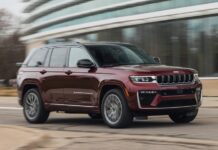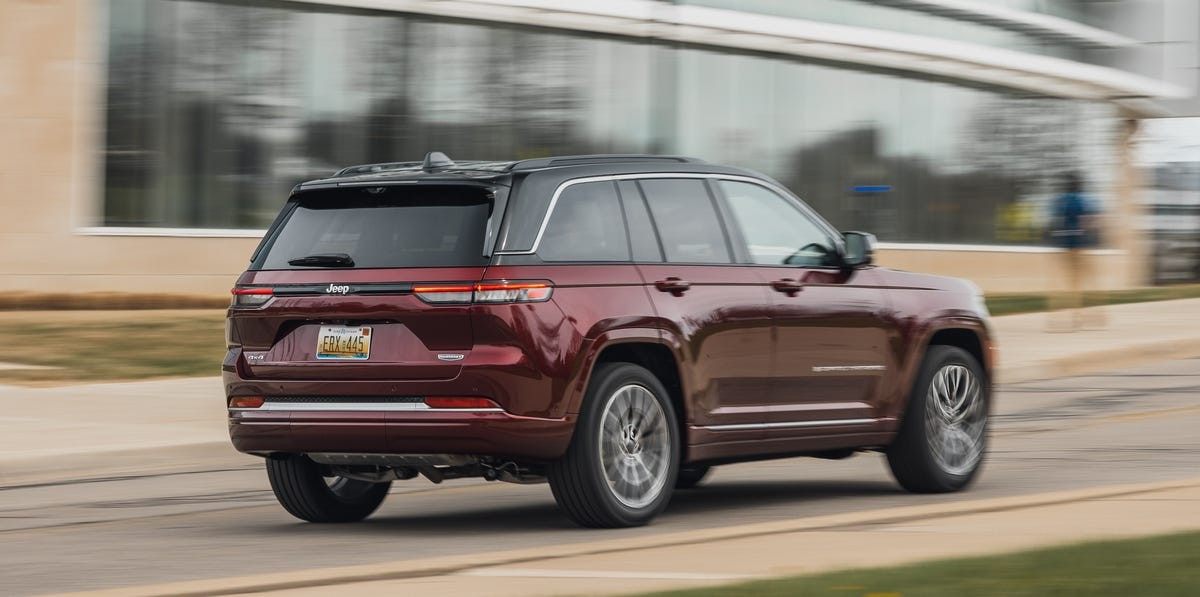
Looks are lying to you. The Jeep Grand Cherokee Summit sports a handsome face and a cabin draped in leather and wood that screams premium. But there is a catch under the hood, and on the pavement, the sparkle fades.
Car and Driver took it for a spin. What they found was a vehicle with a new engine and a ride quality that feels a bit… clunky.
The New Heartbeat
Forget the 3.6-liter V-That still lingers on cheaper trims. The real story for 2026 is the Hurricane 4 Turbo. A 2.0-liter turbocharged inline-four that sits in the premium models. It borrows its lineage from the Alfa Romeos and Wranglers, but this isn’t just a hand-me-down. It’s fancy tech wrapped in a compact package.
We’re talking two injectors per cylinder. Port and direct. Two spark plugs. A variable-geometry turbocharger. And then there is the prechamber ignition system—the same tech that lit the fire in the Maserati MC230. Jeep wanted complete combustion. They wanted more power without killing the MPG.
All of this engineering theater is just Jeep trying to gain power and save gas.
The idea is solid. The execution? A little heavy.
Punchy Until It Isn’t
The engine has personality. Once the turbo spins up, it’s punchy. But you have to wait for it.
The Hurricane needs serious boost. Peak pressure hits 34.8 psi. Building that pressure takes time. While the computer chases the air, the Jeep’s 4881-pound body feels absolutely enormous. The small four-cylinder engine feels like it is pulling a trailer just to get the needle to move.
It gets to 60 mph in 6.3 seconds. That’s 1.1 seconds faster than the V-6 version. On paper, it looks fast. But the real world tells a different story. From a rolling five miles per hour? It took 7.6 seconds. That is how the engine really feels in traffic. Lag. Hesitation. Effort.
There is one win for the wallet, though. The 2.0-liter pulled 26 mpg on a steady 75 mph run. The V-6 got 22. Four miles per gallon isn’t nothing. Is it enough to justify the turbo lag?
Interior Blinds The Senses
Once you leave the acceleration struggles behind and merge onto the highway, the cabin becomes a sanctuary. The interior is gorgeous. The seats massage your back into submission. The 19-speaker McIntoshi stereo fills the space with sound so crisp you might forget you are in a mid-size SUV.
Just touch nothing. Especially not the climate controls. They are haptic. Meaning they rely on vibrations and fake resistance. Use them, and you will develop a fetish for frustration. It is just bad.
Just try to avoid using the hactic climate controls, unless you enjoy being annoyed by technology that should be simple.
The car handles surprisingly well for its footprint. The steering feels connected. But then you hit a pothole.
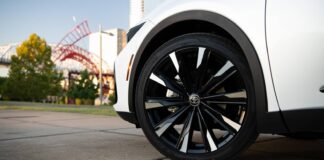
The Summit comes on massive 21-inch wheels. Firm air springs do not forgive road imperfections. You feel every crack, every divot, every piece of debris. The brakes compound the irritation, grabbing unpredictably in stop-and-go traffic.
Driver Assist Without The Confidence
Jeep’s hands-free assistance is optional on the Summit model. You get the tech, but you don’t necessarily get the trust. It works, sure. But in corners? It hesitates. It second-guesses the road geometry. Compared to the smooth confidence of systems from GM, Ford, or Tesla, this one feels jittery. You find yourself hands hovering near the wheel, waiting for the ghost driver to make a mistake.
The Verdict
At an as-tested price of $66,587, you are paying for the badge, the wood, the leather, and the McIntosh. The engine struggles to justify the performance premium, requiring too much effort from the driver to feel truly powerful.
You buy this because it looks like success. You drive it because it holds five people and looks good in photos. You ignore the turbo lag and the stiff ride because the massage seats make it feel better. It is a well-appointed family hauler that wants to be a performance SUV, but hasn’t quite figured out the transition.