Most drivers hit a wall when it comes to hauling. Your sedan handles groceries fine, but try loading a motorcycle trailer or a small camper, and suddenly the physics change. You’re not just moving metal anymore; you’re managing momentum and weight distribution. If you plan to pull anything heavier than your spare tire, you need the right setup. It’s not optional. You need a vehicle rated for the load, a proper hitch assembly, and the specific accessories that keep that trailer from turning into a dangerous swing-arm pendulum.
The connection point is where the magic—or the disaster—happens. This is the hitch. It bolts directly to the frame. You’ll find two main types. Permanent hitches stay put. Temporary ones let you swap out the ball mount when you’re done hauling. That removable piece is the ball mount. It’s the pivot point. It lets the trailer articulate as you turn, steering, and braking. Without it, you’d be dragging a rigid beam behind you.
To keep that ball mount from vibrating loose, you use a ball mount lock. It’s a simple pin system, but it’s non-negotiable for temporary setups. If it rattles out, you’ve got a runaway trailer on your hands.
The trailer itself grabs onto this ball with its coupler. The front of the trailer, the tongue, rests on the ball. This is where the tongue weight lives. It’s the downward force the trailer exerts on the hitch ball. Too little weight? The trailer will sway. Too much? You’ll bottom out your rear suspension. The tongue lock clamps the coupler to the ball to prevent accidental detachment.
Then there are the backups. Safety chains cross under the tongue. If the hitch fails, the chains catch the trailer. They must be crossed so the tongue doesn’t drop straight down and block your road. Wiring harnesses run alongside these chains, syncing your brake lights, turn signals, and running lights.
But a hitch is just the start. You need gear to manage the load.
Beyond the Hitch: Critical Towing Accessories
You can’t just hook up and go. The hardware that keeps things stable and secure falls into four distinct buckets. Ignoring any of these invites trouble.
- Tools and Ramps : You need the right wrenches to tighten bolts to spec. Loading ramps make it easier to get heavy bikes or ATVs onto the trailer without straining your back or damaging the vehicle’s suspension during the lift.
- Securement Gear : Straps, bungee cords, and chains hold your cargo down. Antitheft devices lock the trailer to the vehicle or the hitch itself. If you’re hauling a $5,000 motorcycle, a simple cable lock isn’t enough.
- Sensors and Visibility : Alarms deter theft. Backup cameras and trailer-specific mirrors help you see what’s behind you. Standard side mirrors often disappear into the blind spot created by a wide trailer.
- Stability Systems : Sway bars and brake controllers are the difference between a smooth highway cruise and a death spiral. Antisway devices reduce lateral movement. Brake controllers sync the trailer’s brakes with your vehicle’s, reducing stopping distance significantly.
10: Where
You’re stuck on the side of the road. The trailer won’t couple. You need a wrench, but it’s somewhere in the cab, buried under maps or buried under clutter in the bed. Or maybe you need to tighten a lug nut that’s come loose on the trail. Having a dedicated spot for your gear isn’t just about organization—it’s about survival when things go sideways.
Scattered tools are useless tools. A proper towing toolbox keeps your essentials within arm’s reach and stops them from becoming projectiles during hard braking.
Where to Put Your Tools
You have two main options for housing your gear: inside the tow vehicle or mounted directly on the trailer.
In-Vehicle Solutions
If you keep your toolbox inside the truck or SUV, you have easy access. But you’re limited by the space you can spare. A small plastic bin behind the seat works for basic screwdrivers and pliers, but you’ll run out of room quickly if you carry heavy-duty gear.
Trailer-Mounted Boxes
This is where it gets interesting. Mounting the box on the trailer itself frees up precious space in your tow vehicle. It also keeps the weight centered over the trailer’s axles, which helps with stability.
The most common spot is the trailer tongue.
Tongue Toolboxes
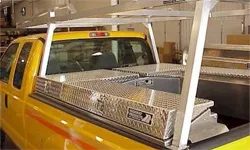
These are mounted to the A-frame or tongue of the trailer. They’re usually made of aluminum or steel—materials that resist rust and can take a beating. You’ll find basic plastic versions for around $100, but an aluminum box will set you back a few hundred.
Why pay more for aluminum? It’s lighter and doesn’t corrode. Steel is cheaper but heavier and prone to rust if the paint chips.
Tongue toolboxes carry tools without wasting space in the tow vehicle or trailer bed.
They lock up, so you don’t have to worry about theft. And because they’re bolted to the frame, they won’t rattle around like a loose toolbox in the back of a pickup.
What Doesn’t Fit in a Box
Some tools are too big, too weird, or just too essential to be locked away in a chest. You need them on hand, not buried under a socket set.
9: Load-minimizing Liftgates and Ramps
If you’re hauling ATVs, motorcycles, or heavy equipment, your back will thank you for skipping the manual lift. A load-minimizing liftgate or ramp system reduces the physical strain of loading. It also speeds up the process, which matters when you’re at a campsite and the sun is setting.
Manual ramps are cheap and lightweight. Electric liftgates are expensive but effortless. The choice depends on how often you load and how heavy your gear is.

8: Protecting Precious Cargo with Tie-downs
Loading the truck is only half the battle. The real danger starts the moment you hit the highway.
Forget brute strength. If your cargo weighs more than your lower back can justify, skip the sweat. A mechanical liftgate is the professional’s choice for heavy loads. It saves your spine. It keeps you out of the hospital. It’s an investment that pays off in muscle preservation.
But if you’re on a budget or hauling something lighter, gravity is your friend. Roll it up. Push it up. Many auto trailers come with integrated ramps on the side. You just drive the car up. Simple. If your trailer is plain, grab a ramp from the auto parts store. Or build one. Wood and hinges cost less than a chiropractor visit.
Once the cargo sits in the bed, it’s not secure. It’s just sitting there. Waiting to slide.
This is where tie-downs matter. Not the decorative kind. The heavy-duty, ratcheting straps that bite into the anchor points. You need tension. Real tension. If you can wiggle it with your thumb, it’s too loose.
Think about the physics. A hard brake sends forward momentum into your cargo. A sharp turn throws it sideways. Your straps need to fight both. Use multiple points of attachment. Spread the load. Don’t rely on a single strap to hold a ton of weight. That’s a recipe for a wreck.
Secure the front. Secure the rear. Lash it down so tight the strap hums when you drive. Then check it again. Ten miles down the road. Stop. Tighten. Drive.
The road doesn’t care how much you weighed it down at home. It only cares what happens when you panic-stop at 65 mph.

7: Backing Up Safely with Alarm Systems
If you are hauling anything more fragile than a bag of sand, your primary goal is simple: stop the cargo from shifting. A loose load doesn’t just get trashed by the bouncing ride. It turns your trailer into a pendulum. That sway is dangerous. It can spin you out on the highway or cause a jackknife situation with terrifying speed.
You can try packing tight. Shove the boxes together until there is zero wiggle room. It works for small items. But what if you have awkward shapes? Or large appliances? Tie-downs become your best friend here.
Don’t just grab a piece of string. You need proper securing gear. You have options. Bungee cords stretch to apply constant pressure. Cargo nets use a web of elastic strands to hold everything in place. But for heavy, expensive, or breakable items, go with ratchet tie-downs. These use a locking mechanism to pull straps tight and keep them there. They clip onto the trailer’s eyeholes or attachment points. You can grab a set at any hardware store. They cost next to nothing compared to replacing your grandmother’s china.
Once you’ve loaded the trailer and tightened every strap, you’re technically ready to go. But before you start reversing into tight spots or navigating narrow driveways, you should look at one more piece of gear. It’s not a strap. It’s a pair of ears.

A trailer physically extends your vehicle’s footprint, but it also creates significant blind spots. You can’t see what’s behind you, and drivers behind you can’t see yours. This is especially dangerous when reversing. Installing a backup alarm on the trailer helps mitigate this risk by audibly signaling your intentions to pedestrians and other motorists.
Most basic backup alarms are straightforward. They emit a rhythmic beep or chirp whenever the tow vehicle is shifted into reverse. More advanced systems use ultrasound sensors to detect obstacles in the trailer’s path, warning the driver before a collision occurs. Installation varies. Some units wire directly into the trailer’s harness, syncing with the tow vehicle’s reverse lights. Others operate independently, powered by their own battery source. Despite the variety, most of these devices are affordable, typically costing under $50. You can find them at major auto parts retailers. They are a cheap, effective safety layer that adds little weight but significant awareness.
Once the world knows you’re moving backward, you need to know where you’re actually going. Visual confirmation changes everything.
How Backup Camera Systems Improve Trailer Accuracy
Relying solely on mirrors or a backup alarm is insufficient for precise maneuvering. Camera systems provide the visual data necessary to navigate tight spaces, park in narrow spots, and align hitches without guesswork. These systems range from simple wired cameras mounted on the trailer tongue to complex wireless setups that transmit video to a monitor inside the cab. The primary benefit is clear visibility of the area directly behind the trailer, eliminating the “blind zone” that trailers create. For heavy towing, this is not just a convenience; it is a necessity for preventing costly damage to both the vehicle and the trailer.
The Art of the Blind Backup
Let’s be honest about towing. There are exactly two moments where you will desperately wish you had eyes in the back of your head.
One is the hitch-up. The other is the backup.
Both require precision. Both require you to see what you cannot see with your peripheral vision. And both are significantly less stressful when you have a digital pair of eyes on your side.
The Hitch-Up Problem
Consider the mechanics of coupling. You have a tow vehicle. You have a trailer. You need to align the hitch ball with the trailer tongue.
Simple, right?
Except the tongue is narrow. We are talking about a 2 to 4-inch window of truth. That is 5 cm to 10 cm of error margin. Back up a heavy truck blindly? You are gambling with your bumper and your bank account.
A camera changes the physics of the situation. It turns a guess into a guided procedure.
Take systems like the Swift Hitch for example. These aren’t integrated OEM displays that come pre-wired from the factory. These are aftermarket solutions that rely on wireless technology. You slap a magnet on the trailer or the truck. It sticks. It stays.
The image travels from that lens to a handheld receiver inside the cabin. No wires trailing behind the vehicle. No drilling into the frame.
The range is solid. We’re looking at 300 feet of transmission distance. That covers almost every standard driveway and campsite. Night vision kicks in at 15 feet. Enough to see the tongue in the dark. Not enough to see a deer three blocks away. But for hitching? It works.
Seeing is Being Seen
We are still moving through the accessory ecosystem here. The camera is just the first layer.
Once you are connected, you are a long vehicle. Long vehicles need to be seen. And you need to see the edges.
5: Side Mirrors and Tow Lights for Seeing and Being Seen

Seeing the blind spots isn’t just about what’s directly behind you. It’s about the flanks. You need to know if a sedan is creeping into your quarter panel or if a truck is pulling up for an overtake. Standard mirrors often fall short here. They’re too close to the body and too narrow.
Wide side mirrors change the game.
They stick out farther from the cab. This geometry gives you a much wider field of view. Some setups are aftermarket add-ons that clamp right onto your existing mirrors. They’re cheap, they’re effective, and they slide into place without major mods. But if you’re driving a newer rig, like the Ford F-150, the tech is built-in. These trucks come with extendable side mirrors that slide out on rails at the push of a button. You get the full width of your load without the constant mental math of guessing clearance.
Making Your Trailer Visible
Visibility cuts both ways. It’s not just about you seeing others. It’s about them seeing you. The U.S. Department of Transportation mandates specific lighting for a reason. A dark, unlit trailer is a ghost on the highway. It’s invisible until it’s too late.
The rules are strict. All trailers must have lights that clearly signal braking and turning. These aren’t optional extras. They’re legal requirements. The lights need to be bright enough to be spotted at night, even in the rain or snow.
There are two main ways to get this done.
Hardwired Systems
This is the traditional route. You run wires from the tow vehicle’s harness directly into the trailer. It’s reliable. It’s permanent. But the installation can be messy. You’re dealing with connectors, fuses, and potential corrosion points.
Wireless Options
Newer wireless towing lights are gaining traction. They sync with your tow vehicle’s signals without a physical tether. No drilling into the frame. No tangled wires. If you move trailers often, this is a huge timesaver. The trade-off? Battery life. You have to remember to charge them.
Securing Your Cargo
Once you’ve mastered the sightlines and the signals, the next threat isn’t the road. It’s the rest stop.
You’re miles from home. Maybe you’re pulling a heavy load for work. Or maybe it’s a weekend trip with expensive gear strapped to the roof or inside a enclosed trailer. Thieves don’t care about your itinerary. They see an unattended trailer and see a target.
4: Securing Your Stuff with Antitheft Devices

It feels almost too simple. Hitch up. Unhitch. Done. That ease of access is exactly why thieves don’t bother with the complex rigging of moving a full trailer. They just grab it. But you can fight back.
Start with the wheel lock. It looks like those heavy-duty boots cops slap on cars that illegally park in loading zones. It clamps around the tire. No movement. No tow. You’re looking at around $100 for the hardware. Does that sting? Not when you factor in the cost of replacing a stolen trailer versus paying for a lock.
Then there are the hitch-mounted options. Cheaper upfront. They slip onto the ball mount and secure with a key or a combination. Some come with built-in alarms. You tug on the device? It screams. It’s not just a deterrent; it’s a witness.
Don’t forget the cargo itself. Trailer doors and gates are the weak points. Simple locks here stop someone from prying the contents out without taking the whole rig.
But there’s a mechanical reason trailers get stolen that has nothing to do with locks. It comes down to physics. Specifically, tongue weight.
The Mechanics of the Snatch
Why do thieves target certain trailers over others? Often, it’s about how much the trailer weighs on the hitch ball. This is your tongue weight.
If your tongue weight is too light, the trailer is unstable. It’s a nightmare to tow. But for a thief? That lightness is a feature, not a bug. A trailer with insufficient tongue weight is easier to jerk off a hitch. It requires less force to break the coupling.
Conversely, a properly loaded trailer with adequate tongue weight sits heavier on the hitch ball. It’s more resistant to sudden jerks. The friction and downward pressure make it harder to disconnect quickly.
This isn’t just theory. It’s why you need to check your load distribution.
Ensure your tongue weight is between 10% and 15% of the total trailer weight.
This range does two things. It keeps the trailer tracking straight behind your vehicle. And it makes the hitch harder to break away from. A heavier tongue means a thief needs more than just a quick pull. They need leverage. They need time. Both of which increase the risk of getting caught.
Check your tongue weight regularly. Use a scale. Adjust your cargo. The right load doesn’t just improve handling. It acts as a physical deterrent against the simplest form of theft.

The weight of the trailer itself is only half the story. You need to understand the tongue weight, which is the specific downward pressure the coupler applies to the hitch ball. This isn’t a static number. It shifts. Every bag of mulch you throw in the back or every kayak you strap down changes the balance.
Why does this matter? If that downward force exceeds the hitch’s rating, you risk disaster. The trailer can uncouple while you’re driving. The hitch can snap. Either way, you’re looking at a catastrophic failure on the highway.
Measuring the Load Without Guesswork
You don’t need a PhD in physics to get this number. A standard bathroom scale works fine. Find a sturdy concrete block. Place the scale on top of it. Roll the trailer tongue up until the coupler sits squarely on the scale. Read the number. That’s your tongue weight.
Alternatively, you can buy a dedicated tongue weight scale. They’re cheap. They’re accurate. Either method gets you the data you need before you hit the road.
Once you have that figure, you’ll likely need to adjust your cargo distribution. Move things forward or backward until you’re within the safe limits. Then, head back to the auto parts store. You’ll need more than just a scale.
Stopping Your Trailer with Supplementary Brakes
Braking a trailer isn’t just about slowing down the tow vehicle. It’s about stopping the whole system. Without additional help, your truck does all the work. The trailer just drags along. This adds immense stress to your brakes, your suspension, and your tires.
Supplementary brakes solve this. They allow the trailer to contribute to the stopping power. This reduces wear on your tow vehicle’s brake pads. It shortens your stopping distance. It keeps things stable when you’re hauling heavy loads down a long decline.
Most jurisdictions require electric brakes on trailers over a certain weight. Know the laws in your state. If you’re towing a boat, a camper, or a utility trailer with significant mass, you’re probably already past that threshold. Don’t ignore it. The insurance company won’t cover an accident caused by illegal or inadequate braking.
Installing these brakes isn’t a weekend project for beginners. It involves wiring, magnets, and sometimes hydraulic lines. But the payoff is control. Real control. Not just hope that your stock brakes will hold up.
Think about your last emergency stop. Did the trailer push you? Did it sway? Supplementary brakes minimize that push. They keep the trailer aligned with your tow vehicle when the pavement gets slick or the traffic ahead disappears.
You’ll need more accessories. Wiring harnesses. Brake controllers for your dashboard. Maybe a breakaway switch. Each piece plays a role. Get them right.
Towing isn’t just about adding cargo. It’s about moving a second, unpowered mass that fights your momentum. When you latch a trailer to the bumper, physics takes the wheel. The tow vehicle has to haul more metal and mass. Acceleration drags. Deceleration feels sluggish. And your brake pads? They’re working overtime. The extra kinetic energy means more heat, more friction, and faster wear. You stop sooner, but you burn through pads twice as fast.
Most drivers don’t like that. So they upgrade.
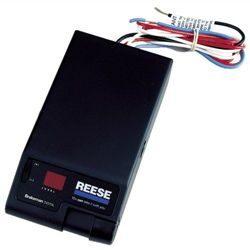
An independent electronic braking system for the trailer is the standard fix. These systems wire the trailer’s brakes directly into the tow vehicle’s circuit. Press the pedal in the cab, and the trailer brakes engage simultaneously. No lag. No reliance on the trailer’s momentum alone. But not all electronic systems work the same way. They fall into three distinct buckets, each with its own logic.
How Trailer Brake Controllers Actually Work
Timed controls are the entry-level option. You set a voltage level. You press the brake pedal. The system dumps a fixed amount of current into the trailer brakes for a set duration. It’s simple. It’s cheap. But it’s also blunt. If you’re crawling down a mountain pass or stopping gently at a red light, that fixed application can feel jerky or inconsistent. It doesn’t account for how hard you’re actually pushing the pedal.
Inertia controls try to be smarter. They use a sensor inside the tow vehicle to detect deceleration. The harder you brake, the more current they send to the trailer. It’s a fixed rate based on that motion. But here’s the catch: high-speed stops can confuse the sensor. At highway speeds, the inertia spike is massive. The system might over-apply, locking the trailer wheels or causing a sway. Many inertia units include override switches to dial back the sensitivity for those heavy, fast stops. Better than timed, but still reactive rather than predictive.
Proportional controls are the gold standard. They don’t just look at deceleration. They look at brake pedal pressure. The system mirrors the tow vehicle’s braking force. If you press the pedal 10% of the way, the trailer brakes apply 10% of their max capacity. If you slam them, the trailer matches that force proportionally. It feels natural. The trailer stays in line. You get smoother stops. It costs more to install. But it’s the only type that truly integrates with how a driver actually drives.
You install these controllers in the tow vehicle. Usually under the dash, near the steering column. A cable runs back to the trailer’s brake assembly. Once connected, the trailer stops when you stop. Period.
But brakes aren’t the only thing that matters. Stability is the real killer.
1: Antisway Bars and Weight Distribution Hitches
You’ve got the brakes sorted. Good. Now stop your trailer from fishtailing.
This is the No. 1 towing accessory for a reason. Weight distribution isn’t a luxury. It’s a necessity for anything over 3,000 pounds. Without it, your tow vehicle squats. The front end lifts. Steering gets light. Dangerous. The trailer’s tongue weight pushes down on the hitch, compressing the
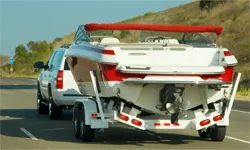
Taming Trailer Sway: Beyond the Ball Mount
Trailer sway is the nemesis of every tow vehicle. It’s not just a nuisance; it’s a physics problem waiting to happen. Wind turbulence or a sudden shift in air pressure can push the trailer sideways, often in the opposite direction of your tow vehicle’s movement. That oscillation, known as “fishtailing,” can become catastrophic if left unchecked.
To counteract this, you need more than just a standard hitch. The industry standard solution involves antisway bars or weight-distribution hitches. These aren’t mere accessories; they are structural reinforcements that change how force transfers between the rig and the trailer.
How Antisway Bars Actually Work
Think of a standard hitch like holding a person’s hand while they hang off a ledge. That person can rotate freely around your grip. It’s a single point of contact. If they twist, you twist. If they lurch, you lurch. Now, imagine two or three people grabbing that same person at different points along their body. Suddenly, that freedom of movement vanishes. The load is distributed. The rotation is resisted.
Antisway bars function on this exact principle. By adding extra attachment points to the hitch assembly, they restrict the trailer’s ability to sway laterally. They don’t eliminate the wind, but they stop the trailer from translating that wind energy into dangerous oscillation.
The Cost of Stability
You can retrofit existing setups, but it costs money. Antisway bar kits are widely available, but the price varies wildly based on engineering and materials. Expect to pay between $200 and $600 for a solid unit, with heavy-duty or specialized models costing even more. Is it worth it? When you’re hauling a $50,000 travel trailer at 65 mph on I-80, the answer is obvious.
What’s Next?
You’ve got the basics of sway prevention down. But towing is a deep rabbit hole. If you want to keep your rig straight and your nerves intact, there’s plenty more to cover.